The Foundation for Economic Education has just posted an audio file from its archives of Nobel-winning economist F.A. Hayek talking about his masterwork, 1960’s The Constitution of Liberty.
Have a listen here.

The Foundation for Economic Education has just posted an audio file from its archives of Nobel-winning economist F.A. Hayek talking about his masterwork, 1960’s The Constitution of Liberty.
Have a listen here.
Comments Off on Hayek on the Constitution of Liberty
Posted in Books, Economics, Great Thinkers, Philosophy
Tagged classical liberalism, constitution of liberty, Economics, f.a. hayek, fa hayek, fee, foundation for economic education, hayek, liberalism

Today’s quotation of the day from The New York Times daily email:
“I’m a middle-of-the-road kind of guy. I want the Democrats out of my pocket and Republicans out of my bedroom. The one word I would use for what’s going on in Washington is embarrassing.”
RON VAUGHN, who provides health insurance to his 60 employees at Argonaut Wine and Liquor in Denver.
Comments Off on This Guy Gets It
Posted in Pith, Political Animals, The Partisan Mind
Tagged colorado, democrats, health insurance, new york times, partisans, partisanship, quotation, quotation of the day, quotes, republican, The Partisan Mind

Did you know that the federal government has a Gastrointestinal Drugs Advisory Committee? It’s true. If you don’t believe me, you can attend their upcoming meeting on February 23. The topic of the day will be a new drug application to treat hepatic encephalopathy.
Hopefully some hepatic encephalopathy sufferers will be there. They can ask the Committee why the FDA takes as long as a decade (and as much as $800 million!) to approve medications that could be helping people and saving lives right now.
Comments Off on Regulation of the Day 98: Gastrointestinal Drugs
Posted in Health Care, Regulation of the Day
Tagged bureaucracy, drugs, fda, fda approval, federal government, hepatic encephalopathy, hhs, prescription drugs, regulation, regulation ofthe day

Today is the fourth working day of the new year. The Federal Register is already over 1,000 pages long.
At this rate, the 2010 Federal Register will hit 63,187 pages. This is an improvement over 2009, when it reached 69,676 pages. In 2008, it was 79,435 pages.
Posted in regulation
Tagged big government, federal register, regulation, regulatory reform
Comments Off on New Reason Video on the TSA
Posted in Security Theater
Tagged airport security, reason, security, Security Theater, terrorism, terrorists, tsa
Sometimes, when two regulations love each other very much, they get together and have little baby regulations. This is happening right now in Britain.
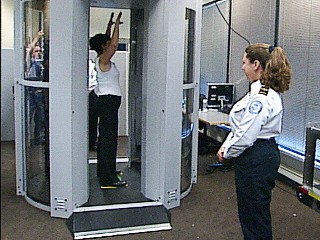
Full body scans are coming into use at many UK airport security checkpoints. Since screeners essentially see all passengers naked, the scans run afoul of child protection laws for passengers under 18.
The thought of pedophiles using the body scan images for their own sick ends is decidedly creepy. So the British government is taking steps to keep that from happening. Those steps include:
-Exempting everyone under 18 from being scanned. This defeats the security purpose of the scanners.
-Moving the scanner operators out of sight of passengers. That keeps the scanner images anonymous. But it doesn’t prevent perverts from seeing things they shouldn’t.
There is an easier way: don’t do full body scans. They do more to make people feel safe than to actually make them safe.
Reinforced cockpit doors, proactive passengers, and checked baggage screening are much more effective. And they’re already in place. Besides, terrorist attacks are rare. Full-body scans are an over-reaction. The resources spent on them have other, better uses.
Comments Off on Regulation of the Day 97: Full Body Scans and Child Protection Laws
Posted in Regulation of the Day, Security Theater
Tagged airport, airport security, body scans, britain, child pornography, child protection, child protection laws, full body scanners, pedophiles, perverts, regulation, Regulation of the Day, security, Security Theater, uk
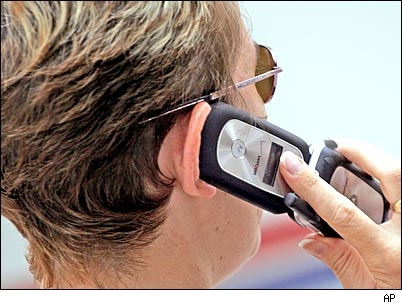
The state of Maine and the city of San Francisco are considering requiring warning labels for cell phones.
Perhaps some warning labels are in order. After all, few things are more annoying than people SPEAKING AS LOUDLY AS POSSIBLE INTO THEIR PHONE ABOUT WHAT’S FOR DINNER when a normal tone of voice will do.
But these warning labels have nothing to do with letting people know that their phones can make them look like jackasses.
No, the labels warn the credulous that their phones emit electromagnetic radiation. Otherwise known as light waves. Some people believe that this causes brain cancer.
Brain atrophy, maybe. But cancer? Most studies have found no correlation, let alone causation.
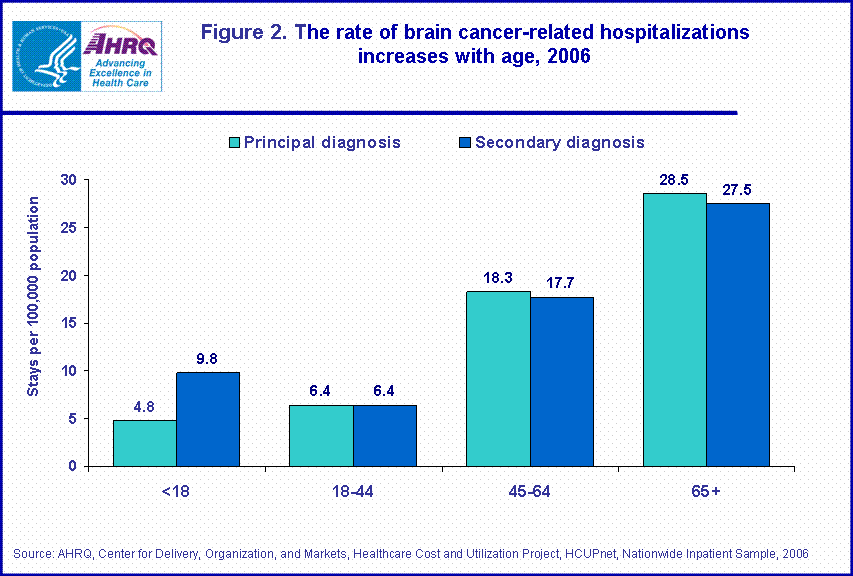
Something else to consider: the demographic group far and away most prone to brain cancer is also far and away the least likely to use cell phones – the elderly.
Hmm.

It is illegal to buy more than 288 bottles of wine per year in Ohio.
If you drink that much wine by yourself, then you have more important problems to worry about than regulatory compliance. But if you host of lot of parties or are building up a wine collection, you run a real risk of hitting the limit.
“The level was set to establish what would seem to be a reasonable amount for personal use,” according to the Ohio Wine Producers Association’s executive director, Donniella Winchell.
Since the law is somewhat difficult to enforce, no violators have yet been found. But when there are, the Ohio Department of Public Safety Investigative Unit will come knocking. Because while buying 288 bottles of wine is perfectly fine, buying 289 poses a threat to public safety.
(Hat tip to CEI colleague Megan McLaughlin)
Comments Off on Regulation of the Day 95: Buying Wine in Ohio
Posted in Nanny State, prohibition, Regulation of the Day
Tagged ohio, prohibition, public safety, relics of prohibition, wine, wine collectors
Think for a minute about how progress is made. It doesn’t follow a constant, linear path. It is unpredictable. It comes in violent fits and starts. It happens at the whim and fancy of genius.
Everyday life is much the same. Life is what you make of it. You have to be free to find what’s best for you. That means making wrong choices sometimes. It means not just trial, but error. Or, as Hayek put it:
“If we knew how freedom would be used, the case for it would largely disappear… It is therefore no argument against individual freedom that it is frequently abused.”
-F.A. Hayek, The Constitution of Liberty, p. 31.
Comments Off on Hayek on Freedom
Posted in Economics, Great Thinkers, Philosophy
Tagged constitution of liberty, Economics, f.a. hayek, fa hayek, freedom, friedrich a hayek, friedrich hayek, hayek, liberty, Philosophy

Retailers have traditionally provided free shopping bags to their customers as a courtesy. Washington, DC’s city government – known for being less than courteous – is now requiring stores to charge customers five cents for each plastic bag they use at checkout.
The tax is environmentally motivated. Since the city is acting so urgently on shopping bags, that implies that they must be the most urgent environmental threat facing DC. If that’s the case, then DC must be a veritable ecological paradise, or else its priorities are misplaced. One or the other must be true.
There were 84 unsolved murders in DC in 2009, by the way.
In lieu of plastic bags, the city is urging people to buy reusable cloth bags. But those have an environmental footprint nearly 100 times larger than a plastic bag, according to Sierra Club data. They have to be used many, many times before they cause any savings. They are also a haven for bacteria if not regularly washed. And washing them adds to their footprint.
Washington, DC has a lot of problems. Expensive but inferior schools, crime, violence, high taxes and spending – the list is long. The epidemic of plastic bags littering the streets is right at the bottom of that list. It should be prioritized accordingly. The regressive plastic bag tax should be repealed.