A Good Day for Freedom of Speech

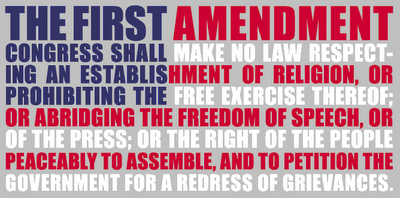
“If the First Amendment has any force, it prohibits jailing citizens for engaging in political speech.”

Justice Anthony Kennedy, introducing today’s Citizens United decision.

Precisely. The correct way to rebut unwelcome speech is not to silence it. It is to counter it with more speech. Let the best arguments win. Advocating speech restrictions is a fancy way of saying, “my arguments are too weak to withstand criticism.” Get better arguments, then!

Free speech issues aside, there is a reason why McCain-Feingold is informally known as the Incumbent Protection Act. It stacks the deck against challengers. No wonder so many incumbent politicians from both parties have come out against today’s decision. It’s bad for their job security.

Grading Obama’s First Year

CEI has just released a comprehensive report card on the administration’s first year in office. My contribution is below. The full report card is here.

C- Office of Management and Budget – Peter Orszag, Director
Grader: Ryan Young, Journalism Fellow

Spending and deficits are far higher than under President George W. Bush, himself a big spender. But Obama can’t be given all the blame. The bailout and stimulus spending programs that caused much of the fresh red ink got their start under Bush. In a potentially positive regulatory development, the number of pages in the Federal Register decreased from 79,435 in 2008 to 69,676 in 2009. Of course, the contents of those pages matters more than how many of them there are. And on that front, the new administration is business as usual.

Regulation of the Day 102: The Size of Banks

Louis Brandeis was a hero of the Progressive Era. One of the central tenets of his philosophy is that when it comes to business, big equals bad. Even if consumers benefit. Doesn’t matter. Big is bad.

This is not an exaggeration. Business historian Thomas McCraw wrote that “a deep-seated antipathy toward bigness clouded his judgment.”*

Then there is Brandeis on consumers: “servile, self-indulgent, indolent, ignorant.” That’s a direct quote, by the way.** It was his justification for wanting to fix prices in favor of small businesses. Consumers invariably prefer low prices. The problem is that sometimes big businesses offer those low prices. And this upset Brandeis to no end. How dare consumers take price into account! The size of the business is more important!

This is not a rigorous line of thought.

But it’s one the current administration has bought into. The White House is expected to propose today a maximum allowable size for banks. Because big is bad.

This reform is unlikely to have its desired effect. The reason banks behaved so badly during the housing bubble is because the regulatory and political climate gave them an incentive to. It had nothing to with size. The solution, then, is to channel incentives in a better direction. Reward good behavior. Punish bad behavior. Any reform that ignores incentives will fail every time.

On one hand, as long as bankers know that the government will bail out their losses, they’ll take as many crazy risks as they can. Where’s the incentive to be careful if taxpayers will cover the bill when you mess up?

On the other hand, a size cap might actually make banks too risk-averse. Loans are risks taken in the hope of future profit. But too much profit — too much good lending — could potentially make a bank run into size problems with the government. This is not the kind of incentive structure the administration should be shooting for.

Today’s fixation on size is just as misguided as Brandeis’ was. Consumers and banks alike would be better served by letting profits encourage risk, and losses encourage prudence, as Russ Roberts put it. That means no size restrictions. No bailouts either.

*Thomas McCraw, Prophets of Regulation, p.99.
**McCraw, p. 107.

Note to Self: Travel More

Travel is most rewarding while you are young, before a career takes hold — with all the mistakes and unintended consequences; or when you are old, and enough is behind you so that acceptance of what has happened becomes a simple necessity, and you have the freedom once again to think about nothing except the immediate landscape.

-Robert D. Kaplan, Mediterranean Winter, p. 128.

That is one convoluted sentence. But the advice is sound.

Regulation of the Day 101: Brushing Teeth After Meals

This one comes from Massachusetts:

[A]ny child who has a meal in day care or is in care for more than four hours will be required to brush their teeth, according to the Department of Early Education and Care.

Regulators, perhaps recognizing the rule’s almost literal paternalism, are allowing parents to opt out if they wish.

I’m researching right now to see if day care providers are required by law to make sure the children in their charge eat their vegetables.

(Hat tip: Fran Smith)

Regulation of the Day 100: Posting YouTube Videos

The Italian government is considering making it illegal for its citizens to post videos on the Internet without a license.

The free speech implications are obvious. But could the proposal also be a move to restrict unwanted economic competition against Italy’s state-dominated media?

Health Insurance and Campaign Contributions


Congressional Democrats are thinking of revoking the health insurance industry’s antitrust exemption; some insurers have spent as much as $20,000,000 opposing the current legislation.

Of course, insurers also gave $20,175,303 to President Obama’s 2008 campaign, roughly triple what McCain netted.

On one hand, this might look like the dog biting the hand that feeds. But really, it isn’t.

If the health care legislation passes, there is a good chance that every American would be required to purchase health insurance.

Suppose that happens. $40 million and change plus some antitrust troubles is a really small price to pay for a legal guarantee of vastly increased business, forever, plus looking like you didn’t want the favor.

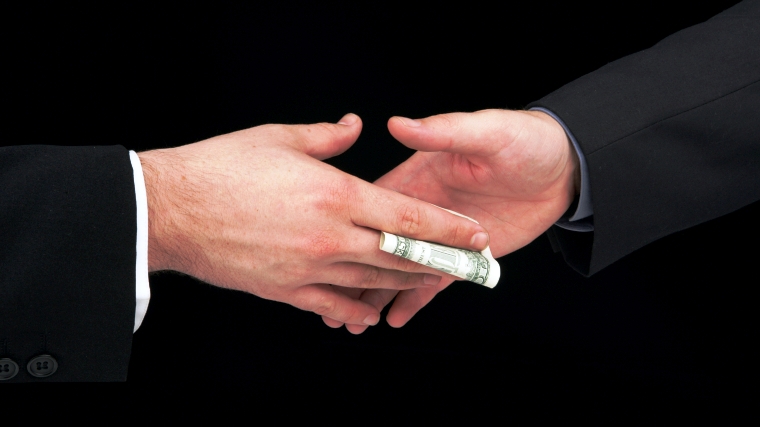
As my friend Jeremy Lott is so quick to remind, it’s a wonder that politicians can be bought off so cheaply, given what they could charge for their services.

It is just as surprising that insurers would spend $20 million opposing legislation that would yield many times that in profit. As economist Bruce Yandle notes, “industry support of regulation is not rare at all; indeed, it is the norm. And in the United States it is as American as apple pie.”

Are Economists Cheap?

According to an amusing article in today’s Wall Street Journal, some are:

Children of economists recall how tightfisted their parents were. Lauren Weber, author of a recent book titled, “In Cheap We Trust,” says her economist father kept the thermostat so low that her mother threatened at one point to take the family to a motel. “My father gave in because it would have been more expensive,” she says.

and some aren’t:

[T]he principles that can make economists seem cheap sometimes lead them to hire help, because they are taught to value their own time.

Ms. Stevenson and Justin Wolfers, also of the Wharton School, gave a friend $150 to hire movers instead of helping him themselves. Harvard University economist David Laibson pays to have a driver pick up his sister from the airport rather than driving himself.

So are economists just cheap, or does their fixation on tradeoffs make them act in ways that only make them appear cheap? You be the judge.

You’re Kidding, Right?

Sarah Palin, on her Fox News debut, said she thought that Iraq was behind the 9/11 attacks until 2008 campaign handlers informed her otherwise.

That would be seven years after the attacks.

Not as off base as the truthers. Still jaw-dropping to read.

One wonders why Democrats put so much time and effort into attacking her. If I were a Democratic party strategist, I would be lending active support to her 2012 candidacy.

It doesn’t matter how much Ms. Palin learns about the issues between now and then. And I place no doubts on her IQ. You don’t get to be governor unless you have something going on upstairs. Sarah Palin has to be the easiest general election kill since at least John Kerry.

Regulation of the Day 99: Salty New Yorkers

New York City is seeking to regulate how much salt is in peoples’ food.

Enforcement will prove difficult; most food that New Yorkers eat comes from outside the city’s jurisdiction. But the goal is to cut average salt intake by 25 percent.

Mayor Bloomberg can probably put a sizable dent in the city’s per capita salt intake all by himself. According to The New York Times, “He dumps salt on almost everything, even saltine crackers. He devours burnt bacon and peanut butter sandwiches. He has a weakness for hot dogs, cheeseburgers, and fried chicken, washing them down with a glass of merlot.”

The mayor also “likes his popcorn so salty that it burns others’ lips.”

There is a lesson to be learned here. People like salt. That’s why they eat so much of it. Suppose some of that salt is cut out of pre-packaged or processed foods. Anyone who wants to can just dump some on from a salt shaker to make up for it. This regulation is completely unenforceable.

There is also something to be said for practicing what one preaches.