Many people still need to be disabused of the notion that Bush’s policies and Obama’s policies are very different. They are actually two peas in a pod. Hopefully this short video will set some people straight.

Many people still need to be disabused of the notion that Bush’s policies and Obama’s policies are very different. They are actually two peas in a pod. Hopefully this short video will set some people straight.
Comments Off on The Bush-Obama Continuum
Posted in Political Animals
Italy, despite housing the Vatican in its borders, is not exactly known for uptight morality. But the small town of Castellammare di Stabia is. Located at a scenic point just south of Naples, the town lies within the shadows of Mt. Vesuvius, which famously erupted in 79 A.D.
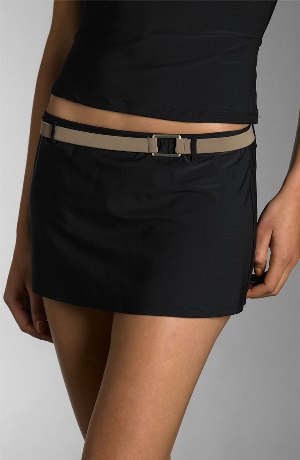
Maybe that visible threat of apocalypse drove conservative Mayor Luigi Bobbio mad. He wants to ban miniskirts within town limits. Police officers would be tasked with paying close attention to women’s hemlines; no doubt many already do. Women who catch an officer’s eye could be fined as much as $700.
Other new regulations that Mayor Bobbio has proposed for Castellammare di Stabia would ban playing soccer in public, sunbathing, and blasphemy. Hopefully the punishment for that last one is less severe than in past centuries.
Comments Off on Regulation of the Day 155: Miniskirts
Posted in Nanny State, regulation, Regulation of the Day
Tagged annay state, Castellammare di Stabia, italy, legislating morality, luigi bobbio, mayor luigi bobbio, miniskirts, mt. vesuvius, naples, vatican
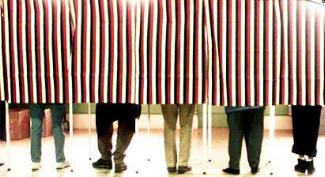
The Washington Post has a breathless write-up of this year’s midterm election spending:
In the latest sign of this year’s record-breaking election season, an independent research group estimated Wednesday that candidates, parties and outside interest groups together could spend up to $4 billion on the campaign.
$4 billion is a lot of money. The Post’s opinion staff writer thinks that’s frightening. $4 billion, of course, comes to $12.90 per person in a nation of 310 million people. So maybe not.
A bit more context: federal spending costs $11,290.32 per person. Regulation costs another $5,645.16 per person. That’s a total burden of $16,935.48 per person. American democracy is a very expensive form of government with surprisingly inexpensive elections.
Spending $12.90 to influence $3.5 trillion in spending and another $1.75 trillion in regulating seems like too little election spending, not too much. Total election spending is about the same as it was in 2000, when the federal budget was under $2 trillion.
Still, for a midterm, this year’s election spending is historically high. And a lot of people think there is too much money in politics. Fortunately, there is a surefire way for them to fix the problem: get politics out of our money.
Republicans and Democrats alike have made it clear that they have little interest in fundamental economic reform. So maybe the Post is right that they aren’t worth spending $12.90 on.
Unfortunately, as long as the Bush-Obama spending and regulating binge continues, people will be spending a lot more than $12.90 to get a piece of the action.
Comments Off on 2010’s Record Election Spending Is Surprisingly Small
Posted in Elections, Free Speech, Political Animals, Spending
Tagged 2010 election, campaign finance, campaign spending, dan eggen, election 2010, washington post
This video gives some examples.
Comments Off on Why Does Regulation Matter?
Posted in regulation
Tagged chuck, economic freedom, ij, institute for jsutice, licensing regulations, regulation

Over at The American Spectator, my colleague Alex Nowrasteh and I make the case for expanding skilled immigration. Our main points:
-1 in 8 Americans are foreign-born, but 1 in 4 American Nobel laureates since 1901 are foreign-born. Immigrants, it seems, are chronic overachievers. America would benefit by letting more in.
-The H-1B visa for skilled immigrants is capped at 85,000. In non-recession years, those 85,000 spots are typically filled in a single day.
-Genius-level intellects are missing out on the chance to flower at the world’s best universities. They’re also missing out on one of the world’s best entrepreneurial environments. And Americans are missing out on cutting-edge jobs in high-tech fields. Consumers lose out on products that are never invented.
-The number of Nobel-caliber intellects who have lost their opportunity to do research in this country is unknown. What is known is that the U.S. government has kept out millions of the most inventive, brilliant, and entrepreneurial people in the world for no good reason.
Read the whole piece here.
Comments Off on The Nobel Case for Immigration
Posted in Immigration, Publications
Tagged alex nowrasteh, american spectator, amspec, economic growth, economic recovery, Immigration, nobel prize, open borders, Ryan Young, skilled immigrants, skilled immigration, the american spectator

The federal government is considering limiting, or even banning potatoes from school lunches. Officials fear the tasty tubers are causing childhood obesity. They would rather children eat more leafy greens instead.
The children are not pleased. One child told the Associated Press, “That would be so not cool. I love tater tots.”
Critics of the nanny state’s slow but steady mission creep often ask, “What’s next, a law saying eat your vegetables?” Well, apparently it is next. Freedom advocates need to find a new reductio ad absurdum.
In fact, the USDA already has a temporary regulation in place disallowing food stamps to be used to buy potatoes. The rule may be made permanent next year. Poverty has more important indignities than losing some choice of what you buy at the grocery store. But what a way to treat adults.
Eat your vegetables. Or else. They’re good for you.
Comments Off on Regulation of the Day 154: Potatoes in School Lunches
Posted in Nanny State, Regulation of the Day
Tagged eat your vegetables, eat your veggies, food stamps, Nanny State, potatoes, school lunches, usda, vegetables, wic
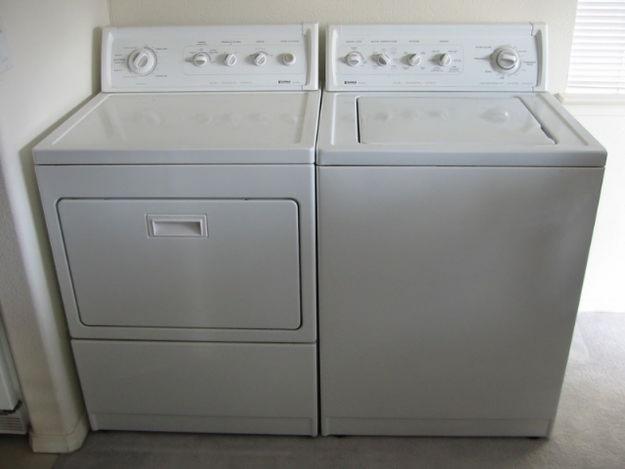
CEI’s Senior Fellow in Environmental Policy Ben Lieberman explains how new energy regulations affect every room in your house, from the basement to the bathroom to the kitchen and beyond.
Comments Off on New CEI Podcast – October 25, 2010: Regulating Every Room
Posted in CEI Podcast, regulation, The New Religion
Tagged ben lieberman, cei, cei podcast, energy efficency, regulation, saving energy, tradeoffs

CEI Director of Insurance Studies Michelle Minton analyzes proposals to privatize Virginia’s liquor stores. Virginia is one of 18 states where the government holds a legal monopoly on the sale of spirits.
Posted in CEI Podcast, Nanny State
Tagged abc, cei, cei podcast, liquor store privatization, michelle minton, podcast, prohibition, relic of prohibition, virginia, virginia abc
A U.S. Senate candidate in Alaska thinks that the U.S. should follow East Germany’s example when it comes to immigration. GOP nominee Joe Miller told a town hall audience, “The first thing that has to be done is secure the border. . . East Germany was very, very able to reduce the flow. Now, obviously, other things were involved. We have the capacity to, as a great nation, secure the border. If East Germany could, we could.”
He’s darn right “other things were involved.” See CEI’s video on the Berlin Wall for details. What a terrible choice of example.
Miller also forgets that East Germany’s 858 miles of fence weren’t meant to keep people out. That fence was meant to keep people in. Against their will. On pain of death.
It’s almost certain that Miller doesn’t really want the full-on East German border enforcement model. It was probably just a tasteless slip of the tongue. But he clearly favors a border fence. Which, of course, he should oppose if his goal is actually to reduce illegal immigration.
Many undocumented immigrants only stay in the U.S. for a few months. Get a job, make some money, go back home and share it with family. A border fence will keep a lot of people like that out, yes. But it also keeps current undocumented immigrants in. Unwillingly, in many cases.
If Miller wins his election, there is a lot he can do to reduce illegal immigration. Building an American version of the Berlin Wall is not one of them. As Alex Nowrasteh and I wrote, “The immigration black market only exists is because the government has made the legal market as cumbersome as it can.”
Miller should make legal immigration less cumbersome. People will come to America, no matter what. That’s what happens when you have one of the freest, richest, most dynamic nations on earth. That’s a fact of life that our broken immigration system does not take into account.
Neither, apparently, does Joe Miller.
Comments Off on The East German Immigration Model
Posted in Elections, Immigration, Political Animals
Tagged Berlin Wall, black markets, cei, cold war, East Germany, gop, Immigration, immigration black markets, immigration reform, joe miller, securing the border, undocumented immigrants, us senate