Category Archives: Regulation of the Day

Regulation of the Day 105: Not Driving Your Car

John Delacey of St. John’s, Newfoundland, Canada, received a court summons for keeping a car in his driveway and not driving it.

The car, which he bought for his daughter, needs new brakes. He claims it is otherwise in good condition, and not an eyesore. Delacey had been saving up money for the repair.

Here’s the really shameful part:

“City property inspectors became involved when someone in the neighbourhood complained about the car.”

It would have been considerate of the offended neighbor to talk to Mr. Delacey first. Maybe they could have come to a compromise (economist Ronald Coase‘s preferred solution). Instead, he went right to the authorities.

Take a look at some other St. John’s by-laws here.

(Hat tip to Jonathan Moore)

Regulation of the Day 104: Haggis

Haggis is the national dish of Scotland. It has also been banned in the United States since 1989. Some of its ingredients are illegal for humans to consume in the U.S.

I won’t list what those ingredients are; they’re a bit hard to stomach (that would also be one of the ingredients). But having tried a small amount of haggis while in Scotland, I can testify that it doesn’t taste as bad as it sounds.

Fortunately, the haggis ban may soon be reversed. There has been no evidence of harm from eating offal ingredients. People have been eating haggis for centuries and been just fine. American shores may soon be teeming with the latest Scottish culinary innovations, including haggis nachos and haggis pizza.

Regulation of the Day 103: When Products Are on Sale

Two states have regulations for when stores can say their products are on sale. The Boston Globe editorializes:

This is a perfect example of a problem that the market can sort out on its own. If there’s one thing 21st century shoppers don’t lack, it’s information. The task of determining whether a “sale’’ is really a sale is best left to comparison-shopping consumers, not the authorities. And given the popularity of websites dedicated to nothing but price-watching and -comparing, doing so is easier than it has ever been. If a store offers an obviously phony promotion, it will be duly punished by its customers. The state needn’t pile on.

(Hat tip to Jonathan Moore)

Regulation of the Day 102: The Size of Banks

Louis Brandeis was a hero of the Progressive Era. One of the central tenets of his philosophy is that when it comes to business, big equals bad. Even if consumers benefit. Doesn’t matter. Big is bad.

This is not an exaggeration. Business historian Thomas McCraw wrote that “a deep-seated antipathy toward bigness clouded his judgment.”*

Then there is Brandeis on consumers: “servile, self-indulgent, indolent, ignorant.” That’s a direct quote, by the way.** It was his justification for wanting to fix prices in favor of small businesses. Consumers invariably prefer low prices. The problem is that sometimes big businesses offer those low prices. And this upset Brandeis to no end. How dare consumers take price into account! The size of the business is more important!

This is not a rigorous line of thought.

But it’s one the current administration has bought into. The White House is expected to propose today a maximum allowable size for banks. Because big is bad.

This reform is unlikely to have its desired effect. The reason banks behaved so badly during the housing bubble is because the regulatory and political climate gave them an incentive to. It had nothing to with size. The solution, then, is to channel incentives in a better direction. Reward good behavior. Punish bad behavior. Any reform that ignores incentives will fail every time.

On one hand, as long as bankers know that the government will bail out their losses, they’ll take as many crazy risks as they can. Where’s the incentive to be careful if taxpayers will cover the bill when you mess up?

On the other hand, a size cap might actually make banks too risk-averse. Loans are risks taken in the hope of future profit. But too much profit — too much good lending — could potentially make a bank run into size problems with the government. This is not the kind of incentive structure the administration should be shooting for.

Today’s fixation on size is just as misguided as Brandeis’ was. Consumers and banks alike would be better served by letting profits encourage risk, and losses encourage prudence, as Russ Roberts put it. That means no size restrictions. No bailouts either.

*Thomas McCraw, Prophets of Regulation, p.99.
**McCraw, p. 107.

Regulation of the Day 101: Brushing Teeth After Meals

This one comes from Massachusetts:

[A]ny child who has a meal in day care or is in care for more than four hours will be required to brush their teeth, according to the Department of Early Education and Care.

Regulators, perhaps recognizing the rule’s almost literal paternalism, are allowing parents to opt out if they wish.

I’m researching right now to see if day care providers are required by law to make sure the children in their charge eat their vegetables.

(Hat tip: Fran Smith)

Regulation of the Day 100: Posting YouTube Videos

The Italian government is considering making it illegal for its citizens to post videos on the Internet without a license.

The free speech implications are obvious. But could the proposal also be a move to restrict unwanted economic competition against Italy’s state-dominated media?

Regulation of the Day 99: Salty New Yorkers

New York City is seeking to regulate how much salt is in peoples’ food.

Enforcement will prove difficult; most food that New Yorkers eat comes from outside the city’s jurisdiction. But the goal is to cut average salt intake by 25 percent.

Mayor Bloomberg can probably put a sizable dent in the city’s per capita salt intake all by himself. According to The New York Times, “He dumps salt on almost everything, even saltine crackers. He devours burnt bacon and peanut butter sandwiches. He has a weakness for hot dogs, cheeseburgers, and fried chicken, washing them down with a glass of merlot.”

The mayor also “likes his popcorn so salty that it burns others’ lips.”

There is a lesson to be learned here. People like salt. That’s why they eat so much of it. Suppose some of that salt is cut out of pre-packaged or processed foods. Anyone who wants to can just dump some on from a salt shaker to make up for it. This regulation is completely unenforceable.

There is also something to be said for practicing what one preaches.

Regulation of the Day 98: Gastrointestinal Drugs

Did you know that the federal government has a Gastrointestinal Drugs Advisory Committee? It’s true. If you don’t believe me, you can attend their upcoming meeting on February 23. The topic of the day will be a new drug application to treat hepatic encephalopathy.

Hopefully some hepatic encephalopathy sufferers will be there. They can ask the Committee why the FDA takes as long as a decade (and as much as $800 million!) to approve medications that could be helping people and saving lives right now.

Regulation of the Day 97: Full Body Scans and Child Protection Laws

Sometimes, when two regulations love each other very much, they get together and have little baby regulations. This is happening right now in Britain.

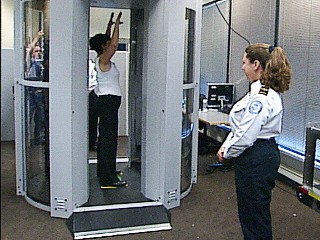
Full body scans are coming into use at many UK airport security checkpoints. Since screeners essentially see all passengers naked, the scans run afoul of child protection laws for passengers under 18.

The thought of pedophiles using the body scan images for their own sick ends is decidedly creepy. So the British government is taking steps to keep that from happening. Those steps include:

-Exempting everyone under 18 from being scanned. This defeats the security purpose of the scanners.

-Moving the scanner operators out of sight of passengers. That keeps the scanner images anonymous. But it doesn’t prevent perverts from seeing things they shouldn’t.

There is an easier way: don’t do full body scans. They do more to make people feel safe than to actually make them safe.

Reinforced cockpit doors, proactive passengers, and checked baggage screening are much more effective. And they’re already in place. Besides, terrorist attacks are rare. Full-body scans are an over-reaction. The resources spent on them have other, better uses.

Regulation of the Day 96: Health Warnings on Cell Phones

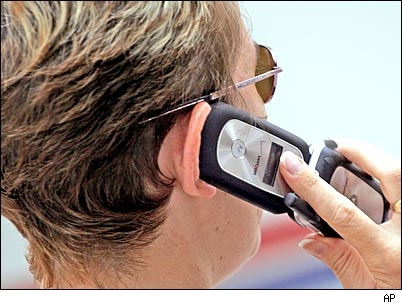
The state of Maine and the city of San Francisco are considering requiring warning labels for cell phones.

Perhaps some warning labels are in order. After all, few things are more annoying than people SPEAKING AS LOUDLY AS POSSIBLE INTO THEIR PHONE ABOUT WHAT’S FOR DINNER when a normal tone of voice will do.

But these warning labels have nothing to do with letting people know that their phones can make them look like jackasses.

No, the labels warn the credulous that their phones emit electromagnetic radiation. Otherwise known as light waves. Some people believe that this causes brain cancer.

Brain atrophy, maybe. But cancer? Most studies have found no correlation, let alone causation.

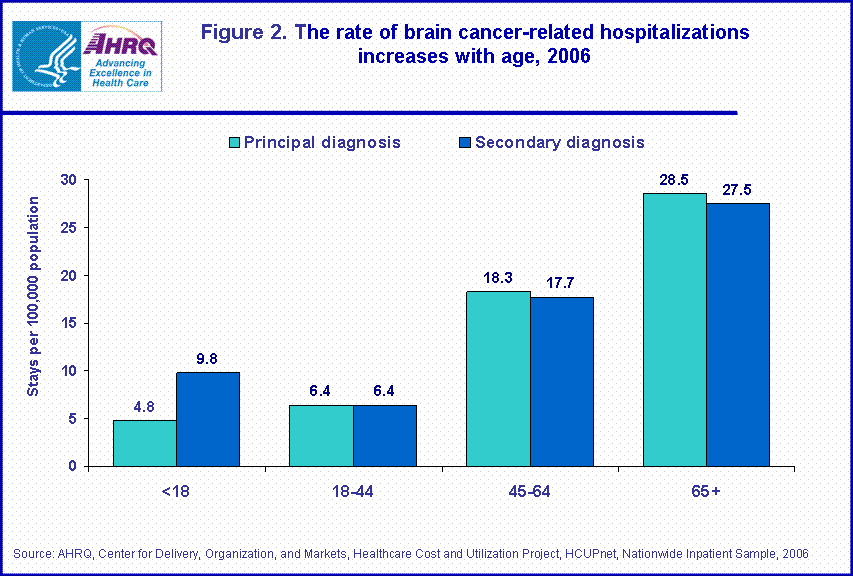
Something else to consider: the demographic group far and away most prone to brain cancer is also far and away the least likely to use cell phones – the elderly.

Hmm.