
Actual press release from the WMATA: “Ride Metro to Bike to Work Day”
Not sure if this press release conveys its intended message very effectively.

Actual press release from the WMATA: “Ride Metro to Bike to Work Day”
Not sure if this press release conveys its intended message very effectively.
Comments Off on Kind of Defeats the Purpose, Doesn’t it?
Posted in General Foolishness
Tagged bad pr, commuting, dc, dc metro, gaffes, messaging, metro, pr, press release, public transit, ride your bike to work day, subway, transit, unintentional humor, wmata
CORRECTION: It appears that I’ve been had. Commenter Dietsch at Jacob Grier‘s blog points out that the article was probably an April Fool’s joke. There are such things as beard net regulations on the books in various cities. But this particularly amusing story appears not to be true; probably for the better.
Hair nets have been a staple of the food service industry for a long time. They are not the most dignified fashion accessory. But they serve a useful purpose. Just like church and state, hair and food are best kept separate. Hair nets are a much easier way to accomplish that goal than, say, mandatory baldness for all kitchen staffs.
Which brings us to the latest fad in Brooklyn’s trendy Cobble Hill neighborhood: mustache nets. For some reason,Victorian-themed restaurants and bars are all the rage right now. Bars are redecorating with old-fashioned furniture and artwork. Bartenders are redecorating themselves with outlandish 19th-century facial hair, from mutton chops to handlebar mustaches.
Unfortunately, a regulation from approximately the same time period is getting in the way of all this nostalgic fun. New York State law requires all persons with facial hair who are serving food or drink to wear a mustache net.
Regulators have been cracking down on un-netted mustaches. They have cited several establishments, as Chow reports:
The crackdown was a surprise to restaurant employees—one bartender apparently panicked and attempted to hide behind a taxidermied warthog. However, many of those cited have remained defiant.
“I’d be happy to have my staff wear mustache nets—if I could find a sustainable source,” said a representative of one of the establishments targeted in the raid. “And so far, I have not found a mustache net farm whose mustache netting practices I believe in.”
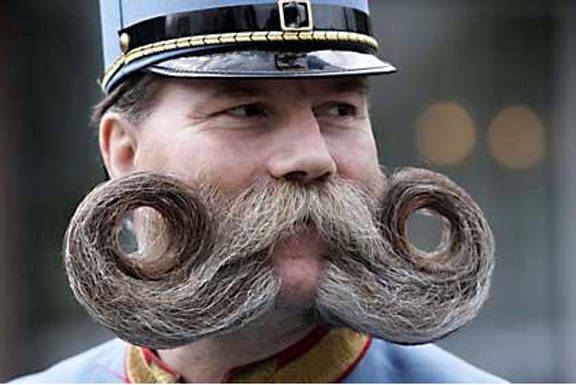
It’s pretty easy to see why the nets aren’t very popular. A Google image search for “moustache net” yields this picture:

Doesn’t exactly befit the image of a chic bartender. But in New York, that’s the law.
Posted in General Foolishness, Regulation of the Day
Tagged brooklyn, hip, hipster, hygiene, moustache, mustache, mustache net, mustache nets, new york, regulation, Regulation of the Day, regulations, victorian era
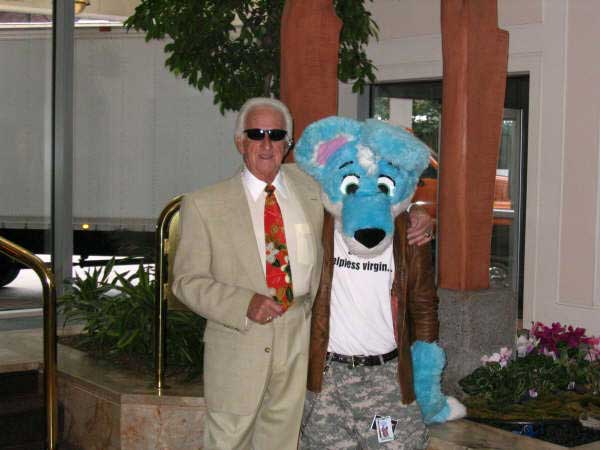
Bob Uecker is having heart surgery on Friday. He’s expected to be fine, but it will be about three months before he’s back in the broadcasting booth. He was calling tonight’s Brewers game against the Pirates, though.
While we wish Bob a fast and full recovery, it’s worth linking to some of his finest work, which happened in 2007 during a series at Pittsburgh. A furry convention was being held in the same hotel the Brewers were staying at. Hilarity ensued. If you don’t know what a furry is, you can look at this Wikipedia page. Or you can listen to Bob’s take here and here. Even if you think baseball is boring, this will make you laugh.
Comments Off on Get Well Soon, Bob Uecker
Posted in General Foolishness, Sports
Tagged baseball, bob uecker, brewers, furriers, furries, get well soon, humor, mlb, pirates, pittsburgh

You need a license to be a bounty hunter in New Jersey. You can apply by clicking here.
The license comes with a cool bounty hunter identification card that you must keep on your person whenever you’re on the job.
But let’s not get ahead of ourselves. There are lots of hoops to jump through first. For one, you need valid photo ID. And you need to pass a criminal background check, and give five character references.
You must also have at least five years of experience in either bounty hunting, law enforcement, or a related field. No one under the age of 25 may be a bounty hunter.
The license fee costs $300; biennial renewal costs $200.
You also need to take a 2-day, 16-hour bounty hunter training course at the Middlesex County Fire Academy in Sayreville. Topics covered range from Constitutional law to proper boundaries on the use of force.
If you want to hire a secretary or other administrative worker, that employee has to register with the New Jersey State Police and go through a background check at his or her own expense. If the employee quits or is fired, you have to let the state know within ten days.
If you can get through all that, happy hunting!
Comments Off on Regulation of the Day 128: Bounty Hunters
Posted in General Foolishness, Regulation of the Day
Tagged bounty hunter, bounty hunters, dog, dumb laws, license, licensing, new jersey, occupational licensing, regulation, Regulation of the Day, regulations, silly

Tim Harford, Financial Times columnist and author of the underrated The Undercover Economist, takes some questions about economics and relationships with the New York Times’ Freakonomics blog.
The first question made me laugh, and also reminded me of my economist self a bit too much for comfort. And the part about engagement rings was enlightening — especially since I bought one not too long ago.
(Hat tip to my fiancee, who thankfully said yes.)
Comments Off on The Economics of Romance
Posted in Economics, General Foolishness
Tagged Economics, economists, engagement, engagement rings, financial times, ft, geek romance, geeks, tim harford, undercover economist

Guns and schools don’t mix. State and local jurisdictions have all kinds of gun-free school legislation. There’s even, redundantly, federal legislation.
Posted in education, General Foolishness
Tagged department of education, education, firearms, guns, guns and schools, guns in schools, remington, remington shotguns, schools, shotguns
General Managers are salivating in front offices across the NFL. At 12:01am tonight, free agency begins.
This look at some past Dallas Cowboys free agent busts really caught me by suprise – Worst Cowboys free-agent signings: No. 2 Ryan Young
Comments Off on NFL Free Agency begins Tonight
Posted in General Foolishness, Sports
Tagged cowboys, dallas, dallas cowboys, football, free agency, free agents, nfl, pro football, Ryan Young

Before there were lawyers, there were philosophers. The Sophists, given a bad name by Plato, earned their bread by teaching people how to plead their cases in court. There being no professional lawyers in 5th century B.C. Athens, people had to represent themselves. Witness this tale (probably too good to be true) of the pre-Socratic Greek philosopher Protagoras:
It is said that [Protagoras] taught a young man on the terms that he should be paid his fee if the young man won his first law-suit, but not otherwise, and that the young man’s first law-suit was one brought by Protagoras for recovery of his fee.
Bertrand Russell, History of Western Philosophy, p. 75.
Comments Off on Before Lawyers
Posted in Books, General Foolishness, Great Thinkers, History, Philosophy, Pith
Tagged ancient greece, ancient philosophy, athens, bertrand russell, greece, greek philosophy, History, history of western philosophy, Philosophy, plato, protagoras, western philosophy
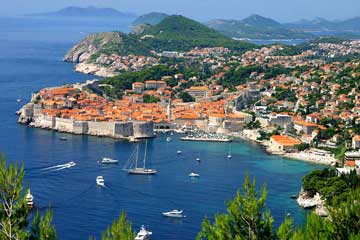
Travel is most rewarding while you are young, before a career takes hold — with all the mistakes and unintended consequences; or when you are old, and enough is behind you so that acceptance of what has happened becomes a simple necessity, and you have the freedom once again to think about nothing except the immediate landscape.
-Robert D. Kaplan, Mediterranean Winter, p. 128.
That is one convoluted sentence. But the advice is sound.
Comments Off on Note to Self: Travel More
Posted in Books, General Foolishness
Tagged advice, mediterranean winter, robert d kaplan, robert kaplan, travel

According to an amusing article in today’s Wall Street Journal, some are:
Children of economists recall how tightfisted their parents were. Lauren Weber, author of a recent book titled, “In Cheap We Trust,” says her economist father kept the thermostat so low that her mother threatened at one point to take the family to a motel. “My father gave in because it would have been more expensive,” she says.
and some aren’t:
[T]he principles that can make economists seem cheap sometimes lead them to hire help, because they are taught to value their own time.
Ms. Stevenson and Justin Wolfers, also of the Wharton School, gave a friend $150 to hire movers instead of helping him themselves. Harvard University economist David Laibson pays to have a driver pick up his sister from the airport rather than driving himself.
So are economists just cheap, or does their fixation on tradeoffs make them act in ways that only make them appear cheap? You be the judge.
Posted in Economics, General Foolishness
Tagged cheap, cheapskate, Economics, economists, frugal, skinflint, wall street journal, wsj

 Inertia Wins!