Tag Archives: Regulation of the Day

Regulation of the Day 97: Full Body Scans and Child Protection Laws

Sometimes, when two regulations love each other very much, they get together and have little baby regulations. This is happening right now in Britain.

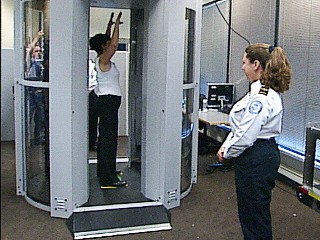
Full body scans are coming into use at many UK airport security checkpoints. Since screeners essentially see all passengers naked, the scans run afoul of child protection laws for passengers under 18.

The thought of pedophiles using the body scan images for their own sick ends is decidedly creepy. So the British government is taking steps to keep that from happening. Those steps include:

-Exempting everyone under 18 from being scanned. This defeats the security purpose of the scanners.

-Moving the scanner operators out of sight of passengers. That keeps the scanner images anonymous. But it doesn’t prevent perverts from seeing things they shouldn’t.

There is an easier way: don’t do full body scans. They do more to make people feel safe than to actually make them safe.

Reinforced cockpit doors, proactive passengers, and checked baggage screening are much more effective. And they’re already in place. Besides, terrorist attacks are rare. Full-body scans are an over-reaction. The resources spent on them have other, better uses.


Regulation of the Day 93: Predatory Lending

Congress has used the financial crisis as an excuse to regulate what it calls “predatory lending.” As so often happens, its new regulations have had unintended consequences.

A bank in South Dakota, in order to comply with the new rules, is charging 79.9 percent interest for one of its low-limit credit cards. The pre-regulation rate was 9.9 percent.

The Credit Card Accountability, Responsibility and Disclosure Act of 2009 makes it illegal to charge annual fees greater than a quarter of a card’s limit. For small-balance cards, the allowable fees are tiny now. That leaves banks with three options:

-1. Lose money. The Wall Street Journal correctly notes that “Banks can’t be expected to give money away, even if Congress is in the habit of doing just that.” So this option is unlikely.

-2. Stop offering low-limit cards. This will hurt people who need them, such as people with low incomes, people with bad credit records, and young people who are trying to establish a credit record.

-3. Charge higher interest rates to make up for the money lost in fees. This is exactly what is happening here with the 79.9 percent rate for a $250-limit card.

If the bank calculated correctly, the 79.9 percent rate will be roughly a wash compared to the earlier high-fee, low-rate policy. But different customers will be paying. The people who incur a lot of  interest-rate charges are usually the people who can’t afford them. And they’ll be paying a lot more than they were before the CCARD Act.

People who can afford to pay their balances on time often don’t pay little or no interest interest anyway. The 79.9 percent rate doesn’t really affect them. And now their annual fees have gone way down. The CCARD Act is, completely unintentionally,  a wealth transfer from poor people to richer people. Congress is actively hurting the very people it intended to help.

Regulation of the Day 92: Camping at the Beach

In Oregon, it is illegal to set up a tent at most beaches.

A beach would not be my first choice for a place to spend the night. It would be cold and wet, especially in Oregon. Sand would get into all kinds of places I’d rather it wouldn’t.

But is a law necessary? Before the tent ban, was there an epidemic of cold, wet, and sandy people on Oregon’s beaches, who would gladly turn to safer, more comfortable accommodations if only a law would nudge them in that direction?

Or should the Solons of Oregon turn their attention to more important matters?

Regulation of the Day 91: Horse Floaters

As horses age, their teeth often wear down into points. This can cause the animals great pain if they bite into their tongue or cheeks. Chewing can also become problematic. A horse floater’s job is to keep that from happening. They are a kind of equine dental specialist. Floaters anesthetize the animal then grind its teeth into smoother shapes.

But regulators are clamping down on horse floaters. Many states want to require them to be licensed veterinarians. This would throw a lot of floaters out of business. Most of them specialize in horse teeth and have no need for full veterinary training. That’s why few have bothered to get it, since it takes years of school and thousands of dollars.

Horse floater Carl Mitz told a reporter, ‘Saying only veterinarians can do this profession … if they’re successful, it eliminates me. After 25 years, I’ll no longer have a job.’

Mr. Mitz is fighting back in court. But he shouldn’t have to. He has a right to make an honest living. And he has been for at least 25 years. Regulators should respect that right.

Regulation of the Day 87: The Volume of TV Commercials

The House passed the Commercial Advertisement Loudness Mitigation Act on Wednesday. If it becomes law, the FCC would control the volume level of television commercials. Some of them are noticeably louder than regular programming. This is, to put it tactfully, irritating.

Rep. Rick Boucher told the Associated Press that “It’s an annoying experience, and something really should be done about it.”

He was talking about the commercials, though his remarks better fit the regulations he voted for.

Still, he’s right that something needs to be done. Loud commercials are a nuisance. They are also avoidable. For example, I avoid them by watching as little television as possible. Maybe read a book or spend time with loved ones instead. There are other ways, too. Here are a few:

-Use the mute button on your remote.

-If you have DVR and you’re watching a show you recorded, you can fast forward through the commercials.

-Change the channel.

-Let broadcasters know how you feel. Tell them not to run loud commercials. You can contact ABC here; CBS here; Fox here; and NBC here. They’d rather you watch their channel than not, after all. And the best way to prevent a viewer exodus is not alienating them.

Besides, they’d probably rather hear from you than the FCC.

(Hat tip to Fred Smith)

Regulation of the Day 86: Cockfighting Advertisements

If you’re thinking of sending out advertisements for a cockfight through the mail, you should be aware that a new regulation allows the postal service to refuse to deliver it.

The same rules also covers advertisements for a “knife, a gaff, or any other sharp instrument attached, or designed or intended to be attached, to the leg of a bird for use in an animal fighting venture.”

Animal fighting is barbaric. And it is illegal in most places. The underground nature of animal fighting makes one wonder how many cockfight promoters actually advertise their events by putting fliers in the mail. Wouldn’t that just make it easier to get arrested?

If so, the USPS should be encouraging such advertising, not banning it. Driving animal fights further underground only makes them harder to eradicate.

Regulation of the Day 85: Peddlers

It is illegal to be a peddler in Wisconsin without a license. One of the requirements is five years of residency in Wisconsin. Because clearly, no one is trustworthy unless they’ve lived in Wisconsin for at least five years. The full list of requirements is here.

You can apply for your peddler’s license here.

(Hat tip to Jim Ulbright)

Regulation of the Day 84: The Size of Holes in Swiss Cheese

Talk about attention to detail. The federal government regulates the size of holes in Swiss cheese.

The majority of the “eyes” (technical speak for “holes”) must be between 3/8” and 11/16” for the cheese to qualify as Grade A or B. Anything bigger or smaller and the cheese is relegated to the barely-edible Grade C. Even if the cheese is otherwise perfect.

(Hat tip to Jonny Slemrod)

Regulation of the Day 83: Citations

The Code of Federal Regulations contains a regulation on how to cite the Code of Federal Regulations. It reads as follows:

The Code of Federal Regulations may be cited by title and section, and the short form “CFR” may be used for “Code of Federal Regulations.” For example, “1 CFR 10.2” refers to title 1, Code of Federal Regulations, part 10, section 2.

See for yourself at 1 CFR 8.9.

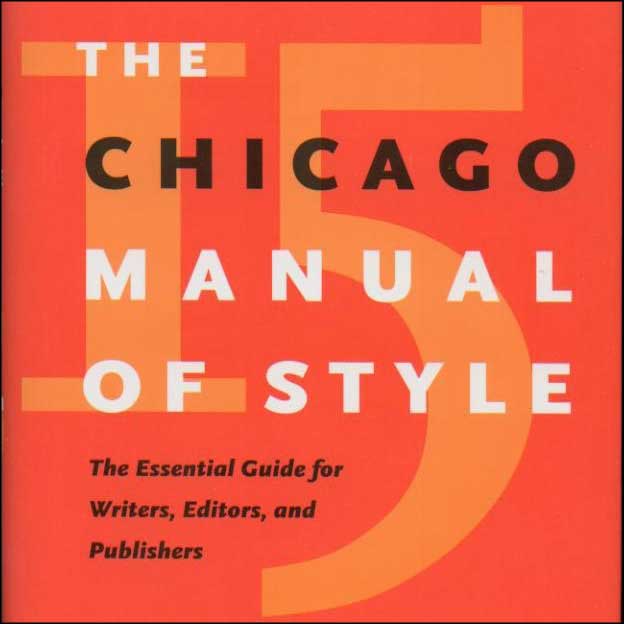
Standard citation formats are extremely useful. That would be why, even without regulation’s guiding hand, the private sector evolved the Chicago and MLA styles, among others.

Yet another example of spontaneous order at its finest.

Regulation of the Day 81: Porn

Marginal Revolution’s Alex Tabarrok points to a proposed rule in California that would reclassify adult film actors as being subject to certain employment regulations. The unintended consequences are potentially fatal:

California’s anti-discrimination laws prohibit requiring an HIV test as a condition of employment; therefore the adult film industry’s current testing process, in which every performer is tested for HIV monthly, would be illegal. Nor would adult film producers be allowed to “discriminate” by refusing employment to HIV-positive performers. As a result, untested and HIV-positive performers would be able to work in the industry, raising the risks of HIV outbreaks–particularly since condom breakage or slippage can occur.

Sounds like regulators and activists need to think that one through a little more carefully.