Category Archives: The Partisan Mind

Misplaced Ire

Pundits are having a field day with the fact that a fire department in Tennessee let a house burn down because the owner didn’t pay his annual $75 fire protection fee. Proof that libertarianism is a failure.

Was it? Tom Firey sums it up thusly:

In a nutshell: The firefighters involved were city government firefighters following a city government policy concerning people who didn’t pay a city government fee for a 20-year-old city government program that was adopted in response to a county government decision.

The commentariat is liable to sprain an ankle, jumping to conclusions like that.

Partisans Believe Strange Things

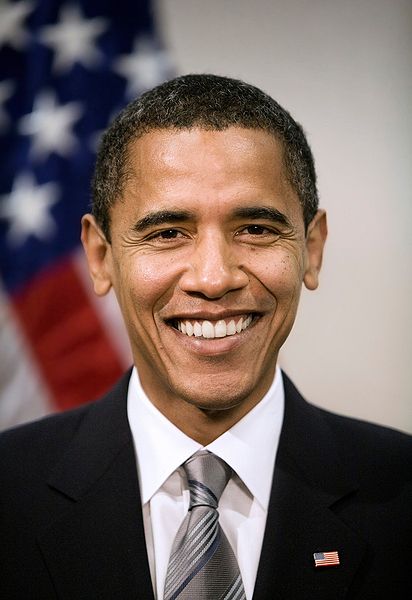
According to a new poll, 31  percent of Republicans believe that Barack Obama is Muslim. Perhaps they forgot about the (Christian) Rev. Jeremiah Wright controversy?

It’s almost as if partisans ascribe anything they don’t like to the other team, then simply believe it to be so. The problem cuts both ways; Democrats are just as guilty. The partisan mind is an ugly thing.

Besides, the issue of the president’s religion has nothing to do with whether his policies will help the economy or hurt it, or whether they will make America a better place or a worse one. His religion is irrelevant. A non-issue. Treat it that way.

Responding to Media Matters

Apparently the folks at Media Matters didn’t care for my July 12 article in the Daily Caller debunking the cell phone cancer scare.

The trouble is, I’m not quite sure why. They never say. Jamison Foser’s blog post doesn’t touch a single argument I made in the article. Instead he attacks me personally, as well as CEI. For all I know, he agrees with everything I said. Or maybe he disagrees. I don’t know.

His main point is that corporate funding makes arguments untrustworthy. Since CEI receives some corporate funding, we are therefore suspicious. This is not a rigorous line of thought. Arguments are either right or wrong. The presence or absence of corporate funding has nothing to do with whether an argument is right or wrong.

There is also the matter of Media Matters’ own very generous corporate donors, which Foser does not address.

Media Matters’ fixation on corporate funding is an easy way for them to avoid genuine intellectual engagement. It is a diversion. If you are unable to attack the argument, then attack the person making it.

This ad hominem attack deserves a rebuttal. The Daily Caller was kind enough to run mine this morning. I hope you will take a few minutes to read it.

Tea Parties and Corporations

Milwaukee’s alternative weekly, the Shepherd Express, recently ran a thought-provoking article by Lisa Kaiser criticizing the tea party movement. I haven’t written a whole lot about the tea party movement. But my reaction has been mixed.

The positive is that a large and vocal constituency is agitating for lower spending and lower taxes. That’s been missing from the protest scene since at least Vietnam.

The negative was summed up almost perfectly by Koch Industries VP Richard Fink: “Some of their worries are… more thoughtful, some of them are less thoughtful.”

If you think about it, tea partiers are the right-wing analogue of Bush-era Iraq war protesters. Both of their main causes are true and just. War against a country that never attacked us is wrong. So is the Bush-Obama spending spree.

But both movements attracted a fringe. A loud fringe. A fringe that, because of their volume, their kookiness, their entertainment value – attracted disproportionate press coverage. Tea partiers have their birthers and John Birchers and so on. The anti-war movement has its Code Pink, truthers, and other strange, fascinating, creatures.

Now suppose you’re a journalist covering one of these protests. You’re on a deadline, and you don’t know a whole lot about what you’re covering.

You could write a story about the ordinary people in jeans and t-shirts, kids in tow, holding up their signs with quiet dignity.

Or you could talk to outlandish – and outlandishly quotable! – nutjobs from Code Pink or the John Birch Society. It’s pretty obvious which tactic gets you the more entertaining story in less time.

An economist would point this out as a classic example of the law of demand. If something costs less, people consume more of it. If it costs more, then less. Since writing a story about colorful kooks costs less time and effort than interviewing ordinary people, no wonder so many newspaper stories are of the cheaper-effort variety.

Which brings us to the article in question.

The words “corporate,” “corporations,” and variations of the same appear nine times. And it is not a long article. Each time, the epithet is unsubtly used as shorthand for “I disagree with this.”

This is a mental shortcut — evidence that Kaiser did not give the issue deep thought. If your gut feeling is that you don’t like something, you can research it to find out for sure. But that is very costly in terms of time and effort. It’s mentally cheaper to just blame “the corporations.”

This is not a rigorous line of thought. Arguments are either right or wrong. The presence or absence of corporate funding has nothing to do with whether an argument is right or wrong.

Take the pull quote from the print edition:

“Americans for Prosperity is a corporate-funded front group that is trying to extract as much of our public dollars as they can and then put it (sic) in the hands of the corporations that fund it.”

That isn’t actually true. AFP is against corporate bailouts. Against corporate subsidies. AFP thinks that corporations should compete in the marketplace. Not in Washington. Public dollars should be kept as far away from corporations as possible. The source who Kaiser quotes is factually inaccurate. And she doesn’t correct him. She agrees with him.

He uses the same mental shortcut that Kaiser does. Just use the word “corporate” to stand for that which he disagrees with. Then he attributes those views to AFP, blissfully unaware of AFP’s actual stances on taxpayer-to-corporation wealth transfers.

This is intellectually lazy. If Kaiser and the activist are against government funding of corporations, they actually have a lot in common with AFP.

Kaiser quotes another activist:

“It’s no coincidence that profits from giant corporations are being pumped into front groups like AFP to further those corporate interests.”

This guy doesn’t get it either. Dollars tend to flow to causes that the donors already agree with. The arrow of causality is pointing in the opposite direction that he thinks.

For example, I favor legalizing same-sex marriage. Suppose that I’m planning to donate money to an organization to advance my view on that issue. Will I get better results by giving to a group that already agrees with me, or by giving to Focus on the Family in hopes of changing their mind?

Koch Industries in particular comes under fire for its longtime support of free-market organizations. And they have much to gain from the crony capitalism they are accused of promoting.

But they aren’t actually promoting crony capitalism. If their political giving actually was made in the name of corporate self-interest, they’d be giving to groups like the Center for American Progress, which openly favors giving billions of taxpayers’ dollars to corporations.

Instead, Koch-funded groups believe, across the board, that corporate welfare is wrong. The Koch brothers are free-market ideologues, and it shows in their philanthropy.

Kaiser’s Shepherd Express article is an interesting read. But not for what it says about tea parties and corporations. It’s interesting because of what it says about her, and about how the law of demand partially explains the poor quality of most journalism.

The Kagan Nomination: What Matters, What Doesn’t

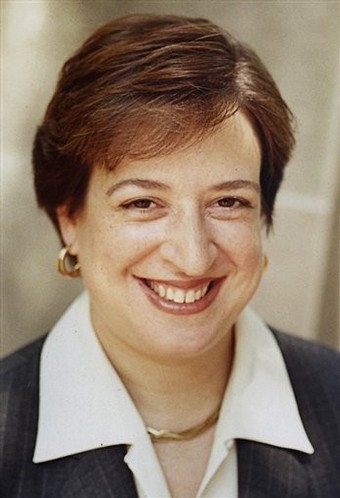
One of the criticisms being hurled at Elena Kagan from the right is that she might be a lesbian. This concerns me.

Not the lesbian part; few things are less important to one’s judicial qualifications. My worry is that Republicans have so atrophied intellectually that this is their loudest reason for opposing her.

A thoughtful soul (I forget who) recently remarked that twenty years from now, almost everyone currently on the wrong side of gay rights issues will be embarrassed to admit it. Yet the obsolete epithets being hurled at Kagan — which may or may not be accurate, and frankly, who cares — are what many of Kagan’s opponents seem to care about the most.

And people wonder why I often take visible offense when someone tries to call me a conservative.

There are substantive reasons to be skeptical about Kagan. One of them is how she views the executive branch. “She is certainly a fan of presidential power,” one scholar remarks. This is important.

Chief Justice Roberts has similar views. He was picked in part because the Bush administration knew he wouldn’t strike down that administration’s more controversial power grabs. Harriet Miers was not rejected for her views, which are utterly conventional. Her nomination was only struck down because her lack of subtlety in expressing those views was considered gauche.

While I have never been an Obama fan, one of my hopes for his administration was that he would repudiate Bush-era excesses such as the PATRIOT Act. He embraced them instead. Having all those cool powers at his disposal was just too much to pass up.

President Obama’s Supreme Court nominees so far seem no different from Roberts or Miers: what the other branches of government want, they shall get. The exceptions, such as the Citizens United decision, are so rare that they garner weeks worth of headlines; such outbursts must be kept to a minimum. Hence Kagan.

What the Supreme Court needs is a healthy dose of judicial activism. Kagan, like Roberts, Sotomayor, and other recent nominees, is a judicial passivist. They reflexively defer to the executive and legislature, right or wrong.

What we need are Justices who will stand up and say “no” when Congress passes a law that is unconstitutional, or when the president abuses his powers. That’s why judicial review exists in the first place. This tradition goes all the way back to Marbury v. Madison, often the very first case that students read in undergraduate constitutional law classes.

As Kagan goes through the pomp and circumstance of the confirmation process, maybe she’ll prove better than her likely soon-to-be colleagues. Maybe she won’t. But so long as her Republican opponents are fixated on something so trivial as her sexual orientation, we may never find out. Given her relative youth, three decades or more of jurisprudence are at stake.

Dueling Headlines

Reid: Republicans ‘making love’ to Wall Street (Politico)

Goldman Sachs was top Obama donor (CNN)

Truth is, both parties are about equally corrupt. Sen. Reid is right, but it’s not just the GOP’s problem.

Social Security, Health Care, and Partisan Hackery

Megan McArdle points out a delicious piece of partisan hackery.

Back in 2005, President Bush proposed privatizing Social Security. This was one of his few good ideas. But because of poor salesmanship, it was less than popular. Nothing came of it. Rather than press on, The New York Times urged him to cave in, in accordance with the peoples’ wishes.

This year’s health care bill is similarly unpopular. Now The New York Times is urging President Obama to press on, against the peoples’ wishes.

Go read her whole post. It’s great.

You’re Kidding, Right?

Sarah Palin, on her Fox News debut, said she thought that Iraq was behind the 9/11 attacks until 2008 campaign handlers informed her otherwise.

That would be seven years after the attacks.

Not as off base as the truthers. Still jaw-dropping to read.

One wonders why Democrats put so much time and effort into attacking her. If I were a Democratic party strategist, I would be lending active support to her 2012 candidacy.

It doesn’t matter how much Ms. Palin learns about the issues between now and then. And I place no doubts on her IQ. You don’t get to be governor unless you have something going on upstairs. Sarah Palin has to be the easiest general election kill since at least John Kerry.

This Guy Gets It

Today’s quotation of the day from The New York Times daily email:

“I’m a middle-of-the-road kind of guy. I want the Democrats out of my pocket and Republicans out of my bedroom. The one word I would use for what’s going on in Washington is embarrassing.”

RON VAUGHN, who provides health insurance to his 60 employees at Argonaut Wine and Liquor in Denver.

They Needed a Poll to Find This Out?

A headline in today’s Politico reads, “Poll: U.S. too politically divided.”

How is that news? Who is going to say they don’t think the U.S. is divided enough?