Category Archives: Elections

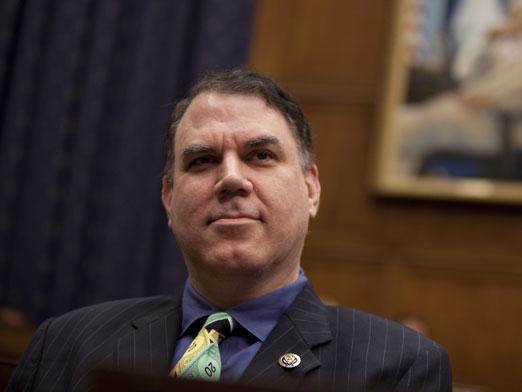
Alan Grayson, We Hardly Knew Ye

Most incumbents running for re-election deserve defeat. That more than 50 of them lost last night is an unabashed good. But one of those defeated incumbents, Florida Democrat Alan Grayson, I will miss.

This is not because he is a serious voice on policy; he isn’t. Rep. Grayson is a walking, talking reminder that Congress is not to be taken seriously, whatever lofty airs its members may exude. Washington could use more like him. Some of his career highlights:

-He blamed his defeat on the weather.

-Grayson characterized the GOP’s health care plan as “Don’t get sick, and if you do get sick, die quickly.”

-He used the word “Holocaust” to describe the current health care system. The Holocaust was an attempt to systematically murder all Jews.

-He referred to attendees of Glenn Beck’s political rally as “people who were wearing sheets over their heads 25 years ago.” Not as Halloween costumes, one presumes.

-He ran a political ad featuring audio of his opponent, Daniel Webster, quoting a Bible verse imploring women to submit to their husbands. The problem is that Grayson’s ad left out the part immediately after that where Webster told his audience to reject that advice, and take a more modern approach to marital relations.

-The same ad referred to Webster as “Taliban Dan.” The Taliban is a radical Muslim group that embraces sharia law, shelters terrorists, and throws acid in women’s faces for going to school.

-Grayson ran another ad calling Webster a draft-dodger. Webster received a student deferment, then was declared medically unfit to serve.

And so on. One expects politicians to be dishonest; one does not expect them to be so blatant about it as Grayson is. He was a breath of fresh air compared to the stale stuff pouring from most of his colleagues.

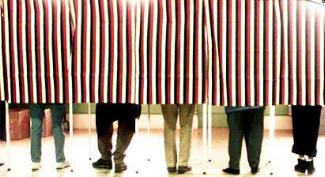
Why I Didn’t Vote This Year

Over at The Daily Caller, I tally up the arguments for and against voting. This year, the minuses outweighed the plusses — at least for me. But different people will come to different conclusions, and that’s fine. Consider this a list of arguments to consider, and an invitation to think for yourself.

I’m rather sick of moralizing do-gooders preaching that voting is your civic duty. “If you forfeit your right to vote, you forfeit your right to complain,” they say. Hogwash. Tell that to blacks before the 15th Amendment and women before the 19th Amendment and see where that gets you.

My main points:

-The mathematics come out against voting. Average turnout in my Congressional district is about 200,000 voters. I have one vote.

-Expressive voting, however, is perfectly legitimate. People place a high value participating in democracy. They value having their say. Exercising their rights. Those are wonderful reasons in favor of taking the time to vote.

-But voting takes time. The time I spend voting is time I can’t spend on activities that have more impact, such as writing articles for publication. I do, after all, make a living expressing my opinions on policy issues.

-To vote or not is a personal decision with no right or wrong answer. Think it through. Do what’s right for you. And don’t look down on people who decide differently than you do.

Is Obama a Keynesian?

In which most of the interviewees mistake the famous economist for a country in Africa:

Note that these are all likely voters.

The Rise of Negative Campaigning?

A lot of people think this year’s election is historically nasty. Then again, people said much the same thing in 2008. And in 2006. And in 2004, 2002… every year, actually.

Pundit hyperbole is nothing new. Neither are attack ads. Negative campaigning is at least as old as the campaign itself. Politics is an inherently nasty business. The pursuit of public office causes people to do and say things they would never dream of if they didn’t have that signature powerlust that separates politicians from decent human beings.

This short video from Reason.tv shows some highlights from the not-so-friendly 1800 presidential race between Thomas Jefferson and John Adams. I think the glowing red eyes are my favorite part.

2010’s Record Election Spending Is Surprisingly Small

The Washington Post has a breathless write-up of this year’s midterm election spending:

In the latest sign of this year’s record-breaking election season, an independent research group estimated Wednesday that candidates, parties and outside interest groups together could spend up to $4 billion on the campaign.

$4 billion is a lot of money. The Post’s opinion staff writer thinks that’s frightening. $4 billion, of course, comes to $12.90 per person in a nation of 310 million people. So maybe not.

A bit more context: federal spending costs $11,290.32 per person. Regulation costs another $5,645.16 per person. That’s a total burden of $16,935.48 per person. American democracy is a very expensive form of government with surprisingly inexpensive elections.

Spending $12.90 to influence $3.5 trillion in spending and another $1.75 trillion in regulating seems like too little election spending, not too much. Total election spending is about the same as it was in 2000, when the federal budget was under $2 trillion.

Still, for a midterm, this year’s election spending is historically high. And a lot of people think there is too much money in politics. Fortunately, there is a surefire way for them to fix the problem: get politics out of our money.

Republicans and Democrats alike have made it clear that they have little interest in fundamental economic reform. So maybe the Post is right that they aren’t worth spending $12.90 on.

Unfortunately, as long as the Bush-Obama spending and regulating binge continues, people will be spending a lot more than $12.90 to get a piece of the action.

The East German Immigration Model


A U.S. Senate candidate in Alaska thinks that the U.S. should follow East Germany’s example when it comes to immigration. GOP nominee Joe Miller told a town hall audience, “The first thing that has to be done is secure the border. . .  East Germany was very, very able to reduce the flow.  Now, obviously, other things were involved.  We have the capacity to, as a great nation, secure the border.  If East Germany could, we could.”

He’s darn right “other things were involved.” See CEI’s video on the Berlin Wall for details. What a terrible choice of example.

Miller also forgets that East Germany’s 858 miles of fence weren’t meant to keep people out. That fence was meant to keep people in. Against their will. On pain of death.

It’s almost certain that Miller doesn’t really want the full-on East German border enforcement model. It was probably just a tasteless slip of the tongue. But he clearly favors a border fence. Which, of course, he should oppose if his goal is actually to reduce illegal immigration.

Many undocumented immigrants only stay in the U.S. for a few months. Get a job, make some money, go back home and share it with family. A border fence will keep a lot of people like that out, yes. But it also keeps current undocumented immigrants in. Unwillingly, in many cases.

If Miller wins his election, there is a lot he can do to reduce illegal immigration. Building an American version of the Berlin Wall is not one of them. As Alex Nowrasteh and I wrote, “The immigration black market only exists is because the government has made the legal market as cumbersome as it can.”

Miller should make legal immigration less cumbersome. People will come to America, no matter what. That’s what happens when you have one of the freest, richest, most dynamic nations on earth. That’s a fact of life that our broken immigration system does not take into account.

Neither, apparently, does Joe Miller.


Foreign Money Is Not the Problem

President Obama has caused a stir recently by declaring that the Chamber of Commerce, which is running ads critical of his policies, is funded with foreign money.

It’s a weak criticism. And not just because the amount of foreign money involved is trivial. Or because labor unions and other political groups across the spectrum also accept small amounts of foreign money.

President Obama seems to be saying that people are smart enough to know whether or not a candidate or a political party is bamboozling them in their campaign ads. But people suddenly lose their wits when an outside group, or – gasp! – someone from another country does the exact same thing. That kind of cognitive dissonance must be difficult to live with.

Because arguments against foreign money in politics are so weak, people who use those arguments are either ill-informed or lying.

Lying is much more likely in this case. If your own arguments are weak, a common tactic is to distract your audience and hope they don’t notice. It works more often than not. Here, President Obama is taking advantage of the fact that almost all people suffer from anti-foreign bias. Not racism. Anti-foreign bias. They’re different. And pandering to that bias can be extremely useful politically.

Why does such a cheap tactic work? It’s because anti-foreign bias is in our DNA. Our hunter-gatherer ancestors lived in small bands. Anybody outside that band was a very real threat to steal food, clothing, or potential mates. So people learned to be wary of outsiders. It was good for one’s life expectancy.

As tribes became villages, towns, cities, and now nations, the number of people we consider insiders has grown. And we treat outsiders much better than we used to. Trade is more common than war in most places. But most people are still instinctively leery of outsiders. It is our nature.

That’s why it’s disappointing to see President Obama so cynically play that card. Clearly he and the Chamber of Commerce prefer different policies. It would be nice to see the President engage the Chamber at a higher level than the ad hominem.

Mises on Political Parties

With a fiercely partisan election just over a month away, the concluding paragraph of Ludwig von Mises’ Liberalism is a refreshing rejection of party politics. Mises, of course, uses liberalism in the original sense of the word:

No sect and no political party has believed that it could afford to forgo advancing its cause by appealing to men’s senses. Rhetorical bombast, music and song resound, banners wave, flowers and colors serve as symbols, and the leaders seek to attach their followers to their own person. Liberalism has nothing to do with all this. It has no party flower and no party color, no party song and no party idols, no symbols and no slogans. It has the substance and the arguments. These must lead it to victory.

-Ludwig von Mises, Liberalism: The Classical Tradtion, p. 151.

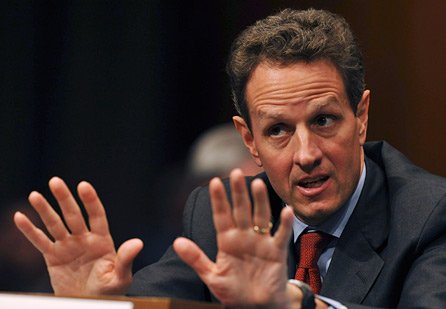
Timothy Geithner, Political Strategist

The TARP bank bailout program polls poorly. 58 percent of Americans think the bailouts were unnecessary. Timothy Geithner, in recent remarks, subtly reminded voters that the hated bailouts were originally a Republican proposal. It began with George W. Bush, remember.

This is a clever bit of strategy from Geithner. President Obama and Congressional Democrats get most of the blame for TARP. And they deserve plenty of blame for not repealing the program. But Geithner is right. TARP began with Republicans.

The midterm elections will probably be very kind to Republicans. Geithner is saying, in effect, “be careful what you wish for.”

He’s right. If the GOP does regain control of Congress, little good is likely to come of it. They will probably do a decent job opposing the White House’s proposals. That could slow spending growth.

But what the country needs are spending cuts. And Republicans have serially proven they can’t be trusted with the public purse.

When Republicans last held power they passed the largest new entitlement program since the Great Society, nearly doubled federal spending in 8 years, gave billions of dollars in subsidies to businesses and farmers, and generally made a mess of things. The TARP bailouts and the largest spending stimulus in U.S. history were their closing flourishes.

Republicans  did all the things they ran against in 1994. Many GOP candidates are saying similar things in 2010. But remember Geithner’s counsel about TARP. Only a fool would believe that Republicans will actually cut spending. Beltway fever catches quickly. And it’s contagious.

Of course, Democrats are just as bad. As I say with every election involving Democrats and Republicans, whoever wins, we lose. The best that we independents can do is nudge the intellectual climate in a better direction. Geithner has kindly reminded us that we need to redouble our efforts on both conservatives and progressives.

Voting the Bums Back In

Many people think change is in the air. Voters are angry. And they want to throw the bums out. That’s the dominant narrative this election cycle. But at least during primary season, that narrative is fitting poorly with actual election results. Politico reports:

Six incumbents have lost this season: Sens. Arlen Specter (D-Pa.) and Bob Bennett (R-Utah) and Reps. Alan Mollohan (D-W.Va.), Bob Inglis (R-S.C.), Carolyn Kilpatrick (D-Mich.) and Parker Griffith (R-Ala.). Larry Sabato, a political scientist at the University of Virginia, pointed out in Arena that factoring for those losses translated into a 98.3 percent win rate for incumbents so far in 2010.

That 98.3 percent win rate will drop on Election Day. But probably not by much. Not even if one or both chambers switch parties. In 2008, incumbents running for re-election had a 94.9 percent success rate. In 2006, when Congress changed parties, the re-election rate was still right around 94 percent. The last time re-election rates went as low as 90 percent was in 1992 — nearly two decades ago.

The sad truth is that incumbents are safe. It doesn’t matter that Congress’ approval ratings are in the low teens. Voters just aren’t going to throw out very many bums. Voters may despise Congress as an institution, but most people have positive opinions of their own representative.

That’s why the average tenure in the House is more than 14 years, or seven terms. And most turnover isn’t from losing elections. It’s from retirement or running for other office, or death; for many, politics is literally a lifelong career.

So expect a lot of familiar faces to be sworn in when the 112th Congress convenes in January, even if power changes hands.

Though I will, of course, be very happy if events prove me wrong.