
Fun fact: the federal government has both an International Trade Administration and an International Trade Commission.

Fun fact: the federal government has both an International Trade Administration and an International Trade Commission.
Comments Off on Department of Redundancy Department
Posted in regulation, Trade
Tagged bureaucracy, export, free trade, government, import, international trade administration, international trade commission, ita, itc, protectionism, redundancy, redundant, Trade
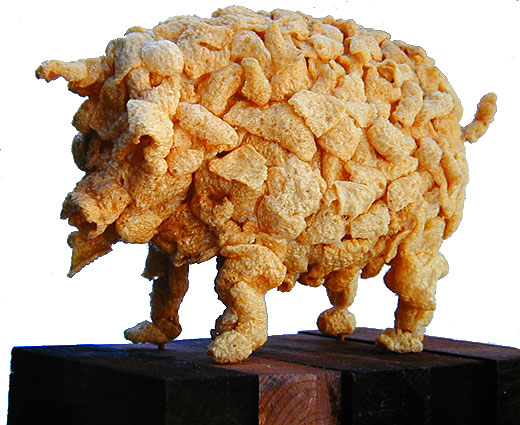
The federal government is loosening its restrictions on importing pork rinds from Brazil. Rudolph Foods, Inc., an Ohio company, owns a factory in Brazil, and stands to benefit from the ruling.
Competitors are up in arms. Citing exotic illnesses like foot-and-mouth disease, one competitor told The Wall Street Journal, “It just takes one pig” that is infected to spread a disease… “The risk is low, but the consequences are really high.”
If that is his strongest argument, then the case against liberalization is as weak as it gets. Instead of using the power of government to hobble its rivals, this company should go out and improve its product. Make its pork rind recipe even tastier. And cheaper. Use the import liberalization to its own advantage if possible.
Comments Off on Regulation of the Day 112: Importing Pork Rinds
Posted in Economics, Regulation of the Day, Trade
Tagged brazil, foot and mouth disease, imports, pork, pork rinds, protectionism, rudolph foods, Trade

Haggis is the national dish of Scotland. It has also been banned in the United States since 1989. Some of its ingredients are illegal for humans to consume in the U.S.
I won’t list what those ingredients are; they’re a bit hard to stomach (that would also be one of the ingredients). But having tried a small amount of haggis while in Scotland, I can testify that it doesn’t taste as bad as it sounds.
Fortunately, the haggis ban may soon be reversed. There has been no evidence of harm from eating offal ingredients. People have been eating haggis for centuries and been just fine. American shores may soon be teeming with the latest Scottish culinary innovations, including haggis nachos and haggis pizza.
Comments Off on Regulation of the Day 104: Haggis
Posted in International, Regulation of the Day, Trade
Tagged food, food ban, food bans, haggis, haggis ban, imports, scotland, Trade

Ancient Roman consuls – equivalent to our presidents – wore togas edged in purple to mark their high status. As Republic became Empire, new emperors were said to “ascend to the purple.”
Purple clothing was a status symbol for most of human history. It was the ancient equivalent of the Mercedes-Benz. Originally discovered in the glands of shellfish (reputedly by Heracles’s dog!), it took 12,000 of the creatures to get just 1.5 grams of dye. Purple garments could be as rare and costly as gold in some places.
Modern innovations such as inexpensive synthetic dyes, the Minnesota Vikings, and purple M&Ms have taken away the color’s exotic reputation. But no worry. Federal regulators are doing what they can to bring it back.
Alpinil Industries, a dye manufacturer in India, sells its carbazole violet pigment 23 cheaply. Too cheaply, it seems. Even commoners can afford to buy products colored with their purple hues!
Irate American competitors convinced the government in 2004 to put an anti-dumping duty on Alpinil’s purple dye. That raised the price to match pricey American-made dyes. Purple would once again be reserved for the rich.
Now that the tax has been in place for five years, the Department of Commerce is wrapping up an investigation to see if it has been working as intended. A repeal would be best for consumers. Don’t expect to see it happen, though.
The benefits are concentrated to a few dye manufacturers, who have a strong incentive to lobby to keep the status quo. Meanwhile, the costs are diffused onto millions of consumers, none of whom have much incentive to spend thousands of dollars in an effort to save themselves a few pennies.
Posted in Economics, History, International, Regulation of the Day, Trade
Tagged alpinil, ancient rome, anti-dumping, concentrated benefits, consul, department of commerce, diffused costs, dumping, dye, free trade, heracles, hercules, protectionism, Public Choice, purple, purple dye, rome, Trade

Here’s a letter I sent recently to the New York Daily News:
December 3, 2009
Editor, New York Daily News
450 W. 33rd Street
New York, NY 10001Washington, D.C.: In his December 3 column, “On jobs front, President Obama needs to show a little audacity,” Errol Louis worries about America’s trade deficit. He shouldn’t.
I run an ongoing trade deficit with my local grocery store. I import food from them every week. They have never purchased a thing from me in return. Even so, we both benefit. I’d rather have their food than my money, and they’d rather have my money than the food on their shelves. This is true even if an international border separates us.
If Mr. Louis is as worried about trade deficits as he says he is, he would never again set foot in a grocery store, start growing his own food, and engage only in barter transactions. If he doesn’t, he is either misinformed, or else he doesn’t really believe what he writes.
Ryan Young
Warren T. Brookes Journalism Fellow
Competitive Enterprise Institute
Washington, D.C.
Comments Off on Don’t Worry about Trade Deficits
Posted in Correspondence, Economics, Trade
Tagged errol louis, fair trade, free trade, nafta, new york daily news, north american free trade agreement, Trade, trade deficits
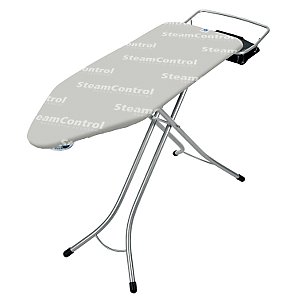
Regulation begets rent-seeking. When government assumes the power to regulate imports, domestic firms will lobby to use that fact to their advantage.
Case in point: Home Products International (HPI), an American company, makes ironing tables. So does Hardware, a Chinese company. I personally have no idea which firm makes the better ironing table. That’s for consumers to decide.
Or at least it should be for consumers to decide. But it doesn’t always work that way in practice. HPI seems to have already made that decision for us.
At HPI’s request, the International Trade Administration will continue to add anti-dumping duties to the price of the Chinese-made ironing tables. That way HPI doesn’t have to worry as much about competing. Sorry, consumers.
Is this fair? Of course not. But all too often, it is how regulation works.
Comments Off on Regulation of the Day 68: Ironing Tables
Posted in Economics, International, Political Animals, Public Choice, Regulation of the Day, Trade
Tagged antidumping, china, hardware, home products international, hpi, international trade, ironing boards, ironing tables, rent seeking, Trade
Classic reductio ad absurdum.
Modern technology could easily grow oranges and grapes in hothouses in the arctic and subarctic countries. Everybody would call such a venture lunacy. But it is essentially the same to preserve the growing of cereals in rocky mountain valleys by tariffs and other devices of protectionism while elsewhere there is plenty of fallow fertile land. The difference is merely one of degree.
Ludwig von Mises, Human Action, p. 395.
Posted in Economics, Great Thinkers, Pith, Trade
Tagged agriculture, human action, ludwig von mises, mises, protectionism, tariffs, Trade

It is ironic that the winner of the Nobel Peace Prize wants to send more troops to Afghanistan. Even so, President Obama is in a prime position to work wonders for the cause of peace. He can institute free trade in America.
Trade is the ultimate act of peace. If someone has something you covet, you are faced with a choice. You could take it from him by force. Or you could trade for it. The first option is the root of all war. The second is the root of all peace.
Trading with people instead of stealing from them is a sign of respect. It says you honor their rights as an individual. It says you reject the use of force. It says you choose persuasion over coercion.
If he wants to earn the prize he has been given, President Obama should scrap those tire tariffs against China. Publicly retract his blustery campaign statements about renegotiating NAFTA. Repeal every tariff, every antidumping duty, and every last restraint on trade in the books.
Nothing promotes peace and civility more than commerce. After all, killing the customer is very bad for business.
Comments Off on President Obama Wins Nobel Peace Prize
Tagged barack obama, globalization, nobel, nobel peace prize, nobel prize, Trade
Consumers have been buying a lot of tires made in China lately. Naturally, U.S.-based tire manufacturers are upset at their competitors’ success. Fortunately, there are two ways for the aggrieved American firms to ease their troubled minds:
1: Make better tires for less money. Give consumers a reason to buy American tires rather than Chinese. Compete, in other words.
2: Don’t compete. Too much hard work. Instead, persuade some politicians to place a 35 percent protective tariff on competitors’ tires. Price them out of the market. Then keep making the same old tires that people don’t want. If the tariff is large enough, you may even be able to raise your prices, even without raising quality.
This is a choice between raising the bar and lowering it. Unfortunately, U.S. tire firms and allied politicians have chosen to lower it. China, by putting up its own barriers to retaliate, is lowering the bar even further.
The really audacious part is that tire tariff supporters think they are really helping the economy. Raising that bar. Saving American jobs!
There is something very unsettling about the notion that an American job is intrinsically more valuable than a Chinese job. We are all human beings, are we not?
This is an ugly, ugly mindset. And it is one that politicians and tire companies have explicitly adopted. The burden is on them to explain why they think people who live in one country are more deserving of economic opportunity than people who live in another.
Comments Off on Regulation of the Day 50: Tires from China
Posted in Economics, International, Regulation of the Day, Trade
Tagged antidumping, china, higher prices for consumers, international trade, protectionism, regulation, Regulation of the Day, Trade

 Inertia Wins!