Tag Archives: regulations

The Wisdom of George Stigler

George Stigler won a Nobel Prize for his work on the economics of regulation. He wrote extensively about regulatory capture, and in fact coined the term. He was one of only a few sane souls who stubbornly insisted that regulations be judged by their actual results, not their intended results. Good intentions, however noble, are not enough. Here’s an example of Stigler at his finest:

Regulation and competition are rhetorical friends and deadly enemies: over the doorway of every regulatory agency save two should be carved: “Competition Not Admitted.” The Federal Trade Commission’s doorway should announce , “Competition Admitted in Rear,” and that of the Antitrust Division, “Monopoly Only by Appointment.”

-George Stigler, “Can Regulatory Agencies Protect the Consumer?”, from The Citizen and the State: Essays on Regulation (1975), p. 183.

Regulation of the Day 127: Landscaping

Southern California is a dry place, prone to droughts. So Angelina and Quan Ha, of Orange, CA, ditched their water-hungry grass lawn about two years ago. They replaced it with “a drought-tolerant garden filled with lavender, rosemary and native wildflower seeds.” They claim the switch is saving them hundreds of dollars per year, not to mention hundreds of thousands of gallons of precious water.

The city of Orange promptly sued them, claiming their lawn violates local regulations. At least 40 percent of a yard must be covered with living plants. The city contends that the sparse shrubs and plants in the Ha family’s yard don’t meet the threshold.

“Compliance, that’s all we’ve ever wanted,” Senior Assistant City Attorney Wayne Winthers said. “They put up a nice fence, but it didn’t show anything about how they had complied with code, as far as the front yard goes.”

This is a fancy way of saying, “you will do what I tell you.” This is not a healthy attitude for any person to have.

The Has pled not guilty in court on March 2. If they lose, they are looking at up to six months of jail time and a $1,000 fine.

Fortunately, after a rash of bad publicity surrounding the court hearing, the city announced within hours that it was considering dropping the charges.

(Hat tip to Megan McLaughlin)

Regulation of the Day 126: Cheese-Rolling Races

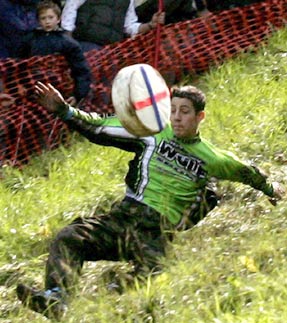
One of Great Britain’s most light-hearted traditions is the cheese-rolling race. Every year on the May Bank Day holiday, wheels of cheese are rolled down Cooper’s Hill in Brockworth, Gloucester. Adventurous and/or foolhardy souls roll down the hill in hot pursuit; the one who gets a hold of the cheese before reaching the bottom of the hill wins. You can watch a video of last year’s race here. Winners get to keep the cheese as a prize.

Cheese-rolling races have been held at Cooper’s Hill since the 1800s. Until this year, that is. Health and safety regulators shut down this year’s event because it has become too popular. The Daily Mail reports:

More than 15,000 spectators turned out last year, which, at three times the site’s capacity, means it has ‘outgrown the location’.
Richard Jefferfies, one of the organi[z]ers, said: ‘‘We have had to cancel on the advice of the police and local authorities this year because of the issues of health and safety and other aspects.

‘As well as concerns about the safety of the crowd and the competitors, local landowners were also worried by the amount of damage done by people climbing over fences and that sort of thing.’

It is hoped the races will return next year.

Federal Register Reaches 10,000 Pages

The 2010 Federal Register passed the 10,000 page mark this morning. It hit the milestone with a State Department request for grant proposals for a “One-time Competitive Grants Program – Competition A – Academic Programs.” $8,000,000 of grants are available if you’re interested.

I noted earlier that it only took 4 working days to top 1,000 pages. Now, after 42 working days, the grand total is 10,158. That’s an average of 242 new pages of rules and notices every working day.

Assuming 250 working days this year, the 2010 Federal Register is on pace to reach 60,464 pages. This would be substantially lower than last year’s figure of 68,598. Part of the slowdown is likely due to the four-day federal shutdown from last month’s snow storms. Another factor is a relative lack of major legislation (so far), as often happens in election years.

Regulation of the Day 121: Cussing

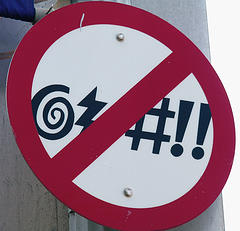
It’s officially “Cuss Free Week” in California. Last Thursday, the state legislature passed a resolution to make the first week of March swearing-free.

Los Angeles County passed a similar measure last year, inspired by 14-year old who has started no-cussing clubs at schools across the country.

The resolution is non-binding, and will not be enforced. There are no First Amendment issues. It’s just a feel-good measure.

What doesn’t feel so good is the fact busy-body legislators feel it is their place to tell you to watch your language.

Then again, all the time they spent crafting cussing legislation was time not spent digging California even deeper into fiscal hell. Might I suggest that the California legislature also pass a non-binding “Eat Your Vegetables Week” resolution?

Regulation of the Day 120: Fish Tanks in Barbershops

In Tenneessee, it is illegal for barbershops to have fish tanks. That could change as soon as today, though. HB2823, sponsored by Rep. Ty Cobb, is up for a vote today in the state Senate. It would make barbershop fish tanks legal once again. The bill already passed the House by voice vote. Why the need for such obscure legislation? According to Tennessean.com,

[Rep. Cobb] proposed the measure after a constituent who owns a barber shop with a built-in fish tank told him she was asked to drain the aquarium after a state inspection and told she could only have fake animals in it.

While fish tank liberalization won’t affect very many people, it is heartening to see legislators repealing laws instead of passing more of them. Legislators looking for other things to repeal can start by looking at other Regulations of the Day. Congratulations to Rep. Cobb for doing the right thing. More, please.

Regulation of the Day 119: Bake Sales

New York City’s public schools spent $18,365 per student in the 2007-2008 school year. That spending has been growing at more than double the rate of inflation over the last decade. That’s a lot of money. But since it isn’t spent very wisely, nowhere near that amount actually reaches the classroom.

Instead of firing teachers for incompetence (and sometimes worse), the district re-assigns bad teachers to “rubber rooms,” where they do nothing except receive their full salary. Maybe play Scrabble or surf the Internet. But mainly sit around and get paid.

Average teacher pay in New York City is approaching $70,000. There are about 700 teachers in rubber rooms. Assuming the rubber room teachers draw roughly average salaries, we’re talking about as much as $50 million that never makes it to the classroom from rubber rooms alone. That’s nearly $50 per student right there.

To make up for some of the money that gets lost in rubber rooms and central offices, schools often have fundraising events like bake sales.

Well, not anymore. At least not bake sales. Those are basically banned in New York City. Mayor Bloomberg and the city’s Department of Education worry that bake sales contribute to child obesity.

Bake sales are technically still legal. But only approved foods can be sold. And only at approved times. And never before the end of lunch hour. And you have to keep detailed records. And so on.

Complying with all the rules is just too difficult for a school basketball team raising money for a new scoreboard, or to cover the cost of traveling to a tournament.

Anything goes after 6:00 pm, food-wise. But hardly anybody stays in school that late. PTAs are given a longer leash. But even they cannot hold more than one bake sale per month.

(Hat tip: Fran Smith)

Regulation of the Day 118: Unlicensed Dogs

In Los Angeles, it is illegal to own a dog without a license. The city government employees eight people whose full-time job is to make sure that people are complying. But they aren’t doing a very good job of it; roughly two thirds of Los Angeles’ dog population is unlicensed.

This epidemic of unlicensed dogs is easily the most pressing issue facing America’s second-largest city. Packs of wild, unlicensed dogs roam the streets at night. People are scared to go out after dark. An entire city huddles in fear.

Or not. Maybe unlicensed dogs don’t really matter. Most places do just fine without dog licensing regulations. So why is the city government clamping down on enforcement all of a sudden?

The answer is simple: money. LA is looking at a $400 million budget deficit this year. At $15 per license, the city estimates it will make $3.6 million from full compliance. Hopefully it will spend somewhat less than that getting there.

Los Angeles is hardly the only city having revenue troubles. One wonders what other obscure regulations are being used for money grabs across the country.

Regulation of the Day 115: Pancake Races

Pancake races are a Lenten tradition that date as far back as the 15th century. Contestants navigate a course as quickly as they can while holding a frying pan and flipping a delicious pancake a certain number of times.

The races are most popular in Britain. But other countries hold them, too. For over fifty years, the town of Liberal, Kansas has competed against Olney in England by setting up standardized courses in each town and comparing racing times. The Americans, despite being relatively new to the sport, actually have the all-time edge on the Brits, 33-25.

The secret to winning is to cross the finish line before your opponents do. That usually means running. The problem is that sometimes, running violates British health and safety regulations.

An official warned the racers before the St. Albans pancake race:

“Due to the wet weather conditions and health and safety regulations, in this year’s race, there will be no running allowed. Only walking is permitted. Any team that runs will be disqualified.

“It is a genuine health and safety concern. People fall over in the dry, they will certainly fall over in the wet.”

Three teams defied orders and pursued excellence as fast as they could. They were disqualified.

(Hat tip: Jonathan Moore)

Regulation of the Day 113: Throwing Snowballs

Two students at James Madison University in Virginia were charged with felonies for throwing snowballs at a snowplow and an unmarked police car. This is illegal in Harrisonburg, Virginia.

Talk about an over-reaction. Arrested and jailed. For throwing snowballs.

While being a jerk isn’t a crime, there is some safety risk when moving vehicles are involved. But this really seems like the kind of incident that is better settled with a talking-to instead of a jail cell.