Tag Archives: regulation

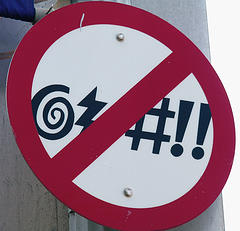
Regulation of the Day 121: Cussing

It’s officially “Cuss Free Week” in California. Last Thursday, the state legislature passed a resolution to make the first week of March swearing-free.

Los Angeles County passed a similar measure last year, inspired by 14-year old who has started no-cussing clubs at schools across the country.

The resolution is non-binding, and will not be enforced. There are no First Amendment issues. It’s just a feel-good measure.

What doesn’t feel so good is the fact busy-body legislators feel it is their place to tell you to watch your language.

Then again, all the time they spent crafting cussing legislation was time not spent digging California even deeper into fiscal hell. Might I suggest that the California legislature also pass a non-binding “Eat Your Vegetables Week” resolution?

Regulation of the Day 120: Fish Tanks in Barbershops

In Tenneessee, it is illegal for barbershops to have fish tanks. That could change as soon as today, though. HB2823, sponsored by Rep. Ty Cobb, is up for a vote today in the state Senate. It would make barbershop fish tanks legal once again. The bill already passed the House by voice vote. Why the need for such obscure legislation? According to Tennessean.com,

[Rep. Cobb] proposed the measure after a constituent who owns a barber shop with a built-in fish tank told him she was asked to drain the aquarium after a state inspection and told she could only have fake animals in it.

While fish tank liberalization won’t affect very many people, it is heartening to see legislators repealing laws instead of passing more of them. Legislators looking for other things to repeal can start by looking at other Regulations of the Day. Congratulations to Rep. Cobb for doing the right thing. More, please.

Regulation of the Day 119: Bake Sales

New York City’s public schools spent $18,365 per student in the 2007-2008 school year. That spending has been growing at more than double the rate of inflation over the last decade. That’s a lot of money. But since it isn’t spent very wisely, nowhere near that amount actually reaches the classroom.

Instead of firing teachers for incompetence (and sometimes worse), the district re-assigns bad teachers to “rubber rooms,” where they do nothing except receive their full salary. Maybe play Scrabble or surf the Internet. But mainly sit around and get paid.

Average teacher pay in New York City is approaching $70,000. There are about 700 teachers in rubber rooms. Assuming the rubber room teachers draw roughly average salaries, we’re talking about as much as $50 million that never makes it to the classroom from rubber rooms alone. That’s nearly $50 per student right there.

To make up for some of the money that gets lost in rubber rooms and central offices, schools often have fundraising events like bake sales.

Well, not anymore. At least not bake sales. Those are basically banned in New York City. Mayor Bloomberg and the city’s Department of Education worry that bake sales contribute to child obesity.

Bake sales are technically still legal. But only approved foods can be sold. And only at approved times. And never before the end of lunch hour. And you have to keep detailed records. And so on.

Complying with all the rules is just too difficult for a school basketball team raising money for a new scoreboard, or to cover the cost of traveling to a tournament.

Anything goes after 6:00 pm, food-wise. But hardly anybody stays in school that late. PTAs are given a longer leash. But even they cannot hold more than one bake sale per month.

(Hat tip: Fran Smith)

Regulation of the Day 118: Unlicensed Dogs

In Los Angeles, it is illegal to own a dog without a license. The city government employees eight people whose full-time job is to make sure that people are complying. But they aren’t doing a very good job of it; roughly two thirds of Los Angeles’ dog population is unlicensed.

This epidemic of unlicensed dogs is easily the most pressing issue facing America’s second-largest city. Packs of wild, unlicensed dogs roam the streets at night. People are scared to go out after dark. An entire city huddles in fear.

Or not. Maybe unlicensed dogs don’t really matter. Most places do just fine without dog licensing regulations. So why is the city government clamping down on enforcement all of a sudden?

The answer is simple: money. LA is looking at a $400 million budget deficit this year. At $15 per license, the city estimates it will make $3.6 million from full compliance. Hopefully it will spend somewhat less than that getting there.

Los Angeles is hardly the only city having revenue troubles. One wonders what other obscure regulations are being used for money grabs across the country.

Regulation of the Day 115: Pancake Races

Pancake races are a Lenten tradition that date as far back as the 15th century. Contestants navigate a course as quickly as they can while holding a frying pan and flipping a delicious pancake a certain number of times.

The races are most popular in Britain. But other countries hold them, too. For over fifty years, the town of Liberal, Kansas has competed against Olney in England by setting up standardized courses in each town and comparing racing times. The Americans, despite being relatively new to the sport, actually have the all-time edge on the Brits, 33-25.

The secret to winning is to cross the finish line before your opponents do. That usually means running. The problem is that sometimes, running violates British health and safety regulations.

An official warned the racers before the St. Albans pancake race:

“Due to the wet weather conditions and health and safety regulations, in this year’s race, there will be no running allowed. Only walking is permitted. Any team that runs will be disqualified.

“It is a genuine health and safety concern. People fall over in the dry, they will certainly fall over in the wet.”

Three teams defied orders and pursued excellence as fast as they could. They were disqualified.

(Hat tip: Jonathan Moore)

Regulation of the Day 114: Unlicensed Fruit Candy

The Chicago Tribune has a jaw-dropping story of regulators gone wild:

Department of Health inspectors seized, slashed open and poured bleach over thousands of dollars of local peaches, pears, raspberry and plum purees owned by pastry chef Flora Lazar… Inspectors cited no health problems with any of the food.

And that’s just the beginning. Read the whole thing. This is a scandal. Ms. Lazar is out of business for six months and has lost about $6,000. There is no evidence of harm. This is no way to treat a small business. Especially during a recession.

(Hat tip: the ever-resourceful Brian McGraw)

Federal Government Shuts Down Due to Snow

Few people outside of the DC area are likely to notice, but the recent snowstorm shut down the federal government today. Another big snow is on the way, so the feds are also taking tomorrow off.

The Washington Post reports:

Official estimate [sic] that closing the federal government for a day due to the weather costs roughly $100 million in lost productivity and opportunity costs, meaning this weekend’s storm will have potentially cost taxpayers at least $250 million, for last Friday’s early dismissal and Monday’s and Tuesday’s closures.

That is dwarfed, of course, by the opportunity costs of having a $3.8 trillion federal government in the first place. Not to mention the productivity losses.The federal government spends $49.1 billion enforcing regulations that cost nearly $1.2 trillion. if even half of that were freed up, imagine the good that would come of it.

The billions and billions of dollars spent on earmarks and stimulus would do far more good if that money stayed in the productive sector, subject to the self-correcting mechanisms of profit and loss.

In short: America benefits when Washington busybodies take a few days off. So enjoy it while it lasts.

There is great wisdom in Mark Twain’s famous adage: “No man’s life, liberty, or property are safe while the congress is in session.”

Regulation of the Day 111: Buying Wine in New York

It is illegal for grocery stores to sell wine in the state of New York. Only liquor stores are allowed to sell the stuff.

This regulation, a relic of Prohibition, lives on because of one of the central concepts in public choice theory: diffused costs and concentrated benefits.

The benefits are concentrated in one constituency: liquor stores. Regulations give them get millions of dollars in free business. That means they have millions of reasons to lobby to keep the status quo.

Consumers, on the other hand, are hurt by the ban by the exact amount that liquor stores benefit. But that hurt is spread far and wide. No one consumer feels enough pain to hire a high-priced lobbyist to open up the market.

That means New York’s misguided restrictions on competition are likely to continue for some time. It’s hard to imagine an aggrieved shopper suing New York’s wine cartel because she has to make an extra trip to get the wine on her grocery list. Or because she pays a bit more than if she lived in a different state.

(Hat tip: Jonathan Moore)

Regulation of the Day 109: Unplanned Castles

Robert Fidler is a farmer in Salfords, England. In 2002, he built his family a house that resembles a castle. It is his dream home. Authorities want to require him to demolish it.

“This was a blatant attempt at deception to circumvent the planning process,” [chief planner Mike Miller] said, adding that Fidler now has one year to destroy the castle, remove the ruins and return the property to its original state.

Britain’s High Court agreed with Mr. Miller in a recent decision. Mr. Fidler is appealing.

It is unclear what harm Mr. Fidler’s castle home is causing to anybody. Perhaps the lawsuit is part of a make-work program for the demolition industry?

(Hat tip: Brian McGraw)

Regulation of the Day 107: Blowing Your Nose While Driving

Michael Mancini was fined for blowing his nose while driving in London. Authorities claim he violated a law requiring him to be in control of his vehicle at all times. Sometimes legislating common sense doesn’t work as well as planned.