Tag Archives: Nanny State

Regulation of the Day 120: Fish Tanks in Barbershops

In Tenneessee, it is illegal for barbershops to have fish tanks. That could change as soon as today, though. HB2823, sponsored by Rep. Ty Cobb, is up for a vote today in the state Senate. It would make barbershop fish tanks legal once again. The bill already passed the House by voice vote. Why the need for such obscure legislation? According to Tennessean.com,

[Rep. Cobb] proposed the measure after a constituent who owns a barber shop with a built-in fish tank told him she was asked to drain the aquarium after a state inspection and told she could only have fake animals in it.

While fish tank liberalization won’t affect very many people, it is heartening to see legislators repealing laws instead of passing more of them. Legislators looking for other things to repeal can start by looking at other Regulations of the Day. Congratulations to Rep. Cobb for doing the right thing. More, please.

Regulation of the Day 119: Bake Sales

New York City’s public schools spent $18,365 per student in the 2007-2008 school year. That spending has been growing at more than double the rate of inflation over the last decade. That’s a lot of money. But since it isn’t spent very wisely, nowhere near that amount actually reaches the classroom.

Instead of firing teachers for incompetence (and sometimes worse), the district re-assigns bad teachers to “rubber rooms,” where they do nothing except receive their full salary. Maybe play Scrabble or surf the Internet. But mainly sit around and get paid.

Average teacher pay in New York City is approaching $70,000. There are about 700 teachers in rubber rooms. Assuming the rubber room teachers draw roughly average salaries, we’re talking about as much as $50 million that never makes it to the classroom from rubber rooms alone. That’s nearly $50 per student right there.

To make up for some of the money that gets lost in rubber rooms and central offices, schools often have fundraising events like bake sales.

Well, not anymore. At least not bake sales. Those are basically banned in New York City. Mayor Bloomberg and the city’s Department of Education worry that bake sales contribute to child obesity.

Bake sales are technically still legal. But only approved foods can be sold. And only at approved times. And never before the end of lunch hour. And you have to keep detailed records. And so on.

Complying with all the rules is just too difficult for a school basketball team raising money for a new scoreboard, or to cover the cost of traveling to a tournament.

Anything goes after 6:00 pm, food-wise. But hardly anybody stays in school that late. PTAs are given a longer leash. But even they cannot hold more than one bake sale per month.

(Hat tip: Fran Smith)

Regulation of the Day 115: Pancake Races

Pancake races are a Lenten tradition that date as far back as the 15th century. Contestants navigate a course as quickly as they can while holding a frying pan and flipping a delicious pancake a certain number of times.

The races are most popular in Britain. But other countries hold them, too. For over fifty years, the town of Liberal, Kansas has competed against Olney in England by setting up standardized courses in each town and comparing racing times. The Americans, despite being relatively new to the sport, actually have the all-time edge on the Brits, 33-25.

The secret to winning is to cross the finish line before your opponents do. That usually means running. The problem is that sometimes, running violates British health and safety regulations.

An official warned the racers before the St. Albans pancake race:

“Due to the wet weather conditions and health and safety regulations, in this year’s race, there will be no running allowed. Only walking is permitted. Any team that runs will be disqualified.

“It is a genuine health and safety concern. People fall over in the dry, they will certainly fall over in the wet.”

Three teams defied orders and pursued excellence as fast as they could. They were disqualified.

(Hat tip: Jonathan Moore)

Regulation of the Day 107: Blowing Your Nose While Driving

Michael Mancini was fined for blowing his nose while driving in London. Authorities claim he violated a law requiring him to be in control of his vehicle at all times. Sometimes legislating common sense doesn’t work as well as planned.

Regulation of the Day 103: When Products Are on Sale

Two states have regulations for when stores can say their products are on sale. The Boston Globe editorializes:

This is a perfect example of a problem that the market can sort out on its own. If there’s one thing 21st century shoppers don’t lack, it’s information. The task of determining whether a “sale’’ is really a sale is best left to comparison-shopping consumers, not the authorities. And given the popularity of websites dedicated to nothing but price-watching and -comparing, doing so is easier than it has ever been. If a store offers an obviously phony promotion, it will be duly punished by its customers. The state needn’t pile on.

(Hat tip to Jonathan Moore)

Regulation of the Day 101: Brushing Teeth After Meals

This one comes from Massachusetts:

[A]ny child who has a meal in day care or is in care for more than four hours will be required to brush their teeth, according to the Department of Early Education and Care.

Regulators, perhaps recognizing the rule’s almost literal paternalism, are allowing parents to opt out if they wish.

I’m researching right now to see if day care providers are required by law to make sure the children in their charge eat their vegetables.

(Hat tip: Fran Smith)

Regulation of the Day 99: Salty New Yorkers

New York City is seeking to regulate how much salt is in peoples’ food.

Enforcement will prove difficult; most food that New Yorkers eat comes from outside the city’s jurisdiction. But the goal is to cut average salt intake by 25 percent.

Mayor Bloomberg can probably put a sizable dent in the city’s per capita salt intake all by himself. According to The New York Times, “He dumps salt on almost everything, even saltine crackers. He devours burnt bacon and peanut butter sandwiches. He has a weakness for hot dogs, cheeseburgers, and fried chicken, washing them down with a glass of merlot.”

The mayor also “likes his popcorn so salty that it burns others’ lips.”

There is a lesson to be learned here. People like salt. That’s why they eat so much of it. Suppose some of that salt is cut out of pre-packaged or processed foods. Anyone who wants to can just dump some on from a salt shaker to make up for it. This regulation is completely unenforceable.

There is also something to be said for practicing what one preaches.

Regulation of the Day 96: Health Warnings on Cell Phones

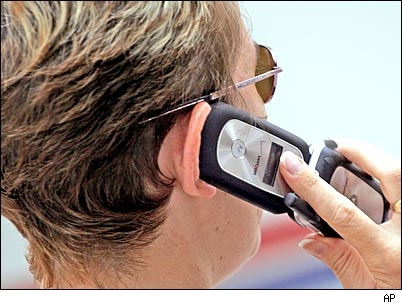
The state of Maine and the city of San Francisco are considering requiring warning labels for cell phones.

Perhaps some warning labels are in order. After all, few things are more annoying than people SPEAKING AS LOUDLY AS POSSIBLE INTO THEIR PHONE ABOUT WHAT’S FOR DINNER when a normal tone of voice will do.

But these warning labels have nothing to do with letting people know that their phones can make them look like jackasses.

No, the labels warn the credulous that their phones emit electromagnetic radiation. Otherwise known as light waves. Some people believe that this causes brain cancer.

Brain atrophy, maybe. But cancer? Most studies have found no correlation, let alone causation.

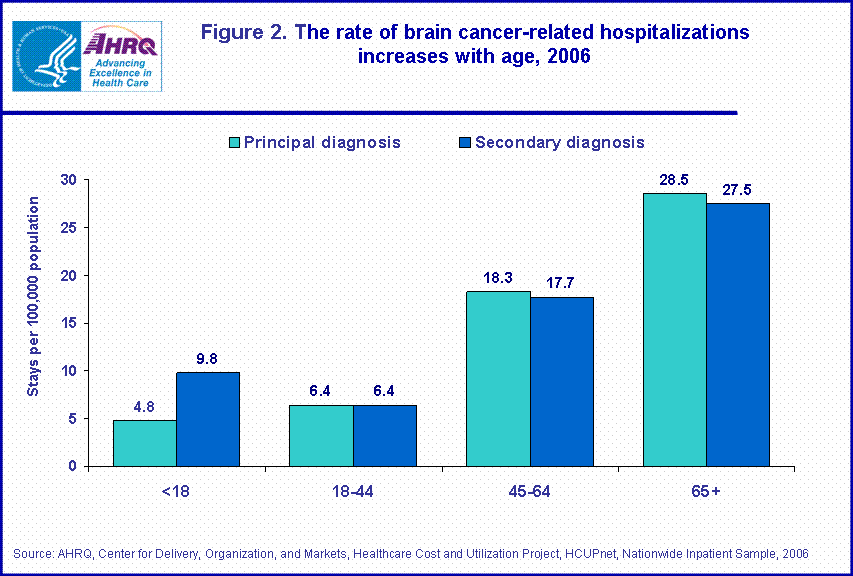
Something else to consider: the demographic group far and away most prone to brain cancer is also far and away the least likely to use cell phones – the elderly.

Hmm.

Regulation of the Day 94: Plastic Shopping Bags

Retailers have traditionally provided free shopping bags to their customers as a courtesy. Washington, DC’s city government – known for being less than courteous – is now requiring stores to charge customers five cents for each plastic bag they use at checkout.

The tax is environmentally motivated. Since the city is acting so urgently on shopping bags, that implies that they must be the most urgent environmental threat facing DC. If that’s the case, then DC must be a veritable ecological paradise, or else its priorities are misplaced. One or the other must be true.

There were 84 unsolved murders in DC in 2009, by the way.

In lieu of plastic bags, the city is urging people to buy reusable cloth bags. But those have an environmental footprint nearly 100 times larger than a plastic bag, according to Sierra Club data. They have to be used many, many times before they cause any savings. They are also a haven for bacteria if not regularly washed. And washing them adds to their footprint.

Washington, DC has a lot of problems. Expensive but inferior schools, crime, violence, high taxes and spending – the list is long. The epidemic of plastic bags littering the streets is right at the bottom of that list. It should be prioritized accordingly. The regressive plastic bag tax should be repealed.

Regulation of the Day 77: Banning Toys in Happy Meals

Roberto Zabrido, a government official in Spain, is “adamant that the Happy Meal and its ilk pose a risk.”

The solution? Legislation that “would ban restaurants and food manufacturers from including toys and prizes with their products.”

If Happy Meals – Happy Meals! – are Spain’s most pressing national problem, then that country is either the most trouble-free place on Earth, or else busybodies such as Mr. Zabrido have too much money and power. My bet is on the latter.

(Hat tip: Jacob Grier)