Basic Irony

From yesterday’s WSJ.com Political Diary (subscription required):

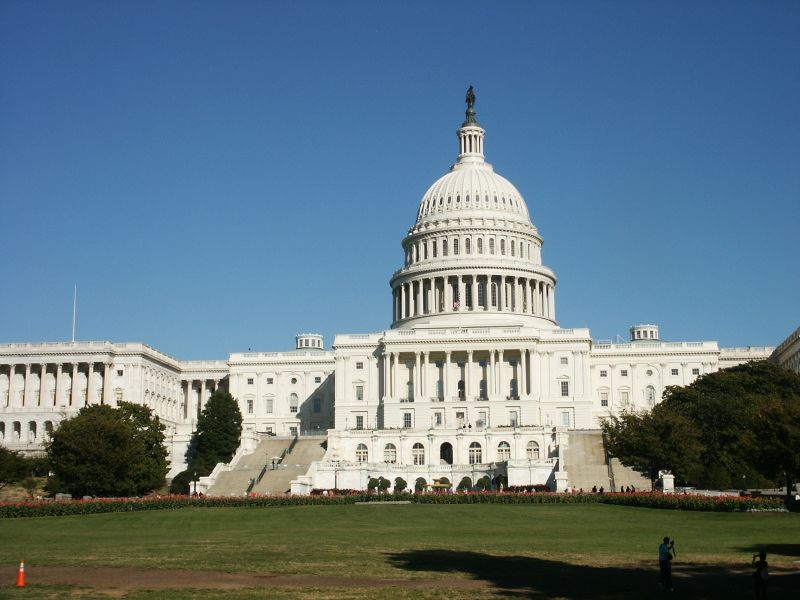
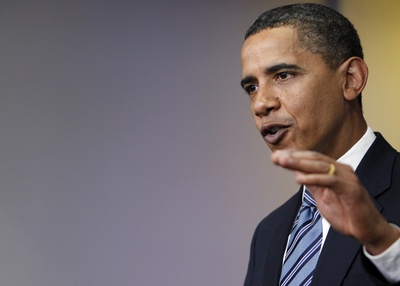
The same day President Obama called for another $50 billion to $100 billion stimulus plan (and concomitant increase in the deficit), he also appointed the chairmen of his Deficit Reduction Commission. It says a lot about Washington that almost no one got the irony of those paired announcements.

Indeed it does. Fortunately, the Commission’s job is pretty simple. There are only two ways to cut the deficit. One is to cut spending. The other is to raise taxes. Cutting spending is the right thing to do. But it is also politically difficult. There is a lot of fat to trim from the budget. But government has little incentive to put itself on a diet.

That’s why the Commission is expected to recommend a tax increase, probably in the form of a VAT. A prestigious bipartisan Commission can provide the political cover that Congress and the administration need to avoid the embarrassment of backtracking on their policies.

Wayne Crews and I recently warned why a VAT is a bad idea in Investors’ Business Daily. Hopefully some of the arguments will find themselves into the debate.
Russ Roberts Interview

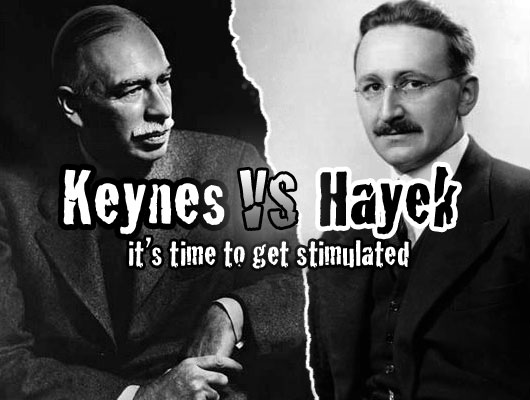
PJTV has an 11-minute interview with Russ Roberts. It’s mainly about the making of the Keynes vs. Hayek rap video. But he also has some wise words to say about the strained relationship between economists and the public. Popularization is both important and neglected.

Worth watching, even if you’re not an economist. Heck, especially if you’re not an economist.

Regulation of the Day 115: Pancake Races

Pancake races are a Lenten tradition that date as far back as the 15th century. Contestants navigate a course as quickly as they can while holding a frying pan and flipping a delicious pancake a certain number of times.

The races are most popular in Britain. But other countries hold them, too. For over fifty years, the town of Liberal, Kansas has competed against Olney in England by setting up standardized courses in each town and comparing racing times. The Americans, despite being relatively new to the sport, actually have the all-time edge on the Brits, 33-25.

The secret to winning is to cross the finish line before your opponents do. That usually means running. The problem is that sometimes, running violates British health and safety regulations.

An official warned the racers before the St. Albans pancake race:

“Due to the wet weather conditions and health and safety regulations, in this year’s race, there will be no running allowed. Only walking is permitted. Any team that runs will be disqualified.

“It is a genuine health and safety concern. People fall over in the dry, they will certainly fall over in the wet.”

Three teams defied orders and pursued excellence as fast as they could. They were disqualified.

(Hat tip: Jonathan Moore)

Disappointing, but Not Surprising

Headline from The Hill – “Pay-go gets passed, then it gets bypassed

Pay-go budgeting rules — that any spending increases must be offset with spending cuts or tax hikes elsewhere — have loopholes big enough to drive a truck through. One of them, the emergency exemption, is invoked as early as the second sentence of the article.

In theory, pay-go is supposed to be a way to slow the growth of government. But it’s all for show. Nobody really means it. Just invoke the emergency exemption. Then spend all you like. Appearances matter, especially in Washington. But they should not be confused with reality. And reality is that Congress is going to spend and spend some more, no matter what budgeting rules are in place.

Shame on them for trying to make people think otherwise.

Do Incumbents Deserve Reelection?

A stunning 8 percent of Americans believe members of Congress should be reelected, a staggering indictment of the legislative branch as Democrats prepare to defend their majority in the midterm elections.”

Not sure what those 8 percent are thinking. They probably aren’t.

Of course, talk is cheap. The very same people who so loudly disapprove of Congress have re-elected 94 percent of its incumbents the last two election cycles. The last time it was as low as 90 percent was 1992.

People do seem to want change. They just rarely vote for it.

Politics 101: Machiavelli and Public Choice

When Niccolo Machiavelli died in 1527, Washington, DC was still more than two and a half centuries away from being founded. But he understood perfectly how that dismal city would work, as Bertrand Russell reminds:

“In the absence of any guiding principle, politics becomes a naked struggle for power; The Prince give shrewd advice as to how to play this game successfully.”

-Bertrand Russell, History of Western Philosophy, xxii-xxiii.

Machiavelli was, in many ways, the first modern public choice theorist. Had he lived in a post-Adam Smith world, he would have made a fine economist. A politician’s guiding principle is usually not ideology. It is to remain in power. So they behave accordingly. The first lesson of economics is that people respond to incentives. If someone’s incentive is to get re-elected, they will behave in a way conducive to achieving that goal. Morality and the greater good compete for a distant second.

Inside North Korea

The satellite image above  is one of the most eloquent arguments for capitalism and freedom that I have ever seen. Liberalism is light. Literally. And just as literally, its rejection means darkness. Some pictures say far more than a thousand words.

Which brings me to an online documentary on North Korea over at VBS.tv that I just finished watching. It’s about an hour long in all. Not only did these guys actually travel to Pyongyang, which is difficult enough, they managed to film their experience on the sly. And despite being threatened with jail more than once, they brought back a lot of footage. To my western eyes, this was quite a sight to see.

The host has a bit of the stereotypical, boorish, Ugly American in him. Not sure he makes the best ambassador. But it took a lot of guts to do what he did. If you want some first-hand footage of life in a totalitarian state, this is about as close as you can get. Worth watching.

Regulation of the Day 114: Unlicensed Fruit Candy

The Chicago Tribune has a jaw-dropping story of regulators gone wild:

Department of Health inspectors seized, slashed open and poured bleach over thousands of dollars of local peaches, pears, raspberry and plum purees owned by pastry chef Flora Lazar… Inspectors cited no health problems with any of the food.

And that’s just the beginning. Read the whole thing. This is a scandal. Ms. Lazar is out of business for six months and has lost about $6,000. There is no evidence of harm. This is no way to treat a small business. Especially during a recession.

(Hat tip: the ever-resourceful Brian McGraw)

Strange Laws in Alabama

Jacob Grier has a Regulation of the Day of his own about some bizarre beer laws in Alabama. Take a look.

What Do You Do?

In Washington, the first question people ask you is usually, “what do you do?”

“I’m an economist,” I answer. “I work at a think tank.”

“Oh,” the usual response goes. Followed by an immediate change of subject.

So I’m not a hit on the DC cocktail party circuit. But this quotation made me swell with pride when I read it:

“Economics is not a dry subject. It is not a dismal subject. It is not about statistics. It is about human life. It is about the ideas that motivate human beings. It is about how men act from birth until death. It is about the most important and interesting drama of all–human action”

-Percy Greaves

Hat tip: the Foundation for Economic Education, which did much to introduce me to the economic way of thinking when I was younger, and continues to educate and inspire me today.