Principles of Law: Simplicity Is Beautiful

Countries across the world have turned to democracy in recent decades. There are still a few monarchies here and there, and plenty of dictatorships. Cuba and North Korea are even keeping the last dying embers of communism alight. But more and more, democracy is seen as the way to go.

One of the first things a new democracy needs is a Constitution. One of a Constitution’s jobs is to establish the government’s structure – how the executive, legislative, and judicial branches are composed, what their powers are (and aren’t!), and a few rules of procedure.

The U.S. Constitution is a model of simplicity. You can read the whole thing in under a half hour. And that is the secret of its success. It doesn’t need to outline the specifics of agricultural or trade policy. That’s Congress’ job.

The EU’s de facto Constitution runs well over 200 pages. Where the U.S. Constitution paints with a broad brush, the European Union fills in every last detail. Most countries, including the U.S., are turning to this top-down model and rejecting the Constitution’s more bottom-up approach.

The thinking goes, “How can something so simple be effective when the modern world is such a complicated place? The 21st century is very different from the 18th century.”

Good question. The answer is that those extra layers of complexity are precisely why a bottom-up approach is more important than ever. Top-down governance is hard enough even in a simple agrarian economy. It is literally impossible in a world like ours. Too many variables. The more rules there are, the easier they are to subvert.

Transitioning democratic countries regularly used the U.S. Constitution as a model when drafting their own Constitutions. But that’s happening less and less, according to a thought-provoking Investor’s Business Daily editorial.

The reason is a shift in the intellectual climate. Negative rights are out of fashion now. Positive rights are all the rage. Negative rights are the kind that pervade the U.S. Constitution: don’t hit other people, don’t take their stuff, don’t break your contracts. Don’t, don’t don’t.

Positive rights are much less dour. And they are all over most new Constitutions. You have the right to health care, or a job with six weeks vacation, and so on. People think of new positive rights all the time, too. There is a push in some countries to give people the legal right to Internet access. Sounds great. Who could be against that?

I can. Positive rights do sound nice, but in practice they are profoundly illiberal. That is because positive rights often contradict each other. If I break a bone and my doctor has a legal right to be on vacation, one of us has to have our positive rights violated. That means someone has to decide. Someone with a lot of power. Life and death, in some cases. A government with the power to make those kinds of decisions is very powerful indeed. Positive rights systems require large, powerful governments. Rights violations are both frequent and arbitrary.

Negative rights have no such conflicts. That’s a big reason why the U.S. Constitution is so simply constructed. In fact, most of it isn’t even about granting this power or that to government. Most of that is contained in Article I, section 8. The majority of the document is about placing strict limits on those powers. When the people are left alone, they largely prosper. Let them build from the bottom up. The view from the top on down is too distant and blurry to catch the necessary details.

In the law, as in so many other areas, simplicity is beautiful. As democracy continues to march across the globe, newly forming governments should keep that in mind.

CEI Podcast for February 9, 2012: The Immigration Tariff

Have a listen here.

Immigration law is second in complexity only to the income tax. In a new CEI paper, Policy Analyst Alex Nowrasteh proposes scrapping the whole thing and replacing it with a tariff. This is a much more humane approach to immigration, and in many cases will be less expensive for immigrants than the lawyers and fees they currently have to pay while they live in legal limbo. A tariff would also reduce illegal immigration by eliminating black markets. Money that currently goes to illegal smugglers and human traffickers could instead go to the U.S. Treasury. The idea can appeal to both the left and the right.

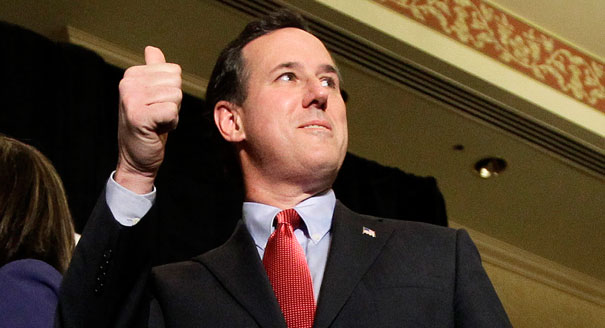
A Libertarian Case for Santorum?

Rick Santorum is to libertarianism as oil is to water. They just don’t mix. But the ever-clever John Samples sees one reason why libertarians shouldn’t be too upset if he wins the GOP nomination:

I think he would drive more secular and independent voters away from the GOP ticket. A ten-point Republican loss in a year when economic weakness suggested a close race would be a political disaster not just for the candidate and his party but also for the ideas they embody. Rick Santorum could be the George McGovern of his party.

Such a disaster might open the door for a different kind of GOP along lines indicated earlier, a party of free markets, moral pluralism, and realism in foreign affairs.

I’m not about to become a Santorum supporter, but John makes a good point. A big Santorum loss would do a lot to marginalize neoconservatives and the religious right within the GOP. This can only be a good thing.

This Blog is Part of the 90 Percent

Congress’ approval rating is a record-low 10 percent, according to Gallup.

On the Radio – Regulation

Sometime between 4:00 and 5:00 EST, I’ll appear on the Business Talk Radio Network’s Mike Siegel Show. We’ll be talking about the size and scope of the regulatory state. I believe you can listen live online here.

Halftime in America

A bit of bailout humor at Clint Eastwood’s expense. Click here if the embed doesn’t work.

Super Bowl Wrap-Up

Congratulations to all you Giants fans out there. This recap video from Taiwan-based NMA.tv is too funny not to share, though it isn’t kind to either the Patriots or Madonna. Click here if the embed doesn’t work.

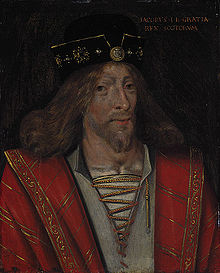
King James I and Sporting Regulations

Regulators usually use a light touch on the world of sport. There is the occasional grandstanding Congressional hearing about steroids, and the odd murmur of antitrust violations. But that’s usually the extent of it. Things were different in medieval Scotland:

James I legislated in 1428 in an attempt to stop people from playing football because it distracted them from archery practice[.]

-Allan Massie, The Royal Stuarts: A History of the Family that Shaped Britain location 281 of the Kindle edition.

Business before pleasure, gentlemen. Or else.

Worth noting: this is James I of Scotland, not the King James who commissioned the famous Bible translation. That man was King James I of England, and simultaneously King James VI of Scotland. Nearly two centuries separated them, though both were members of the Stuart royal family.

Spirit Airlines WSJ Interview

I can’t figure out how to embed the video in this post, so here’s the link to that WSJ interview about Spirit Airlines’ “Department of Transportation Unintended Consequences Fee.”

Larry Sabato was the guest on the segment before mine. He’s a tough act to follow; please feel free to refrain from telling me how I did.

Aaron Rodgers Wins 2011 MVP

There are 50 voters for the NFL’s MVP award. 48 of them chose Aaron Rodgers. He is the first Packer to win the award since Brett Favre won the last of his three consecutive MVPs. He set team records for touchdown passes (45), yards (4643), and set the NFL record for passer rating with 122.5, eclipsing Peyton Manning’s record of 121.1. Rodgers was nothing if not deserving.

The award caps an amazing year for Wisconsin sports. The Packers and Brewers are rarely competitive at the same time, but this year they had eerily similar seasons. Both teams set franchise records for regular season victories, with 15 and 96. Both teams had a league MVP, with Ryan Braun winning the NL MVP back in November. Braun and Rodgers even look a little alike, though the Californians’ resemblance does have precedent; Brett Favre and former Brewer Geoff Jenkins were famously hard to tell apart.

Neither team could duplicate its regular season success in the playoffs. The Brewers lost to the eventual world champion St. Louis Cardinals. The Packers fell to the New York Giants, who will play in today’s Super Bowl. Should they beat the Patriots, that would be one more piece of symmetry.

Whichever way the Super Bowl goes, the last year or so has been  a joy for fans to follow. It all started with Aaron Rodgers winning a different, more meaningful MVP award — the Super Bowl MVP. Now he has a regular season award to put next to it on his shelf. May he win several more. Of each.