Category Archives: Regulation of the Day

Regulation of the Day 154: Potatoes in School Lunches

The federal government is considering limiting, or even banning potatoes from school lunches. Officials fear the tasty tubers are causing childhood obesity. They would rather children eat more leafy greens instead.

The children are not pleased. One child told the Associated Press, “That would be so not cool. I love tater tots.”

Critics of the nanny state’s slow but steady mission creep often ask, “What’s next, a law saying eat your vegetables?” Well, apparently it is next. Freedom advocates need to find a new reductio ad absurdum.

In fact, the USDA already has a temporary regulation in place disallowing food stamps to be used to buy potatoes. The rule may be made permanent next year. Poverty has more important indignities than losing some choice of what you buy at the grocery store. But what a way to treat adults.

Eat your vegetables. Or else. They’re good for you.

Regulation of the Day 153: Pentagon Cybersecurity

One of the things government regulates is itself. And it sure isn’t shy about it. The military’s cybersecurity experts are governed by 193 policy documents. They are all conveniently listed in a chart. It is two feet long.

The U.S. is currently fighting two land wars in Asia. Keeping military computer networks secure is literally a matter of life and death. Let us not forget for a second how important the Pentagon cybersecurity team’s work is for keeping troops safe. But Wired makes the point that too much regulation just might hinder security more than it helps:

Obviously, operating networks for the millions of people who make up the world’s largest military is no simple task: The financial, legal, organizational and technical issues are nothing short of staggering. On the other hand, the hackers trying to break into those networks don’t have to check 193 different policy documents before they launch their malware. It’s hard not to think that gives the attackers an edge.

Regulation of the Day 152: Locking Your Car Door

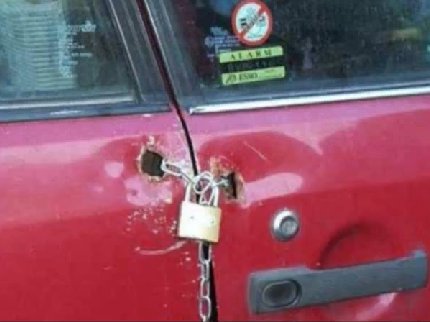
Most car thefts happen to unlocked cars. The government of Bucks County, Pennsylvania, thinks it can help. It plans to issue $25 fines to people who forget to lock their cars. First-time violators get off with a warning.

Bear in mind that enforcing this policy involves police systematically trying to break into peoples’ cars. First, that’s inherently creepy. Second, that’s a significant privacy violation. It’s also a Fourth Amendment issue. If an officer stumbles upon something illegal and decides to prosecute, he has performed a warrantless search.

It’s also a safety issue. If a thief decides to play dress-up and look like an officer, he could very easily steal valuables from parked cars in broad daylight and no one would be the wiser.

One more problem to add to the pile is corruption. A legitimate officer might be tempted to give himself a quick pay raise at a forgetful car owner’s expense. Policing for profit is all too common.

Better for the government to stay out of this one.

Regulation of the Day 151: Water Heaters

The EPA recommends setting your water heater to no higher than 120 degrees Fahrenheit. But OSHA recommends setting it to 140 degrees Fahrenheit. Why the difference?

“If you turn your water heater down to 120 degrees Fahrenheit; you will cut your water-heating costs by 6-10 percent,” says EPA. Doing so also uses less energy.

But 120 degrees is not hot enough to kill the Legionella pneumophila bacteria. Legionnaire’s disease causes both flu-like and pneumonia-like symptoms. The disease is most often caught by inhaling the spiral-shaped bacteria via water mist, such as in the shower or near a lake or stream. That’s why OSHA recommends setting your water heater hot enough to kill the bacterium – 140 degrees.

Legionnaire’s disease got its name when the Pennsylvania American Legion celebrated America’s 1976 bicentennial at a hotel with contaminated water. More than 200 people were treated for pneumonia. 34 died. The newly discovered Legionella pneumophila bacteria turned out to be the cause. That and other bacteria are why OSHA recommends 140 degrees.

EPA and OSHA are free to publish all the recommendations they want. But hopefully they won’t impose one standard or other on the entire country. One is expensive; the other would kill people.

Fortunately, you are still free to set your water heater how you choose. If you place a high value on saving money and energy, and you have your health, 120 degrees is the way to go. But if you are elderly or infirm, or you have children in your household, 140 degrees is probably better for you. When it comes to your water heater, you know best. Hopefully OSHA and EPA will continue to recognize that.

(via Sam Kazman)

Regulation of the Day 150: Toy Guns

Samuel Burgos is 8 years old. One day he brought a toy gun to school in his backpack. That got him expelled from his Miami school for two years. Toy guns violate his school district’s zero-tolerance policy for weapons.

The district offered to place Sam in a correctional school; his parents opted to home-school him instead. His father told the local NBC affiliate, “I can’t sit here and allow them to send my kid to a school where students have committed actual crimes,” Burgos said. “He hasn’t committed a crime.”

Sam misses his friends. And he may have to repeat the second grade. All because common sense has gone missing from Broward County’s schools. That’s what makes the school board’s response especially galling:

The school board says it’s common sense to know that this kind of item can’t be allowed on school campus and that responsibility also falls on parents to know what their children have in their backpacks.

The Burgos family has suffered enough. Toy guns are not weapons. They are toys. The school board should exercise a bit of common sense and reinstate Sam immediately.

Regulation of the Day Update: Ladies’ Night Bar Specials

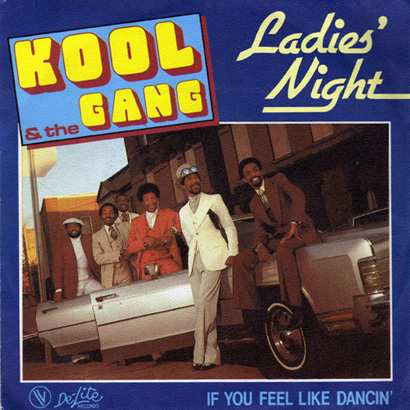
As noted previously, ladies’ night bar specials are illegal in Minnesota. The state’s Department of Human Rights says they are unfair gender discrimination. But they’re still legal in New York.

That upsets attorney Roy Den Hollander. He thinks ladies’ nights are unconstitutional. So he sued several New York bars. The Second Circuit Court of Appeals wisely threw out his case. Even more wisely, they chose not to take him seriously:

The court, with evident amusement, said it must rule against Den Hollander even though “without action on our part, (he) paints a picture of a bleak future, where ‘none other than what’s left of the Wall Street moguls’ will be able to afford to attend nightclubs.”

It’s not often that New Yorkers show more common sense than Midwesterners. Minnesota’s solons should take heed.

Regulation of the Day 149: Sliced Bagels

In New York State, sliced bagels cost 8 cents more than unsliced bagels. It’s not because they’re more expensive. The marginal cost in labor and equipment is practically nil. Nor is it because bagel shop owners are greedy. Shops in Connecticut and New Jersey don’t charge more for sliced bagels. And there’s nothing about New York consumers that makes them more susceptible to predatory bagel pricing. The reason is government.

Albany’s legislators are in quite the fiscal mess right now. Short of cutting spending, they’re trying everything they can to plug their $8.5 billion budget deficit. The Wall Street Journal explains how this affects bagels:

“In New York, the sale of whole bagels isn’t subject to sales tax. But the tax does apply to “sliced or prepared bagels (with cream cheese or other toppings),” according to the state Department of Taxation and Finance. And if the bagel is eaten in the store, even if it’s never been touched by a knife, it’s also taxed.”

So there you have it. Bruegger’s, a New York bagel chain, put signs in its stores telling customers that “We apologize for this change and share in your frustration on this additional tax.”

Bruegger’s shouldn’t be apologizing to its customers. The state legislature should be apologizing to theirs. If they had been able to keep state spending in check, there would be no need for the tax.

(Via Reason’s Katherine Mangu-Ward)

Regulation of the Day 148: Cutting Grass in Cemeteries

In the world of regulation, no good deed goes unpunished. In the UK, an ex-soldier named Derek Evans decided to mow the lawn at the cemetery where his mother is buried. At first, he had intended to tidy up only her grave. But out of kindness, he ended up mowing the entire cemetery.

Regulators quickly put a stop to Mr. Evans’ good deeds. British blog Big Brother Watch reports:

The jobsworths at the Council have told him that as he was without public liability insurance he was banned from carrying on – despite the fact, as Mr Evans points out in stark terms, “the only people I was mowing near are six feet under.”

… There’s just no common sense to decisions like this: they’re so stupid you have to be an “expert” to reach them.

(Via Iain Murray)

Regulation of the Day 147: Breathing Fire

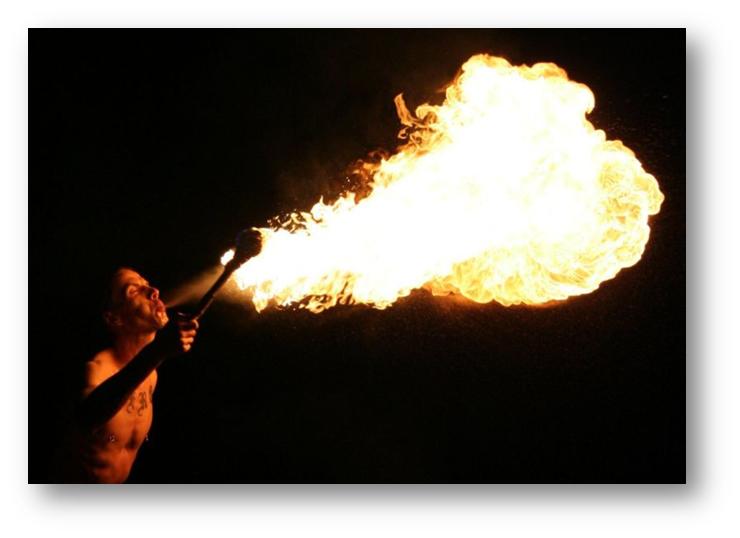
Jimmy’s Old Town Tavern in Herndon, Virginia, has an unusual attraction: fire-breathing bartenders. That tradition may be coming to an end, according to the Washington Examiner:

Fairfax County fire investigators charged Tegee Rogers, 33, of Herndon, and Justin Fedorchak, 39, of Manassas, with manufacturing an explosive device, setting a fire capable of spreading, and burning or destroying a meeting house. They also were charged with several state fire code misdemeanors.

Both men are looking at as much as 45 years in prison. Fire marshals gave them no warning before pressing criminal charges. They have been breathing fire at Jimmy’s for over a decade without previous incident. Both men were surprised; given that Jimmy’s openly advertises its fire-breathing tradition, fire marshals have had plenty of chances to tell them to stop.

Owner Jimmy Cirrito is sticking up for his employees. He told the Examiner:

“But I don’t think we’ve done anything wrong,” he said. “There’s a lot of fire in restaurants. I’ve been served flaming desserts, I’ve roasted marshmallows on tables, I’ve seen 75 candles and sparklers on cakes, and I’ve seen bartenders perform the tricks coast-to-coast and no one’s been arrested.”

(Via Tim Carney)

Regulation of the Day 146: Airplane Child Seats

If you and your small child are flying away on a vacation, most airlines will let the child fly for free. If the child sits in your lap, you don’t have to pay for a second seat. But the National Transportation Safety Board doesn’t think that is safe.  Severe turbulence and rough landings kill a lap-child or two every decade.

That’s why NTSB wants to require all children to sit separately, comfortably ensconced in the child safety seats they use when riding in a car.

The NTSB’s intentions are laudable. They’re trying to make people safer. But intentions are not results. And this rule’s results would be exactly opposite its intentions. It would kill far more people than it would save.

That’s because making parents pay for an extra ticket raises the cost of flying. Many families will choose to drive instead. And remember, driving is much more dangerous than flying. According to CEI’s Sam Kazman, studies show that the extra driving in lieu of flying would kill about 50 people per decade, plus thousands more injuries.

Throwing away 50 lives to save one or two lives is a bad deal. It is literally death by regulation. That’s also why the FAA has repeatedly refused NTSB’s periodic demands to make parents pay more to fly. May they stand firm again.

See also today’s press release from Sam Kazman.