Category Archives: Political Animals

Partisanship Pays

Rep. Joe Wilson (R-SC) yelled out “you lie!” at President Obama while he was presiding over a joint session of Congress. His outburst has been good for $2.7 million in campaign contributions over the last two months.

Rep. Alan Grayson (D-FL) raised $114,108 in one day after labeling the other team’s health care proposals as a way to “die quickly.”

Such hyper-partisanship is regrettable. But there is a reason politicians indulge in it — voters like it. Why else would it be so good for their campaign war chests?

Sometimes I think the saddest part of democracy is that the people get what they want.

Robert Reich Gets It

robert_reich

Some of the consequences of increasing government’s role in health care are easy to predict. One is that cutting costs requires cutting the amount of care. That means rationing. People judged not deserving of care would be denied it.

Another is that if government uses its increased bargaining power to lower drug prices, there will be less money for R&D. That means less innovation. That could well mean the end of increasing life expectancies.

Some people see these consequences and oppose more government in health care (I refuse to call President Obama and Congress’ proposal a reform; that word implies improvement). Others see those same consequences as reasons for supporting proposed legislation.

Today’s issue of OpinionJournal’s Political Diary (requires paid subscription) shows that Robert Reich, who supports government-run health care, realizes its effects on rationing and innovation, supports it anyway, and said so in a public speech at UC Berkeley in 2007.

Mr. Reich told the Berkeley youngsters: “You — particularly you young people, particularly you young healthy people — you’re going to have to pay more. And by the way, if you’re very old, we’re not going to give you all that technology and all those drugs for the last couple of years of your life to keep you maybe going for another couple of months. It’s too expensive . . . so we’re going to let you die'”

Reich goes on:

“I’m going to use the bargaining leverage of the federal government in terms of Medicare, Medicaid — we already have a lot of bargaining leverage — to force drug companies and insurance companies and medical suppliers to reduce their costs. What that means, less innovation and that means less new products and less new drugs on the market which means you are probably not going to live much longer than your parents.”

Whether you support more government in health care or not is up to you. But it is not disputable that those consequences exist. They should be factored into your opinion. Supporters of proposed legislation should acknowledge the effects of their ideas. Instead, they usually run away from them.

Kudos to Robert Reich for the intellectual honesty he displayed in his speech. More, please.

Regulation of the Day 60: Hybrid Car Noise

hybrid-3
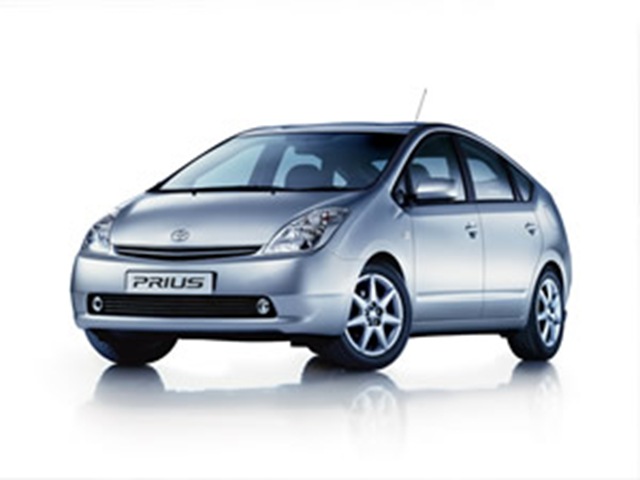
One advantage of hybrid cars is that they are quiet. Too quiet, some would say. Blind pedestrians may not hear a hybrid coming around the corner until it’s too late.

Car companies are responding to the concern by voluntarily outfitting their hybrid models with fake digital vrooms so pedestrians can hear them as well as conventional cars. There’s a reason car companies were so quick to respond to their customer’s wishes: it’s good for business. One more safety feature is one more selling point to entice potential customers.

Regulators, behind the curve as usual, have introduced the Pedestrian Safety Enhancement Act of 2009. If passed, it would make fake vrooms a federal matter. This policy of making mandatory what companies are doing anyway probably originated with the Department of Redundancy Department.

Almost True

Steve Wynn raised a kerfuffle when he recently said that “Government has never increased the standard of living of one single human being in civilization’s history.”

This isn’t quite true. Former Rep. William Jefferson has at least 90,000 reasons to disagree.

Obama Wants to Extend PATRIOT Act

People are often surprised to hear how similar President Obama’s policies are to President Bush’s. They shouldn’t be. One may be a Republican and the other a Democrat, but make no mistake. Bush and Obama are two peas in a pod.

-Bush signed a $700 billion bank bailout bill. Obama continued the policy. And he extended it to other sectors, such as the automobile industry.

-Bush tried fiscal stimulus twice while in power. With some help from the Bush team, Obama oversaw the largest fiscal stimulus bill in history. There is occasional talk of another.

-Bush started two land wars in Asia. Obama could end them. Instead, he is committing more troops to Afghanistan.

-Bush oversaw Medicare part D, the largest expansion of government’s role in health care since 1965. Obama also would like to expand government’s health care presence.

-And now, we have the PATRIOT Act. The bill was perhaps the largest expansion of executive power in seventy years, and the Bush administration’s signature legislation. Now that Obama has inherited all these cool powers, turns out he likes the PATRIOT Act, too. So he wants to extend some of its expiring provisions.

Predictable. Still disappointing.

Moving On

As so often happens, Gene Healy hits a home run.

On the anniversary of 9/11, what’s clear is that, despite the cliche, September 11th didn’t “change everything.” In the wake of the attacks, various pundits proclaimed “the end of the age of irony” and the dawning of a new era of national unity in the service of government crusades at home and abroad. Eight years later, Americans go about their lives, waiting in restaurant lines, visiting our ”great destination spots,” enjoying themselves free from fear — with our patriotism undiminished for all that. And when we turn to politics, we’re still contentious, fractious, wonderfully irreverent toward politicians, and increasingly skeptical toward their grand plans. In other words, post-9/11 America looks a lot like pre-9/11 America. That’s something to be thankful for on the anniversary of a grim day.

To Heckle the President, or Not?

Over at CNN, John Feehery argues that it’s better not to heckle. I agree, but for different reasons.

Feehery’s line of thinking is that the office deserves respect. Holding one’s tongue is a matter of decorum. “The president is the commander-in-chief, the leader of the country, and in many unspoken ways treated as a king.”

Technically, the president is commander-in-chief of the armed forces, and of nothing else. The rest of his job consists of humbly executing the laws given him by the Constitution and the legislature. That’s why it’s called the executive branch.

Feehery, a partisan Republican, here manages to out-conservative Edmund Burke. Royal rhetoric pervades his piece – evidence of how far the presidency has strayed from its intended purpose. The cult of the presidency endures.

Don Boudreaux’s approach to the presidency is more realistic, if less romantic:

[T]he notion that the U.S. presidency is lofty or respectable in any ethically significant sense is ludicrous. As Saul Bellow said about politicians, “they’re a bunch of yo-yos. The presidency is now a cross between a popularity contest and a high school debate, with an encyclopedia of clichés the first prize.”

Hence the real reason to let the president have his say without being heckling him: politicians make themselves look bad far more effectively than any heckler could. He doesn’t need the help. Just take his ideas seriously:

-We can save money by spending $900,000,000,000.

-We can contain costs by isolating people from the costs they incur.

-The Medicare/Medicaid model works. Expand it.

Presidents are unremarkable creatures. Borne of much talent for campaigning and little for governing, more love for power than for principle, and the unyielding belief that they know best, presidents have the worst kind of hubris. This is perhaps their only regal trait.

President Bush thought he could win two simultaneous land wars in Asia, and use military might to build a new nation in Iraq. Hubris.

President Obama thinks he can run the auto, financial, and health care industries at the same time, all while controlling global climate patterns. Hubris.

Feehery is right that President Obama should not have been heckled. If not for the sheer harm his office causes, it would not merit the attention.

A Riddle

Rep. Joe Wilson is under fire for yelling “you lie!” at President Obama during his health care speech last night.

Now, all politicians lie. It is their nature. So Rep. Wilson’s assertion, tactless as it was, is technically correct.

But Rep. Wilson is a politician too, and therefore a teller of lies. So, when calling another man a liar, could he have been lying himself?

The mind boggles.

Dog Bites Man

I am shocked — shocked — that $6 million of stimulus money went to a company accused of “overbilling, bribery of union officials and other alleged improprieties on several large New York projects.” Such lapses in oversight never happen with government spending projects!

The Starry-Eyed 37 Percent

Some time ago I said that President Bush’s chronically low approval ratings were a good thing. Evidence of widespread skepticism about politicians. Or at least one of them.

This is why I welcome today’s news that 52% of Americans — a clear majority — have an unfavorable view of Congress. There is still much to do, though. Even after enduring two simultaneous land wars in Asia, record spending, record deficits, a housing crisis primarily of congress’ creation, bank bailouts, cap-and-trade, and cash for clunkers, 37% of Americans still retain a favorable view of Congress.

Jeez, what’s it take? Maybe health care?