
Reid: Republicans ‘making love’ to Wall Street (Politico)
Goldman Sachs was top Obama donor (CNN)
Truth is, both parties are about equally corrupt. Sen. Reid is right, but it’s not just the GOP’s problem.

Reid: Republicans ‘making love’ to Wall Street (Politico)
Goldman Sachs was top Obama donor (CNN)
Truth is, both parties are about equally corrupt. Sen. Reid is right, but it’s not just the GOP’s problem.
Comments Off on Dueling Headlines
Posted in Political Animals, The Partisan Mind
I have mixed feelings about the tea party movement. On one hand, it is wonderful that there is a large and vocal constituency agitating for lower taxes and lower spending. And while many tea partiers are appropriately wary of the Republican party, they certainly seem to skew conservative. And conservatives are no friends of limited government.
John Samples from Cato nails my sentiments exactly in the video below. Here is a list of his main points:
1. Republicans aren’t always your friends.
2. Some tea partiers like big government.
3. Democrats aren’t always your enemies.
4. Smaller government demands restraint abroad.
5. Leave social issues to the states.
Comments Off on Advice to Tea Partiers
Posted in Philosophy, Political Animals
Tagged cato, cato institute, conservatives, democrats, john samples, republicans, tea partiers, tea parties, tea party

The lede to this Denver Post article says it all:
RIDGWAY — Residents of this Old West- meets-New Age town can be fined if their fences are too high, they have too many chickens, their dogs aren’t on leashes or their weeds are out of control.
Tom Hennessy would like to add not voting to that list.
There are three things wrong with Mr. Hennessy’s proposed regulation. One is that mandatory voting is a violation of personal freedom. To vote or not is an important choice that people make for themselves. It is not Mr. Hennessy’s place to make that decision for others. Many countries have tried mandatory voting over the years, most notably the Soviet Union.
The second thing wrong with mandatory voting is that it violates freedom of speech. Mr. Hennessy is aware that compelled speech is just as unconstitutional as censored speech. That’s why he proposes a “none of the above” option on ballots. But some people are sending a deliberate message when they choose not to vote. Mr. Hennessy would fine them for sending that message.
The third point is that, maybe, some people shouldn’t vote. If I step into a voting booth not knowing a thing about the candidates or the issues, I am essentially choosing at random. And choosing wrong means voting against everything I stand for.
Even worse, human beings have built-in cognitive biases that affect their voting habits. Economist Bryan Caplan’s book The Myth of the Rational Voter identifies anti-foreign bias, anti-market bias, make-work bias, and pessimistic bias, for starters.
Even relatively informed voters fall prey to these biases. They vote accordingly. The difference of opinion between economists and the general public on economic issues is startling. Nobody argues relativity with a physicist thinking they’ll win. But voters from both parties argue against the laws of economics every election, often in error but never in doubt.
Despite its flaws, democracy has worked tolerably well in this country for a long time. Perhaps the best part of our particular democracy is that people are free to choose their level of engagement with it. That should be your choice. Not Tom Hennessy’s.
(Full disclosure: CEI takes no stance on whether to vote, or for whom. Neither do I. I personally have not voted since 2002, but seriously consider it every year.)
Comments Off on Regulation of the Day 134: Not Voting
Posted in Economics, Elections, Political Animals, Public Choice, Regulation of the Day
Tagged bryan caplan, co, colorado, compelled speech, Elections, first amendment, Free Speech, freedom of speech, hennessy, mandatory voting, not voting, politics, regulation, Regulation of the Day, ridgway, tom hennessy, voting

Judges routinely defer to the will of the legislature and the executive. This is exactly opposite of their intended duty. A judge’s job is to be a thorn in the side of the other two branches; he is to be their conscience, if political animals can be said to have such a thing.
How about some more judicial activism, then? Most of the laws Congress passes are unconstitutional. A judge who defers to Congress isn’t doing his job. More activism on that front would be most welcome.
What a shame then, that progressives and conservatives so often misuse the word “activist” as a slur to describe any judge they disagree with, no matter how submissive that judge actually is. Their intellectual sloppiness has cost a useful word its true meaning.
Comments Off on A Quick Thought on Judicial Activism
Posted in Law, Political Animals
Tagged judge, judges, judicial activism, justice, law, legal, scotus, supreme court

March 31 was Cesar Chavez Day. It has been celebrated in California for some time. A few other states also recognize the holiday. But this year, for the first time, it was a national holiday.
The trouble is that nobody knew it at the time.
On April 2, the White House filed a Presidential Document declaring the holiday. It ran in the April 5 Federal Register, five days after the fact.
You’d think this would have been announced in advance. But Chavez remains a controversial figure. And the gesture will be seen by President Obama’s adversaries as yet more evidence of his capture by labor interests.
The president could rebut those charges directly. Instead he actively avoided confrontation, which is one way of admitting guilt.
Comments Off on Cesar Chavez Day – Interesting Timing
Posted in Political Animals
Tagged cesar chavez, cesar chavez day, labor, obama, president obama, unions

Bill Easterly does a good job of sticking up for Hayek.
Hayek could be quite different than Hayekians. That distinction needs to be made in this era of tea parties and the dominant liberal-vs.-conservative false dichotomy.
I think it’s great that some conservatives are boosting Hayek (I wish progressives would, too; they’d find a lot to like). It just appears they aren’t reading him very closely. Do bear that in mind before associating Hayek with conservatism.
Worth reading: Hayek’s essay, “Why I Am Not a Conservative.” Print it out. Read it closely. Mark up the margins with your notes and reactions. Agree or disagree, this essay rewards deep and careful thought. I’ve read it several times over the years, and every time I pick it up again I learn something new.
Comments Off on Hayek’s Uneasy Relationship with Conservatives
Posted in Economics, Great Thinkers, Philosophy, Political Animals
Tagged bill easterly, classical liberalism, conservatism, conservatives, hayek, liberalism, progressive, progressives, tea parties, tea party, william easterly

George Will has a good column today. He does a wonderful job contrasting Hayek’s philosophy of humility before complexity with the early 20th-century progressive mindset of planning and scientistic design. The framework applies surprisingly well to today’s health care debate, with President Obama playing the role of Woodrow Wilson. Very thought-provoking.
Comments Off on The Hayekian Approach to Health Care
Posted in Economics, Health Care, Philosophy, Political Animals
Tagged barack obama, george will, hayek, Health Care, health care debate, health care reform, humility, obama, president obama, progressive, progressivism, uncertainty, woodrow wilson

If you’re gay, you can’t donate blood. It’s illegal. The ban was put in place in 1983, during the early days of the HIV/AIDS scare. It may have made some sense in those days, when HIV testing was less than trustworthy. But it sure doesn’t now, with modern screening technology.
Obviously, keeping HIV-positive blood out of circulation is a wise policy goal. But most gay people don’t have HIV/AIDS. Rather than screening donors for sexual preference, they should be screened for blood-borne diseases. Straight people already are. And it works quite well. Current policies are keeping healthy, willing donors out of the system.
The outdated ban could soon be coming to an end. Sen. John Kerry and 15 of his colleagues, usually more prone to passing regulations than repealing them, are urging the FDA to repeal this one. You can read their letter here.
The one disconcerting thing about the letter is that every single one of the signees is Democratic. Not one Republican joined in. That could be because Sen. Kerry and the others deliberately excluded them for political reasons. But the GOP is famously behind the curve on gay rights issues. So maybe Republicans were asked, and said no. I don’t know.
Republicans should send their own letter supporting Sen. Kerry’s position. Enlarging the pool of eligible blood donors is an unabashed good. It’s a classic gay rights issue. It’s also a health issue. Blood would be more readily available for patients who need it. Economists would add that increasing the supply of blood will lower its price – a good thing in this age of rapidly rising health care costs.
Posted in Economics, Health Care, Political Animals, Regulation of the Day
Tagged aids, blood donors, democrats, donating blood, fda, gay, gay rights, Health Care, hiv, hiv/aids, John Kerry, kerry, republicans, senate, Senator John Kerry
From yesterday’s WSJ.com Political Diary (subscription required):
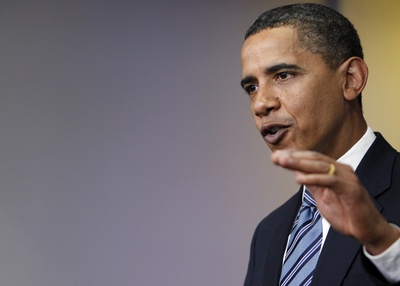
The same day President Obama called for another $50 billion to $100 billion stimulus plan (and concomitant increase in the deficit), he also appointed the chairmen of his Deficit Reduction Commission. It says a lot about Washington that almost no one got the irony of those paired announcements.
Indeed it does. Fortunately, the Commission’s job is pretty simple. There are only two ways to cut the deficit. One is to cut spending. The other is to raise taxes. Cutting spending is the right thing to do. But it is also politically difficult. There is a lot of fat to trim from the budget. But government has little incentive to put itself on a diet.
That’s why the Commission is expected to recommend a tax increase, probably in the form of a VAT. A prestigious bipartisan Commission can provide the political cover that Congress and the administration need to avoid the embarrassment of backtracking on their policies.
Wayne Crews and I recently warned why a VAT is a bad idea in Investors’ Business Daily. Hopefully some of the arguments will find themselves into the debate.
Comments Off on Basic Irony
Posted in Economics, Political Animals, Taxation
Tagged commission, cut spending, deficit, deficit commission, deficit reduction commission, obama, obama deficits, tax increase, taxes, value added tax, vat, washington

Headline from The Hill – “Pay-go gets passed, then it gets bypassed”
Pay-go budgeting rules — that any spending increases must be offset with spending cuts or tax hikes elsewhere — have loopholes big enough to drive a truck through. One of them, the emergency exemption, is invoked as early as the second sentence of the article.
In theory, pay-go is supposed to be a way to slow the growth of government. But it’s all for show. Nobody really means it. Just invoke the emergency exemption. Then spend all you like. Appearances matter, especially in Washington. But they should not be confused with reality. And reality is that Congress is going to spend and spend some more, no matter what budgeting rules are in place.
Shame on them for trying to make people think otherwise.
Comments Off on Disappointing, but Not Surprising
Posted in Economics, Political Animals, Spending
Tagged budget, federal budget, federal spending, government spending, pay-go, pay-go budgeting, pay-go rules, spending

 Inertia Wins!