Category Archives: Spending

The Washington Version of Spending Cuts

Here’s a letter I sent to Politico:

Editor, Politico:

The title of your November 10 article, “Panel leaders propose Social Security cuts,” is inaccurate. A cut is when spending goes down. Social Security spending will go up if Erskine Bowles and Alan Simpson’s recommendations are enacted. They would increase spending at a slower rate than under current policy. But it would still increase.

An increase is not a cut. Not even in Washington.

Ryan Young
Fellow in Regulatory Studies
Competitive Enterprise Institute

Consistently Inconsistent

More than 60 different agencies publish more than 3,500 new regulations every year. There are more than 1,000 federal subsidy programs covering everything from mohair to ethanol. When the government involves itself in that many different projects, some of them are bound to contradict each other.

For example, the federal government spends more than $1 billion per year on anti-obesity programs. But the federal government also spent more than $12 million to help Domino’s Pizza tout its new recipe with 40 percent more cheese; this is roughly the opposite of an anti-obesity program.

Dairy Management, the USDA-funded program that gives taxpayers’ dollars to Domino’s, Pizza Hut, and other private firms, is designed to help dairy farmers. By encouraging restaurants to use more cheese in their recipes, the USDA is achieving its goal of giving dairy farmers more business. But it also undermines the competing federal goal of reducing obesity.

Government has a long history of undermining its own goals. One of the more famous examples involves paying farmers to destroy their crops in an effort to raise food prices during the Great Depression. When (frequently unemployed) non-farmers complained about having to pay more for food during those hard times, the federal government then took actions to lower food prices – while keeping in place the policies that raised them in the first place.

The spirit of consistent inconsistency goes beyond the government’s spending habits. Vice President Biden will have a meeting today in the White House about government transparency. It will be closed to the public.

2010’s Record Election Spending Is Surprisingly Small

The Washington Post has a breathless write-up of this year’s midterm election spending:

In the latest sign of this year’s record-breaking election season, an independent research group estimated Wednesday that candidates, parties and outside interest groups together could spend up to $4 billion on the campaign.

$4 billion is a lot of money. The Post’s opinion staff writer thinks that’s frightening. $4 billion, of course, comes to $12.90 per person in a nation of 310 million people. So maybe not.

A bit more context: federal spending costs $11,290.32 per person. Regulation costs another $5,645.16 per person. That’s a total burden of $16,935.48 per person. American democracy is a very expensive form of government with surprisingly inexpensive elections.

Spending $12.90 to influence $3.5 trillion in spending and another $1.75 trillion in regulating seems like too little election spending, not too much. Total election spending is about the same as it was in 2000, when the federal budget was under $2 trillion.

Still, for a midterm, this year’s election spending is historically high. And a lot of people think there is too much money in politics. Fortunately, there is a surefire way for them to fix the problem: get politics out of our money.

Republicans and Democrats alike have made it clear that they have little interest in fundamental economic reform. So maybe the Post is right that they aren’t worth spending $12.90 on.

Unfortunately, as long as the Bush-Obama spending and regulating binge continues, people will be spending a lot more than $12.90 to get a piece of the action.

Just Say Neigh

I have a post over at the AmSpec blog about a $4.6 million bridge used by 50 horses and the people who ride them. That’s $92,000 per horse.

Stimulus Roundup

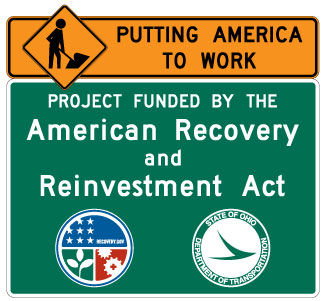
Most people doubt Congress’ ability to spend money wisely. The stimulus has given them some proof:

-$800,000 for an African genital-washing program.

-$700,000 to create computer software that can tell jokes.

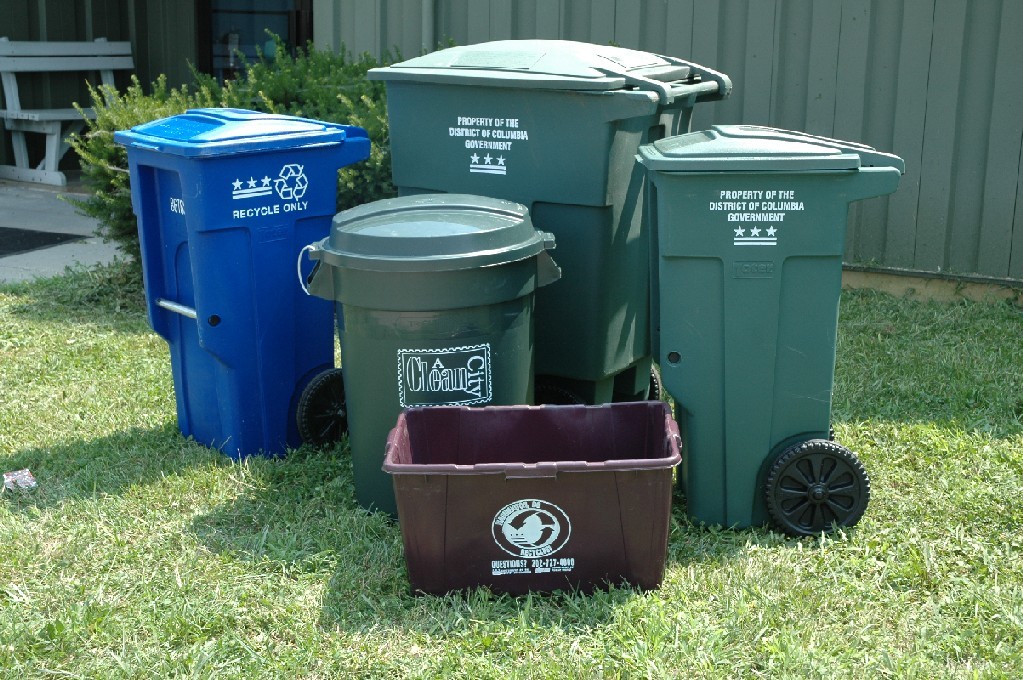
$40,000 for ten trash bins.

-$1.6 million to irrigate a golf course inTexas.

-Thousands of dollars to replace – twice – a sidewalk “that doesn’t front any homes or businesses, and leads into a ditch”

300 truckloads of oyster shells.

Bonus non-stimulus spending: “[T]he Census spent $23,000 on a totem pole in Alaska. Census representative Hector Maldonado says the agency thought it was a great idea. The plan was to increase participation in Alaska, but despite the totem pole, participation dropped in the state by two percent from the last census.”

Expensive Jobs

Through June, the government spent about $620 billion of stimulus money. The Obama administration claims that the spending has saved or created 2.3 to 2.8 million jobs.

For the sake of argument, let’s assume those job creation numbers are true. In fact, let’s pick the rosiest number — 2.8 million jobs.

At a price of $620 billion, that comes out to $221,428.57 per job. Startlingly inefficient.

Now consider that that $620 billion had to come from somewhere else. Some of that money came from taxes. That leaves less money left over for consumers and businesses to spend. Some of the stimulus money was borrowed. That leaves less capital for private companies borrow.

The private sector tends to spend less than the government to create a job. Since stimulus spending is spending more money to create fewer jobs than the private sector, it is actually causing net harm to the job market.

In place of the spending stimulus, I humbly offer a deregulatory stimulus. CEI VP Wayne Crews and I offer some specific proposals here.

Graphs and Narratives

There are a lot of stories that can explain this graph that Eli Dourado created from BEA data. But not all of them are true. Eli, a fine economist who I went to grad school with, shows why one of them is not true.

Take a minute to see why.

Unintended Consequences of Unemployment Benefits

This letter of mine ran in today’s New York Times in response to Paul Krugman’s July 4 column.

To the Editor:

Paul Krugman is at a loss to explain why some people oppose extending unemployment benefits. One reason people hold such an opinion is that when government subsidizes something, there tends to be more of it.

The more government subsidizes unemployment, the more people will indulge in it for longer periods of time.

Ryan Young
Washington, July 6, 2010

The writer is a journalism fellow at the Competitive Enterprise Institute.

Making a Difference – A Very Small Difference

The House passed a budget enforcement resolution yesterday. It sets 2011’s discretionary spending $7 billion below what President Obama has requested.

Next year’s discretionary spending target is $1.12 trillion for next year. The $7 billion difference represents savings of 0.625 percent. Barely a rounding error. If total spending (including mandatory and defense spending) ends up at $3.5 trillion next year, the savings becomes 0.2 percent.

Of course, 2010 discretionary spending was $1.39 trillion. 2011 spending will very likely end up much closer to that than the targeted $1.12 trillion. The appropriations process is not kind to non-binding resolutions, however well-intentioned. Especially when the resolution “doesn’t detail how Congress should reach that [deficit reduction] goal.”

Congress lacks the will to cut $270 billion of spending. The interests benefitting from that spending will scream bloody murder the second their programs are put on the chopping block. In an election year when incumbents are more fearful than usual, no politician worth his salt wants to cause an uproar.

Congress need not worry too much, though. Even in anti-incumbent years, re-election are almost always above 90 percent. The vast majority of congressional turnover happens through retirement, running for other office, or death.

The pattern is holding this year, so far. The University of Virginia’s Larry Sabato recently pointed out that 5 incumbents have lost their state primary elections this year, while 240 were re-nominated. That’s a 98 percent success rate. There will be a few more casualties, especially in the November general elections.

Most members are safe. They can, and should, rock the boat by cutting unnecessary spending. If anything, the most aggressive cutters might become folk heroes like Chris Christie in New Jersey. They just don’t have the guts.

I will be more than happy if Congress proves me wrong. We’ll find out over the next few months.

Solving America’s Problems

The days of trillion-dollar deficits, multiple land wars in Asia, and other catastrophes may soon be coming to an end. Congress continues to work long and hard to solve America’s most important problems. Take a look at some of the legislation that passed on May 18:

H. Res. 1256: congratulating Phil Mickelson on winning the 2010 Masters golf tournament

H. Res. 792: honoring Robert Kelly Slater for his outstanding and unprecedented achievements in the world of surfing and for being an ambassador of the sport and excellent role model

H. Res. 1297: supporting the goals and ideals of American Craft Beer Week.

H.R. 4491: to authorize the Secretary of the Interior to conduct a study of alternatives for commemorating and interpreting the role of the Buffalo Soldiers in the early years of the National Parks, and for other purposes

I applaud each and every one of these bills, frivolous though they are. Each one took a good deal of time to write and to put through committee. Each one was given 40 minutes of floor debate, though less than that was typically used. All of that time and effort was not spent further destroying the economy with more substantive legislation.

Most states get by with part-time legislatures. Congress would do well to follow suit. In the meantime, as long as Congress is full-time, it should devote as much time as possible to trivial bills like the ones listed above.