Category Archives: Economics

Why Trade and War Are Different

There is lots of talk about trade wars lately. We especially need to get tough on China, our politicians tell us. Over at The American Spectator‘s AmspecBlog, I highlight why real wars and trade wars are very, very different
. It’s time to put that misguided analogy to rest.


Just Say Neigh

I have a post over at the AmSpec blog about a $4.6 million bridge used by 50 horses and the people who ride them. That’s $92,000 per horse.

CEI Podcast – October 7, 2010: Trade, Jobs, and Korea

Have a listen here.

CEI Adjunct Fellow Fran Smith talks about the EU-Korea free trade agreement that takes effect next year, and why the US-Korea FTA stalled, to the economy’s detriment. Fran also talks about NAFTA’s impact on jobs, and why imports are a good thing.

How to Lie with Statistics

Steven Landsburg uncovers a whopper. Take a look at this graph for a second. Pay special attention to the right-hand y-axis. Then click on over to Landsburg’s blog post to find out what’s wrong with it.

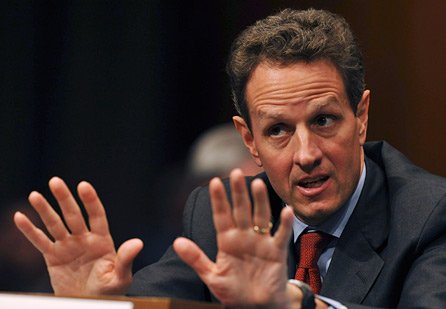
Timothy Geithner, Political Strategist

The TARP bank bailout program polls poorly. 58 percent of Americans think the bailouts were unnecessary. Timothy Geithner, in recent remarks, subtly reminded voters that the hated bailouts were originally a Republican proposal. It began with George W. Bush, remember.

This is a clever bit of strategy from Geithner. President Obama and Congressional Democrats get most of the blame for TARP. And they deserve plenty of blame for not repealing the program. But Geithner is right. TARP began with Republicans.

The midterm elections will probably be very kind to Republicans. Geithner is saying, in effect, “be careful what you wish for.”

He’s right. If the GOP does regain control of Congress, little good is likely to come of it. They will probably do a decent job opposing the White House’s proposals. That could slow spending growth.

But what the country needs are spending cuts. And Republicans have serially proven they can’t be trusted with the public purse.

When Republicans last held power they passed the largest new entitlement program since the Great Society, nearly doubled federal spending in 8 years, gave billions of dollars in subsidies to businesses and farmers, and generally made a mess of things. The TARP bailouts and the largest spending stimulus in U.S. history were their closing flourishes.

Republicans  did all the things they ran against in 1994. Many GOP candidates are saying similar things in 2010. But remember Geithner’s counsel about TARP. Only a fool would believe that Republicans will actually cut spending. Beltway fever catches quickly. And it’s contagious.

Of course, Democrats are just as bad. As I say with every election involving Democrats and Republicans, whoever wins, we lose. The best that we independents can do is nudge the intellectual climate in a better direction. Geithner has kindly reminded us that we need to redouble our efforts on both conservatives and progressives.

This Tax Is Full of Schnitzel

Over at the AmSpec blog, I describe a kerfuffle in Germany over schnitzel taxes:

Gerhard Kaltscheuer owns a restaurant in a working-class neighborhood in Hammerbruecke, Germany. His schnitzels are especially popular — except with German tax authorities.

It goes downhill from there.

Study: Regulations Cost $1.75 Trillion in 2008

The Small Business Administration released a new study today. “The Impact of Regulatory Costs on Small Firms,” by Nicole V. Crain and W. Mark Crain, updates previous studies of the same title from 2005 and 2001.

From the introduction (p. 6):

The findings in this report indicate that in 2008, U.S. federal government regulations cost an estimated $1.75 trillion, an amount equal to 14 percent of U.S. national income. When combined with U.S. federal tax receipts, which equaled 21 percent of national income in 2008, these two costs of federal government programs in 2008 consumed 35 percent of national income.

And keep in mind that those numbers are for 2008. With government spending now closer to 24 percent of GDP, the federal government’s current share of the economy is around 38 percent.

State and local spending and regulations, of course, cost extra.

Unions Prefer to Hire Non-Union Protesters

This is priceless.

The Daily Show With Jon Stewart Mon – Thurs 11p / 10c
Working Stiffed
www.thedailyshow.com
Daily Show Full Episodes Political Humor Tea Party

Maybe they got the idea for this segment from a recent CEI video:

New CEI Podcast: Creating High-Tech Jobs

Ryan Radia, CEI’s Associate Director of Technology Studies, talks about obstacles and opportunities for job creation in the high-tech sector. Regulatory uncertainty is making companies wary of making long-term investments. The sheer number of regulations makes it very expensive to hire workers. According to an article Ryan and I coauthored at RealClearMarkets, rolling back the regulatory state could pave the way for more jobs.

Have a listen by clicking here.

Stimulus Roundup

Most people doubt Congress’ ability to spend money wisely. The stimulus has given them some proof:

-$800,000 for an African genital-washing program.

-$700,000 to create computer software that can tell jokes.

$40,000 for ten trash bins.

-$1.6 million to irrigate a golf course inTexas.

-Thousands of dollars to replace – twice – a sidewalk “that doesn’t front any homes or businesses, and leads into a ditch”

300 truckloads of oyster shells.

Bonus non-stimulus spending: “[T]he Census spent $23,000 on a totem pole in Alaska. Census representative Hector Maldonado says the agency thought it was a great idea. The plan was to increase participation in Alaska, but despite the totem pole, participation dropped in the state by two percent from the last census.”