Category Archives: Economics

The Partisan Deficit

When Republicans are in the White House, Paul Krugman thinks budget deficits are bad. When a Democrat is in the White House, deficits are no problem at all.

Correctly noting in 2005 that the Bush deficits were “comparable to the worst we’ve ever seen in this country,” Krugman worried that investor confidence would wilt under the difficulty of paying back such massive obligations.

Now that President Obama has tripled the Bush deficits, he has a column poo-pooing deficit worriers as “being terrorized by a phantom menace — a threat that exists only in their minds.” Investor confidence will be just fine.

Would he be so sanguine if a Republican president ran up a $1,400,000,000,000 budget deficit in his first year in office? The party in power has nothing to do with whether deficits are good or bad. Deficits are either a problem or they aren’t.

Krugman’s partisanship is regrettable. What’s more regrettable is that it is taken seriously. Such is the tragedy of the partisan mind.

The Economic Way of Thinking about Stimulus Packages, Part II

In light of the news about stimulus job creation statistics not being as advertised — complete with made-up Congressional districts — I offer another surprisingly relevant insight from Mises’ Human Action. Turns out there is a reason stimulus advocates are resorting to trickery:

“If government spending for public works is financed by taxing the citizens or borrowing from them, the citizens’ power to spend and invest is curtailed to the same extent as that of the public treasury expands. No additional jobs are created.”

-Ludwig von Mises, Human Action, 4th ed., (Irvington-on-Hudson New York: Foundation for Economic Education, 1996 [1949], p. 776.

New Trotsky Biography

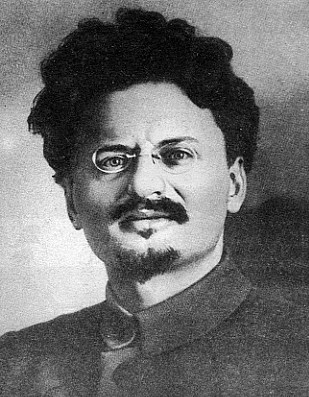
Robert Service’s new biography of Trotsky is reviewed in today’s Wall Street Journal. Having read Service’s excellent biography of Lenin a few years ago, this seems like a book worth reading. Joshua Rubenstein’s thoughtful review touches on some thoughts about socialism and socialists.

Socialism had three major failings. The first is what economists study most closely. It is the impossibility of economic calculation under socialism, because of the rejection of prices and money as a medium of exchange. Whether you support socialist ideals or not, it is literally impossible to achieve. Do away with prices and currency, and they will emerge in a different form. They are part of human society.

The second aspect of socialism intrigues philosophers: socialism genuinely sought to change human nature itself. People as they currently are are in no shape to realize Marx’s vision of communist society. So part of the communist program was to actively mold and change people so that vision could one day become a reality.

Before Marx came along, Plato’s Republic and Thomas More’s Utopia were also written about societies with a fundamentally changed human nature. More, knowing his ideal to be impossible, coined the word “utopia,” which literally means “no place.” His book is a pleasant dream (for a collectivist at least), but More knew it was one that could ever come true. We are they way we are. And we’re stuck that way, for better or worse.

This leads us to the third aspect of socialism, which most concerns Trotsky. This is, for me, the most remarkable part, and the most chilling. It is the sheer violence that accompanied Marxism-Leninism everywhere it was tried. And I mean everywhere. Every single country to adopt communism had a checkered human rights record. No exceptions. Not one had anything resembling freedom of speech or press, or due process, or property rights.

Most historians now estimate that communist governments killed around 100,000,000 people. Mostly their own citizens. At no other point in human history have governments been so murderous of their own people. No other ideology has had consequences so bloody as Marxism and its variants.

One reason for the violence is that it allowed the governments to maintain power; resistance is less likely when the prevailing climate is of fear. Another is that human nature is stubborn. If it is to be changed, force is required. But, of course, the basic tenets of humanity are immutable. We are who we are.

Communist leaders, including Trotsky, were simply chilling. Many of them come off as sadists. They seemed to actually enjoy bloodshed. Revel in it. Yet Trotsky still has his admirers today. They need to answer for why they look up to someone who would even have thoughts like the following, let alone give voice to such brutish impulses in public speeches:

“The strength of the French Revolution,” he shouted to a group of revolutionary sailors, “was in the machine that made the enemies of the people shorter by a head. This is a fine device. We must have it in every city.” And have it they did. Once in power, Trotsky advocated show trials and the execution of political prisoners; he suppressed other socialist parties and independent trade unions; he pushed for the censorship of art that did not support the revolution; and he created the institutions of repression that were later turned against him and his followers.


The Economic Way of Thinking about Stimulus Packages

“[A] government can spend or invest only what it takes away from its citizens… its additional spending and investment curtails the citizens’ spending and investment to the full extent of its quantity.”

-Ludwig von Mises, Human Action, 4th ed., (Irvington-on-Hudson New York: Foundation for Economic Education, 1996 [1949], p. 744.

Making Broadband Accessible: Innovation, Not Intervention

FCC regulators want to provide wider and cheaper broadband access by subsidizing it, raising taxes, and forcing network owners to share their network infrastructure with competitors.

A few things the FCC should consider:

-Subsidies don’t make broadband access any less expensive. They just change who pays for it. In this case, that would be anybody with a phone. Which probably includes you. The great economist Ludwig von Mises observed that “A government can no more determine prices than a goose can lay hen’s eggs.”*

-The tax would make owning a phone more expensive. And when something becomes more expensive, people consume less of it. With tax-exempt technologies like Skype and Google Voice now available, people can switch away from a taxed phone to something cheaper more easily than ever. The more people who do that, the less revenue the phone tax would generate, defeating its very purpose.

-If a company has to share its network infrastructure with its competitors, it loses the incentive to maintain and improve that network. Why invest millions of dollars if it will help your competition just as much as yourself? Quality suffers. So does innovation. In the long run, it is innovation, not FCC intervention, that will make broadband affordable and accessible for everyone. The long-run view is just as important as the short-run view here.

-Land-based networks are expensive to build in rural areas. The cost per customer is huge compared to denser urban areas. Fortunately, that isn’t as much of a problem for wireless technologies. The FCC seems hellbent on the land-based networks since wireless networks aren’t yet advanced enough for mass-market broadband service. But they will be soon enough. And every dollar spent on old-fashioned wired networks is a dollar unavailable for improving wireless service. An unintended consequence of FCC intervention would be slower innovation.

*Ludwig von Mises, Human Action, 4th ed., (Irvington-on-Hudson New York: Foundation for Economic Education, 1996 [1949], p. 397.

Against a Value Added Tax


Over at Investor’s Business Daily, Wayne Crews and I make the case against a Value Added Tax. Policy makers have been flirting with the idea as a way to reduce the $1,400,000,000,000 budget deficit.

We argue that a VAT is:

-Complex; it would require roughly doubling the size of the IRS.

-Untransparent; most VATs don’t show up on receipts the way sales taxes do. Taxpayers are clueless as to how much tax they actually pay.

-Vulnerable to special-interest tinkering; politically incorrect goods are routinely penalized with higher rates. Politically favored goods are granted exemptions.

-Prone to increases; 20 out of 29 OECD countries with a VAT have increased their rates since implementing a VAT.

A point we didn’t make is that VATs affect industrial organization. VATs are applied at each stage of the production process. That gives companies an incentive to reduce the number of taxable steps. That means more vertical integration than would otherwise occur. This can decrease the efficiency of the manufacturing process. Which means higher prices and fewer goods. Plus the tax.

Fixing TARP: Is Transparency Enough?

bailout

The House is voting today on a bill to improve transparency in the TARP bailout program. TARP is, shall we say, rather opaque. 25 different agencies administer TARP funds. Each one uses different accounting standards. Keeping track of everything almost impossible.

I wrote an article not too long ago saying that transparency is welcome symptomatic relief. But TARP itself is a disease. The only way to cure the disease of bailout programs is to abolish them. Russ Roberts said much the same thing:

[C]apitalism is a profit and loss system. The profits encourage risk-taking. The losses encourage prudence. If the taxpayer almost always eats the losses for the losers, you don’t have capitalism. You have crony capitalism.

Transparency is a good start. But the goal should be to not have government bailing out politically favored companies in the first place.

Andrew Cuomo Sues Intel

cuomo3

Over at the Washington Examiner‘s Opinion Zone, Wayne Crews and I explain why New York Attorney General Andrew Cuomo’s antitrust lawsuit against Intel is a mistake.

Calling Intel’s business practices “bribery” and “coercion” is little more than argument by assertion. Rebates and exclusivity deals are normal competitive behavior. Not only is Intel facing increasing competition in its home turf, that small segment is hardly the extent of the relevant competitive market. Intel faces an uncertain future as consumer tastes shift to smaller products powered by non-Intel chips. Cuomo’s antitrust lawsuit does not stand up to scrutiny. It deserves to be dropped.

Antitrust policies thwart the competitive process whenever and wherever they are applied.

Cell Phones, Cancer, and Certainty

cell phone-2

CNN reports: “Last summer, Dr. Ronald Herberman, then director of the University of Pittsburgh Cancer Institute, issued a warning to about 3,000 faculty and staff, listing steps to avoid harmful electromagnetic radiation from cell phones.”

“Electromagnetic radiation” is a fancy way of saying light waves.

Herberman has been on his cell phone crusade for a while now; I diagnosed him with a severe case of The Certainty last year.

Still, let’s assume he’s right that cell phones cause tumors. What actions should be taken? I present the following CDC data on leading causes of death as a way to guide our priorities:

Heart disease: 631,636
Cancer: 559,888
Stroke (cerebrovascular diseases): 137,119
Chronic lower respiratory diseases: 124,583
Accidents (unintentional injuries): 121,599
Diabetes: 72,449
Alzheimer’s disease: 72,432
Influenza and Pneumonia: 56,326
Nephritis, nephrotic syndrome, and nephrosis: 45,344
Septicemia: 34,234

Deaths from cancer attributable to cell phone use? Zero. There is an important lesson to be learned here.

Think of it like this: every dollar and every hour of researchers’ time spent investigating cancer risks from cell phones is money and time not spent curing heart disease. Or cancer itself. Or stroke. These “big three” combine to end more than a million lives each and every year.

Which is a better use of limited research resources? Herberman, by bringing funding and attention to a non-issue, is quite possibly costing lives that could otherwise be saved.

The Certainty has very high costs. In Herberman’s case,  measurable in lives.

Unfunded Mandates

money_blowing_away001

Today’s American Spectator Online has a piece by CEI VP Wayne Crews and I on curbing Congressional abuse of  unfunded mandates. If the term is new to you, unfunded mandates are basically an accounting gimmick that lets government understate how much it costs taxpayers:

rather than fund a new federal job training program through a Department of Labor appropriation, Congress could mandate that all Fortune 500 firms provide, and pay for, such training. The first appears on the federal budget, the second does not. For politicians, it’s the perfect scheme. The government can spend — or, rather, force other people to spend — as much as it wants without adding to the deficit.

Decency demands this trickery stop; a bill from Rep. Virginia Foxx looks like it would do some good on that front.