Category Archives: Books

Influential Books

Over at EconLog, George Mason economics professor Bryan Caplan lists the 15 books that have been his biggest intellectual influences. It’s worth a look. For you libertarian ideologues out there, pay attention to what he says about Rothbard and Mises. I love them both, and clearly so does Caplan; he assigned a fair amount of Rothbard when I took his graduate public finance class. But they’re not without their faults.

My own list would look pretty different. But I have to say, it would share a lot of common themes.

Before Lawyers

Before there were lawyers, there were philosophers. The Sophists, given a bad name by Plato, earned their bread by teaching people how to plead their cases in court. There being no professional lawyers in 5th century B.C. Athens, people had to represent themselves. Witness this tale (probably too good to be true) of the pre-Socratic Greek philosopher Protagoras:

It is said that [Protagoras] taught a young man on the terms that he should be paid his fee if the young man won his first law-suit, but not otherwise, and that the young man’s first law-suit was one brought by Protagoras for recovery of his fee.

Bertrand Russell, History of Western Philosophy, p. 75.

Politics 101: Machiavelli and Public Choice

When Niccolo Machiavelli died in 1527, Washington, DC was still more than two and a half centuries away from being founded. But he understood perfectly how that dismal city would work, as Bertrand Russell reminds:

“In the absence of any guiding principle, politics becomes a naked struggle for power; The Prince give shrewd advice as to how to play this game successfully.”

-Bertrand Russell, History of Western Philosophy, xxii-xxiii.

Machiavelli was, in many ways, the first modern public choice theorist. Had he lived in a post-Adam Smith world, he would have made a fine economist. A politician’s guiding principle is usually not ideology. It is to remain in power. So they behave accordingly. The first lesson of economics is that people respond to incentives. If someone’s incentive is to get re-elected, they will behave in a way conducive to achieving that goal. Morality and the greater good compete for a distant second.

Note to Self: Travel More

Travel is most rewarding while you are young, before a career takes hold — with all the mistakes and unintended consequences; or when you are old, and enough is behind you so that acceptance of what has happened becomes a simple necessity, and you have the freedom once again to think about nothing except the immediate landscape.

-Robert D. Kaplan, Mediterranean Winter, p. 128.

That is one convoluted sentence. But the advice is sound.

Hayek on the Constitution of Liberty

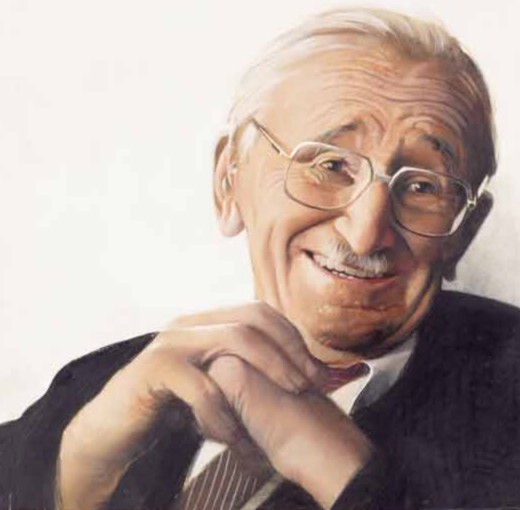
The Foundation for Economic Education has just posted an audio file from its archives of Nobel-winning economist F.A. Hayek talking about his masterwork, 1960’s The Constitution of Liberty.

Have a listen here.

Scroogenomics

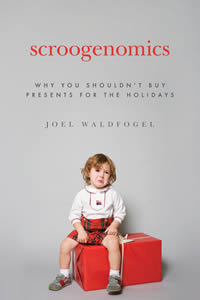
Today’s Washington Times contains my review of Joel Waldfogel’s book Scroogenomics: Why You shouldn’t Buy Presents for the Holidays.

Here’s a taste:

“‘A cribbage board? You shouldn’t have,’ we tell our mothers-in-law. Indeed.” In those three short sentences, Joel Waldfogel describes the origin of what retailers call “return season” and what consumers call “the week after Christmas.”

Mr. Waldfogel has a point here. By his calculations, such gifts cost the U.S. economy about $85 billion in waste. That’s more than 124 countries’ entire gross domestic product, by the way.

2009: The Year in Books

It’s year-end list season. Thought I’d join the fun with a list of books I read this year, along with a few words about each. Books that I started and didn’t finish are not listed. Hopefully you’ll find a few you’ll want to pick up yourself. I enjoyed each and every one; I wouldn’t have bothered reading all the way through if I didn’t.

I read a lot about economics because it’s my job to. And I read a lot of history because I love history. But I’m a bit weak on literature and science. Any suggestions for good books in those areas are most welcome.

1. Dante Alighieri – Inferno
Dante was the last great gasp of the medieval mind, and arguably started Europe’s transition into the early Renaissance. You probably read this in high school. I did. And I hated it. But re-reading it this year, I loved every word. Since this work is very much a creature of its time and place, some historical background into late medieval Florence is essential. Fortunately, the abundant footnotes in the edition linked to above are extremely helpful, though they do slow things down. I’m 4 cantos away from finishing Purgatorio, and hope to eventually finish the trilogy.

2. Joel Best – Damned Lies and Statistics: Untangling Numbers from the Media, Politicians, and Activists
A guide to the more common statistical fallacies that newspapers and politicians use. Some of those fallacies are due to ignorance. Some are intentionally misleading. This book seeks to prevent people from being misled in the first place.

3. Fernand Braudel – The Structures of Everyday Life: Civilization and Capitalism, 15th-18th Century, Volume 1
This book was a landmark event in the historiographical shift from kings-and-battles to everyday social history. It is also, unintentionally, the best case for modernity ever put to paper. The first hundred pages are a litany of disease, famine, early death, loneliness, cold, and drudgery. And that’s how life was for most people before the Industrial Revolution.

4. Marcus Tullius Cicero – De Oratore
Cicero was the best, most persuasive public speaker of his day. He was also one of the best prose stylists. De Oratore is his how-to guide for aspiring orators. This book made me a better speaker, a better writer, and was a revelation in how to keep my thoughts organized.

5. Hernando De Soto – The Other Path: The Economic Answer to Terrorism
A classic in the field of development economics, which focuses on how to make poor countries rich. De Soto’s answer is rooted in property rights. He wrote this book in the 1980s at great personal risk. Sendero Luminoso, a Maoist terrorist group in De Soto’s native Peru, bombed his offices and made several attempts on his life because this book was such a convincing refutation of their ideas.

6. Will and Ariel Durant – The Story of Civilization, Volume XI: The Age of Napoleon
The last of their masterly eleven-volume survey of human history. Eleven of the best books I have ever read. Oh, how they could write. And their integral historiographical approach was revolutionary in bringing history alive for the layman.

7. Anthony Everitt – Hadrian and the Triumph of Rome
The third and last of Everitt’s biographies of great Romans. His books on Cicero and Augustus are the best of this generation; this one falls a bit short due to the poor historical record. As a result, it is about Hadrian’s predecessor Trajan as much as it is about Hadrian himself. Still a good book.

8. Bob Garfield – The Chaos Scenario
An opinionated take on the decline of old media and the rise of new media.

9. Phil Hanrahan – Life After Favre: A Season of Change with the Green Bay Packers and Their Fans
The author moved from LA back to Wisconsin to follow the Packers in their first season without Favre. Part travel memoir, part sports journalism, it’s about the fans as much as it is the players.

10. Peter Heather – The Fall of the Roman Empire: A New History of Rome and the Barbarians
A new take on Rome’s fall. He thinks it was external, not internal. The Empire was doing just fine in the 5th century, but population pressures in Asia forced mass migrations to the West at a faster pace than the West could assimilate. It’s often paired with Adrian Goldsworthy’s very different book on the same subject, which I haven’t read.

11. Christopher Hitchens – Thomas Paine’s Rights of Man: A Biography
Short primer on Paine, with all the panache and hyper-erudition one would expect from a Hitchens book.

12. Darrell Huff – How to Lie with Statistics
A classic of its genre from the 1950s. A quick, easy read that taxonomizes the most common tricks used in charts, graphs, and statistics.

13. Steven E. Landsburg – The Big Questions: Tackling the Problems of Philosophy with Ideas from Mathematics, Economics, and Physics
The economist as philosopher. Very different, and very good.

14. Steven E. Landsburg – More Sex Is Safer Sex: The Unconventional Wisdom of Economics
Another book along the lines of his The Armchair Economist and Fair Play. Landsburg’s absolutely relentless use of logic and economic reasoning is inspiring. He’s one of my favorites.

15. Peter T. Leeson – The Invisible Hook: The Hidden Economics of Pirates
Pirates and economics, together at last. Leeson was pretty entertaining (not to mention radical) as a professor. So is his book.

16. Steven D. Levitt and Stephen J. Dubner – Superfreakonomics: Global Cooling, Patriotic Prostitutes, and Why Suicide Bombers should Buy Life Insurance
Better than the first one. Borders on being contrarian for its own sake at times. And a climatologist I know says that the physics behind one of the geoengineering schemes they describe in chapter 5 are flawed. But this book will make you think.

17. Niccoló Machiavelli – The Prince
Machiavelli was the original public choice theorist. He describes how Florence worked in his day, which is also how Washington works  in our day. I keep a leather-bound edition in my office, and a paperback edition at home. I make sure to re-read this every few years.

18. Thomas K. McCraw – Prophet of Innovation: Joseph Schumpeter and Creative Destrtuction
Schumpeter had quite the life story, and McCraw tells it well. His explanation of Schumpeter’s intellectual work is top-notch.

19. Thomas K. McCraw – Prophets of Regulation: Charles Francis Adams; Louis D. Brandeis; James M. Landis; Alfred E. Kahn
If Plutarch wrote about regulation, he would have written something like this.

20. Ludwig von Mises – Human Action: A Treatise on Economics
Didn’t read it in college. Didn’t read it in grad school. Finally read it this year. And I see the world a little differently now. It’s not easy going, but this is the most definitive — and thorough — economic work since Adam Smith.

21. Charles Murray – Real Education: Four Simple Truths for Bringing America’s Schools Back to Reality
Takes a sledgehammer to the Lake Wobegon school of thought. His pedagogy is a little traditionalist for my taste, but his policy recommendations are a breath of fresh air.

22. Johan Norberg – Financial Fiasco: How America ’s Infatuation with Homeownership and Easy Money Created the Economic Crisis
The sanest breakdown of the financial crisis that I’ve seen. Echoes of Tocqueville. I had more to say in an earlier post.

23. Edwin S. Rockefeller – The Antitrust Religion
Strident in tone, but a valuable introduction to the basics of antitrust policy.

24. Joseph A. Schumpeter – Can Capitalism Survive? Creative Destruction and the Future of the Global Economy
An excerpt from Schumpeter’s masterwork, Capitalism, Socialism, and Democracy. Contains his explanation of his theory of creative destruction.

25. William Caruthers Sellar and Robert Julian Yeatman – 1066 and All That: A Memorable History of England
Easily the funniest book I’ve read in years. It came out during the Great Depression, and is still just as funny today.

26. Thomas Sowell – Applied Economics: Thinking beyond Stage One
From the content to the delivery, Sowell is one of the best economics writers there is. He’s in fine form for this book. His politics are to the right of mine, but this book is about economics, so there’s very little politicking.

27. Nassim Nicholas Taleb – Fooled by Randomness: The Hidden Role of Chance in Life and in the Markets
The tone is haughty, but it contains valuable lessons about probability, certainty, and humility. Though the third seems to have escaped the author.

28. Nassim Nicholas Taleb – The Black Swan: The Impact of the Highly Improbable
More of the same from Taleb. This is a good thing.

29. Arnold J. Toynbee – Civilization on Trial
Toynbee was one of the best of the big-picture historians. Though his obsession with world government is a bit odd to an early 21st century reader. He thought history was unstoppably progressing in that direction.

30. Joel Waldfogel – Scroogenomics: Why You shouldn’t Buy Presents for the Holidays
I liked it. My review will run tomorrow in the Washington Times.

31. Fiona Watson – Scotland: From Prehistory to the Present
A 300-page survey history that reads quickly. Found it in a gift shop in Scotland while there on vacation. It was exactly what I was looking for: a short introduction to the land I was visiting so I could better appreciate where I was.

32. Derek Wilson – Charlemagne: A Biography
This one was a little disappointing. Only half of this short book is about Charlemagne’s life. The rest is about Europe. Charlemagne was one of the great unifiers of the continent. He was the first post-classical European to reign over a territory as large as a modern nation-state. He set in motion a trend that continues today with the EU. That’s important. But I would have preferred more on his life and times, and less on all that.

Financial Fiasco

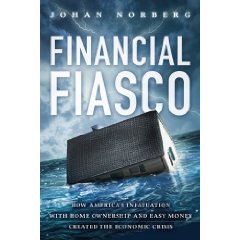
I recently finished reading Swedish economist Johan Norberg‘s book about the financial crisis, aptly titled Financial Fiasco. It’s both short and informative. Six chapters and 155 pages, all of them worth reading.

The first two chapters are about the two big regulatory causes of the recession. One, monetary policy that was too easy for too long. The price system works. When the Fed messes with that price system, prices send out the wrong signals. People behave accordingly. Two, a decades-long drive to raise homeownership rates caused a lot of people to take out loans they couldn’t afford. It was only a matter of time before the consequences would come to bear.

Chapters 3 and 4 are about how the private sector reacted to the incentives regulators gave them. Let’s just say they acted badly. If people can game the system, they often will. Norberg’s criticism of overly-complicated securitized mortgage packages is both shocking and infuriating.

Chapter 5 is about how the government and private sector reacted to the crisis once the housing bubble popped. The $700 billion bailout program to reward bad behavior comes under fire.

Norberg is in top form in Chapter 6. Having looked at the causes and consequences of the crisis, now he offers a way out. One lesson is that politicians will always behave badly. “Politicians who distribute pork they cannot afford are reelected; butcher shops that sell pork they cannot afford go bankrupt. (p. 150)” Politicians are just like you and me. They go wherever their incentives lead them. We need to approach them accordingly.

The way to a full recovery is not bailouts. It is letting bad companies fail. And just as important, letting good ones prosper. “Government support for companies is thus not a way to save jobs, as politicians try to make us believe. It is a way to move jobs from good companies to bad companies.” (p. 151) In the long run, bailouts keep the economy down by keeping jobs and resources away from where they would do the most good.

Financial Fiasco has echoes of Tocqueville; a foreigner is trying to figure out how America works. Norberg, like Alexis de Tocqueville, is uncommonly perceptive. His experience living under an economy more thoroughly mixed than America’s allows him to see things that have escaped American commentators. This is extremely valuable. The fact that his book is concise, well written, and accessible to those of us who don’t have economics Ph.Ds makes it even moreso.

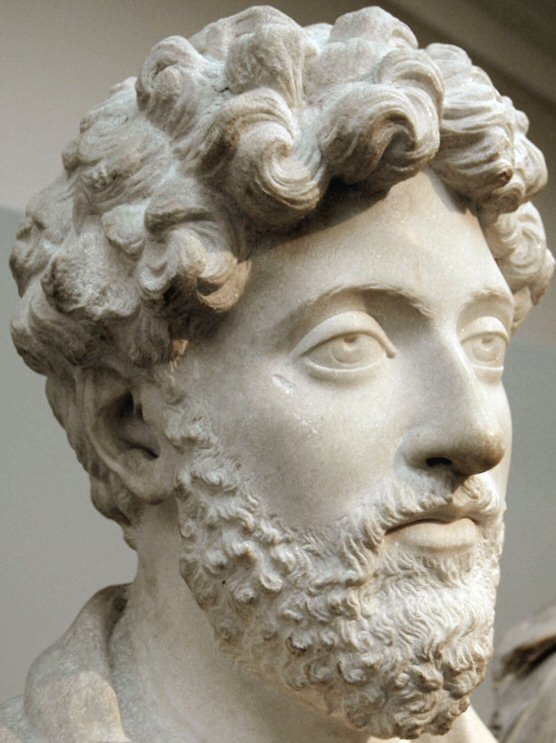
Marcus Aurelius: Emperor, Philosopher, Economist

Gibbon’s Decline and Fall begins with the death of Marcus Aurelius in 180 AD. It was all downhill from there.

Besides being a well-regarded emperor who was succeeded by an ill-regarded son, Marcus was a philosopher. Reading the works of Epictetus turned him into a devoted stoic as a young man. Marcus’ book Meditations remains the sterling example of the stoic mindset: civility, moderation in all things, and above all, taking triumph and tragedy with the same quiet dignity.

Marcus also had a bit of the economist in him. Despite predating Adam Smith by sixteen centuries, Meditations contains an excellent example of opportunity costs. Only the law of demand is more important in the economist’s toolkit. As a way of saying “mind your own business,” he writes:

Do not waste what remains of your life in speculating about your neighbours, unless with a view to some mutual benefit. To wonder what so-and-so is doing and why… means a loss of opportunity for some other task.*

*Meditations, III.4; trans. Maxwell Staniforth.

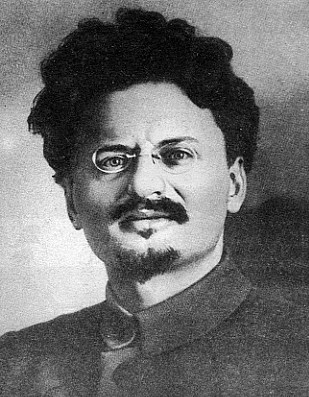
New Trotsky Biography

Robert Service’s new biography of Trotsky is reviewed in today’s Wall Street Journal. Having read Service’s excellent biography of Lenin a few years ago, this seems like a book worth reading. Joshua Rubenstein’s thoughtful review touches on some thoughts about socialism and socialists.

Socialism had three major failings. The first is what economists study most closely. It is the impossibility of economic calculation under socialism, because of the rejection of prices and money as a medium of exchange. Whether you support socialist ideals or not, it is literally impossible to achieve. Do away with prices and currency, and they will emerge in a different form. They are part of human society.

The second aspect of socialism intrigues philosophers: socialism genuinely sought to change human nature itself. People as they currently are are in no shape to realize Marx’s vision of communist society. So part of the communist program was to actively mold and change people so that vision could one day become a reality.

Before Marx came along, Plato’s Republic and Thomas More’s Utopia were also written about societies with a fundamentally changed human nature. More, knowing his ideal to be impossible, coined the word “utopia,” which literally means “no place.” His book is a pleasant dream (for a collectivist at least), but More knew it was one that could ever come true. We are they way we are. And we’re stuck that way, for better or worse.

This leads us to the third aspect of socialism, which most concerns Trotsky. This is, for me, the most remarkable part, and the most chilling. It is the sheer violence that accompanied Marxism-Leninism everywhere it was tried. And I mean everywhere. Every single country to adopt communism had a checkered human rights record. No exceptions. Not one had anything resembling freedom of speech or press, or due process, or property rights.

Most historians now estimate that communist governments killed around 100,000,000 people. Mostly their own citizens. At no other point in human history have governments been so murderous of their own people. No other ideology has had consequences so bloody as Marxism and its variants.

One reason for the violence is that it allowed the governments to maintain power; resistance is less likely when the prevailing climate is of fear. Another is that human nature is stubborn. If it is to be changed, force is required. But, of course, the basic tenets of humanity are immutable. We are who we are.

Communist leaders, including Trotsky, were simply chilling. Many of them come off as sadists. They seemed to actually enjoy bloodshed. Revel in it. Yet Trotsky still has his admirers today. They need to answer for why they look up to someone who would even have thoughts like the following, let alone give voice to such brutish impulses in public speeches:

“The strength of the French Revolution,” he shouted to a group of revolutionary sailors, “was in the machine that made the enemies of the people shorter by a head. This is a fine device. We must have it in every city.” And have it they did. Once in power, Trotsky advocated show trials and the execution of political prisoners; he suppressed other socialist parties and independent trade unions; he pushed for the censorship of art that did not support the revolution; and he created the institutions of repression that were later turned against him and his followers.