Monthly Archives: December 2009

Regulation of the Day 81: Porn

Marginal Revolution’s Alex Tabarrok points to a proposed rule in California that would reclassify adult film actors as being subject to certain employment regulations. The unintended consequences are potentially fatal:

California’s anti-discrimination laws prohibit requiring an HIV test as a condition of employment; therefore the adult film industry’s current testing process, in which every performer is tested for HIV monthly, would be illegal. Nor would adult film producers be allowed to “discriminate” by refusing employment to HIV-positive performers. As a result, untested and HIV-positive performers would be able to work in the industry, raising the risks of HIV outbreaks–particularly since condom breakage or slippage can occur.

Sounds like regulators and activists need to think that one through a little more carefully.

In-Flight Rent-Seeking

An article in this month’s Info Tech & Telecom News quotes me about proposed stimulus funding for an in-flight broadband provider.

My take: it’s corporate welfare.

The Lede Says it All

Gene Healy’s latest column begins: “This Thursday, Barack Obama will swing by Oslo to pick up the Nobel Peace Prize — just over a week after he announced that he’d escalate the war in Afghanistan. Awkward.”

Regulation of the Day 80: Falconry

The Code of Federal Regulations contains 12,834 words worth of rules concerning falconry, of all things. Pasted into a Microsoft Word document with 11 point font size, that’s 24 pages. On falconry.

Some of the rules are surprisingly permissive: “Your falconry facilities may be on property owned by another person where you reside, or at a different location.”

Other rules, less so: “(D) Regardless of the number of State, tribal, or territorial falconry permits you have, you may possess no more than 5 wild raptors, including golden eagles.”

Because clearly, owning six birds instead of five is a threat to public health and safety.

Did Deregulation Cause the Great Recession?

Over at RealClearMarkets, I explain why the answer is a resounding no:

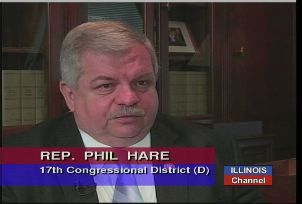
Rep. Phil Hare argues that “reckless deregulation” is one of the causes of the current economic crisis. That isn’t actually true. This year’s edition of the Competitive Enterprise Institute’s Ten Thousand Commandments report found that 3,830 new regulations came into effect in 2008 alone.

Over 30,000 total new rules passed during the Bush years. Hardly any were repealed. Businesses currently dole out the equivalent of Canada’s entire 2006 GDP – about $1.2 trillion – just to comply with federal regulations.

Where is the deregulation?

263,989 people make their living working for federal regulatory agencies, according to research from the Mercatus Center. That’s an all-time high.

12,190 of them regulate financial markets from Washington. More are based in New York and other financial centers. None of these figures include state and local rules and regulators. Those cost extra.

Regulation of the Day 79: Auctioneers in Alabama

It is illegal to conduct an auction without a license in Alabama. Unlicensed auctioneers can be punished with fines of up to $500.

Applicants must pay nearly a thousand dollars for 85 hours of coursework. 8 additional hours are required every two years to keep the license.

It’s worth asking: Does this benefit anyone besides the people teaching the courses and the auctioneers who get to limit the amount of competition they have to face?

Don’t Worry about Trade Deficits

Here’s a letter I sent recently to the New York Daily News:

December 3, 2009

Editor, New York Daily News
450 W. 33rd Street
New York, NY 10001

Washington, D.C.: In his December 3 column, “On jobs front, President Obama needs to show a little audacity,” Errol Louis worries about America’s trade deficit. He shouldn’t.

I run an ongoing trade deficit with my local grocery store. I import food from them every week. They have never purchased a thing from me in return. Even so, we both benefit. I’d rather have their food than my money, and they’d rather have my money than the food on their shelves. This is true even if an international border separates us.

If Mr. Louis is as worried about trade deficits as he says he is, he would never again set foot in a grocery store, start growing his own food, and engage only in barter transactions. If he doesn’t, he is either misinformed, or else he doesn’t really believe what he writes.

Ryan Young
Warren T. Brookes Journalism Fellow
Competitive Enterprise Institute
Washington, D.C.

Regulation of the Day 78: Green Energy Subsidies

Today’s New York Times has a classic dog-bites-man story. The green energy sector is shedding jobs, despite being given billions of taxpayers’ dollars by Presidents Bush and Obama.

As so often happens, regulators’ efforts to change people’s behaviors aren’t working as hoped.

To paraphrase Jerry Taylor and Peter Van Doren’s work on ethanol subsidies: if it’s commercially viable, then it doesn’t need any subsidies. If it isn’t, no amount of subsidy will make it so.

Regulation of the Day 77: Banning Toys in Happy Meals

Roberto Zabrido, a government official in Spain, is “adamant that the Happy Meal and its ilk pose a risk.”

The solution? Legislation that “would ban restaurants and food manufacturers from including toys and prizes with their products.”

If Happy Meals – Happy Meals! – are Spain’s most pressing national problem, then that country is either the most trouble-free place on Earth, or else busybodies such as Mr. Zabrido have too much money and power. My bet is on the latter.

(Hat tip: Jacob Grier)

They Needed a Poll to Find This Out?

A headline in today’s Politico reads, “Poll: U.S. too politically divided.”

How is that news? Who is going to say they don’t think the U.S. is divided enough?