Tag Archives: tsa

Air Travel: A Touching Experience

Dave Barry writes about his first encounter with the TSA’s strictly enforced new policy of touching passengers’ genitalia.

I will experience this for myself this holiday season. If the choice is between some bureaucrat either touching my ding-dong or taking a picture of it, I suppose I’ll take the groping. Full-body scans are a more permanent indignity.The TSA claims that it destroys its nude pictures. But that claim is inaccurate. The machines automatically save the images.

Or maybe I’ll drive, even though it’s statistically more dangerous.

I hate the holidays.

When TSA Agents Attack

For most people, the TSA is merely an annoyance. We grudgingly play our part in security theater so we can get where we’re going. But for Kathy Parker, the TSA is something far more serious (via Steve Horwitz):

“Everything in my purse was out, including my wallet and my checkbook. I had two prescriptions in there. One was diet pills. This was embarrassing. A TSA officer said, ‘Hey, I’ve always been curious about these. Do they work?’

“I was just so taken aback, I said, ‘Yeah.’ ”

What happened next, she says, was more than embarrassing. It was infuriating.

That same screener started emptying her wallet. “He was taking out the receipts and looking at them,” she said.

“I understand that TSA is tasked with strengthening national security but [it] surely does not need to know what I purchased at Kohl’s or Wal-Mart,” she wrote in her complaint, which she sent me last week.

She says she asked what he was looking for and he replied, “Razor blades.” She wondered, “Wouldn’t that have shown up on the metal detector?”

In a side pocket she had tucked a deposit slip and seven checks made out to her and her husband, worth about $8,000.

Her thought: “Oh, my God, this is none of his business.”

Two Philadelphia police officers joined at least four TSA officers who had gathered around her. After conferring with the TSA screeners, one of the Philadelphia officers told her he was there because her checks were numbered sequentially, which she says they were not.

“It’s an indication you’ve embezzled these checks,” she says the police officer told her. He also told her she appeared nervous. She hadn’t before that moment, she says.

She protested when the officer started to walk away with the checks. “That’s my money,” she remembers saying. The officer’s reply? “It’s not your money.”

Read the whole thing. If the Fourth Amendment had any force anymore, the TSA would have been abolished years ago. It is well past time for President Obama and Congress to consider that step. It would certainly do wonders for them in the polls.

Terrorists Are Nitwits

So claims a must-read article at The Atlantic (hat tip to Radley Balko):

They blow each other up by mistake. They bungle even simple schemes. They get intimate with cows and donkeys. Our terrorist enemies trade on the perception that they’re well trained and religiously devout, but in fact, many are fools and perverts who are far less organized and sophisticated than we imagine. Can being more realistic about who our foes actually are help us stop the truly dangerous ones?

Remember: terrorism thrives on over-reaction. Not only are terrorists rare, they are often incompetent. Lightning strikes kill 20 times as many Americans. One day homeland security policies should reflect that.

Regulation of the Day 131: Airport Vendors

A regulation passed in 2005 states that “at least 10 percent of all business at the airport selling consumer products or providing consumer services to the public are small business concerns (as defined by regulations of the Secretary) owned and controlled by a socially and economically disadvantaged individual (as defined in section 47113(a) of this title).

The requirement that the size of a business be taken into account is puzzling; a company’s size has little to do with whether it will do a good job or not.

I would also argue that airports are disadvantaged enough, having already to deal with the TSA, the FAA, the DOT, and others. Snark aside, airports are poorly run, almost without exception. Forcing them to hire vendors and contractors on factors other than price and performance is unlikely to improve matters.

Disadvantaged business quotas bring up a third issue: What happens if a disadvantaged business owner prospers through her hard work, and can no longer be considered disadvantaged? Does she get kicked out of the airport?

That thorny question would have been put to rest on April 21 of this year, when a built-in sunset provision would have made the regulation expire. Wayne Crews and I have written before favoring sunset rules for all new regulations. It’s a painless way to automatically get rid of rules when they become obsolete, or that turn out to be more trouble than they’re worth.

If a rule merits another five years on the books, Congress should be able to vote on it.

In this case, however, the Department of Transportation is getting set to renew the disadvantaged quota program all by itself. Permanently.

According to the DOT, leaving in the sunset provision “would simply cause confusion and disruption, making it more difficult for all parties concerned to carry out their responsibilities under the statute.”

Laws are supposed to be made by legislative branch, not the executive. What we have here is one more case of regulation without representation, out of thousands. You can read all about it in today’s Federal Register.

Regulation of the Day 124: Kissing Your Girlfriend Good-Bye

How do we know the terrorists are winning? When a man kissing his girlfriend good-bye at Newark Liberty International Airport results in the evacuation of an entire terminal, 200 delayed or canceled flights, and re-screening for thousands of passengers.

There is a word for this: overreaction. If this how the government reacts to a threat that is 20 times scarcer than being struck by lightning, we are doing something wrong.

Yes, the criminal kisser was wrong to sneak under a security rope to get one last peck from his girlfriend. But closing down an entire terminal at a major airport for six hours is overdoing it. Just take a look at the offender.

His name is Haisong Jiang. He is 28 years old and very much in love. He emigrated to the U.S. from China in 2004, and met his girlfriend at Rutgers University. She recently moved to California, though they remain together. Mr. Jiang is still in the New York area, pursuing a biology Ph.D. When he receives his degree later this year, he plans to move to California to be with her. He is clearly not a terrorist.

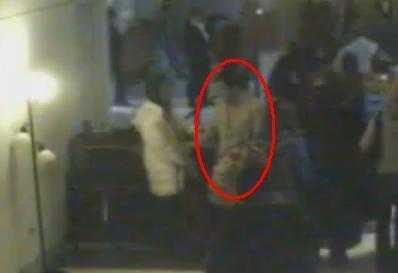
Mr. Jiang’s forbidden kiss was recorded by surveillance cameras. It was clear that he was sneaking a kiss, not a bomb. Even so, a five-day manhunt ensued. Mr. Jiang was arrested and tried. Fortunately, his sentence is a light one: “a $500 fine and $158 in costs and fees,” plus 100 hours of community service.

I was a bit worried that he would have been shipped to Guantanamo Bay, frankly. Hopefully retired Maj. Gen. Robert Harding, the new head of the TSA, will take steps to make airport security more rational and less driven by fear.

In-Flight Wi-Fi: Security Threat?

An article in this month’s Infotech & Telecom News on a TSA proposal to ban in-flight wi-fi quotes me at length. Here’s what I had to say:

“Are such restrictions justified? No,” said Ryan Young, the Warren T. Brookes Journalism Fellow at the Competitive Enterprise Institute. “The only way to prevent terrorism is to make terrorism difficult.

“Banning in-flight entertainment would not do that,” he added. “Terrorism is a rare threat, and it should be treated accordingly. Every time you board a plane, your odds of being a victim of a terrorist attack are about 1 in 10.4 million. You are 20 times more likely to be struck by lightning,”

‘Chipping Away at Freedoms’

“Terrorists can’t win by killing people,” Young said. “There are too many of us and too few of them. They win by making us overreact in fear. And that is exactly what the TSA is doing.

“Chipping away at freedoms like in-flight wi-fi might make people feel safer. But it doesn’t actually make them safer,” he said. “The TSA should make sure that all cockpit doors are reinforced. It should diligently screen checked baggage. Passengers know that sometimes they have to take matters into their own hands. Anything beyond that isn’t security. It’s security theater.”

Dangerous Driving
Young adds TSA’s reaction to the Christmas Day bomber and other potential threats could not just stifle tech innovation but also harm the ability of the airline market to improve its services.

“Banning in-flight wi-fi would hurt both the airline industry and technology companies,” Young said. “Some airlines, such as JetBlue, compete by offering fringe benefits that competitors don’t, like in-air wi-fi. Taking that away would make the airline market more homogeneous and less competitive.

“Banning in-flight wi-fi also poses a safety risk,” he added. “When flying becomes more onerous, some people will opt to drive instead. Per mile traveled, driving is far more dangerous than flying. Car accidents kill at least 200 times as many Americans as terrorists do each year.”

Grading Obama on Homeland Security

It didn’t make it into CEI’s final report card since homeland security is outside CEI’s suite of issues, but here’s my grade for DHS:

F         Department of Homeland Security – Janet Napolitano, Secretary
Grader: Ryan Young, Journalism Fellow

The Obama administration showed great early potential on security issues, and didn’t live up to it. President Obama had a chance to let the PATRIOT Act’s more controversial provisions expire. He extended them. Closing Guantanamo Bay was a positive development that has been badly mishandled. The foiled Christmas Day underwear bomb attack was a chance to stand up to terrorists and let them know that we are not afraid. Instead, travelers are being treated to more of the same hysterical overreactions they have been stoically enduring for years.

New Reason Video on the TSA

Terrorism Is Rare

Radley Balko points to an article that shows exactly how rare terrorism is.

The figure that caught my eye was the last one. There were 647 deaths due to airborne terrorism over the last last ten years. There were 7,015,630,000 passengers over the same period. Yes, that figure is higher than current world population. That’s because each time someone flies, they count as one passenger. You take ten trips, you’re counted ten times. That represents each opportunity to become a terrorist victim, and is therefore the correct measure to use.

Each time you board a plane, your odds of being a victim of terrorism are about  1 in 10,408,947 (my own calculations yielded 1 in 10,843,323, but the point holds either way). Your odds of being struck by lighting are over twenty times higher!

Terrorists are so rare that they can’t win by killing people. There are too many of us and too few of them. Terrorists can only win by scaring people. Making them overreact. Making them trade away their freedom for for the illusion of security. The TSA, which is based on exactly that, represents the terrorists’ greatest victory yet.

That’s why people need to know just how safe we really are, even with all of the terrorists out there. The more we know, the less scary they become. And fear is their only effective weapon. If we take it away, the terrorists lose.

Regulation of the Day 73: Snow Globes as Terrorist Threat

snow-globe

Some of the TSA’s critics say the agency its own reductio ad absurdum. TSA’s latest action does nothing to improve security, but much to prove its critics correct. Snow globes are now banned from carry-on luggage (hat tip: Radley Balko).

This means one of two things: either grandmothers with snow globes in their carry-ons are the biggest terrorist threat facing the country, or the TSA is doing something wrong.

The way to prevent terrorism is to make terrorism difficult. Banning snow globes doesn’t make terrorism any more difficult.

Yes, larger snow globes probably violate the TSA’s three-ounce limit for liquids. But they are not bombs. They are, in fact, snow globes.