
Tag Archives: bush

Did Deregulation Cause the Great Recession?

Over at RealClearMarkets, I explain why the answer is a resounding no:

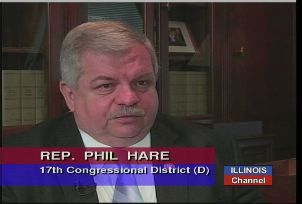
Rep. Phil Hare argues that “reckless deregulation” is one of the causes of the current economic crisis. That isn’t actually true. This year’s edition of the Competitive Enterprise Institute’s Ten Thousand Commandments report found that 3,830 new regulations came into effect in 2008 alone.

Over 30,000 total new rules passed during the Bush years. Hardly any were repealed. Businesses currently dole out the equivalent of Canada’s entire 2006 GDP – about $1.2 trillion – just to comply with federal regulations.

Where is the deregulation?

263,989 people make their living working for federal regulatory agencies, according to research from the Mercatus Center. That’s an all-time high.

12,190 of them regulate financial markets from Washington. More are based in New York and other financial centers. None of these figures include state and local rules and regulators. Those cost extra.


Regulation of the Day 78: Green Energy Subsidies

Today’s New York Times has a classic dog-bites-man story. The green energy sector is shedding jobs, despite being given billions of taxpayers’ dollars by Presidents Bush and Obama.

As so often happens, regulators’ efforts to change people’s behaviors aren’t working as hoped.

To paraphrase Jerry Taylor and Peter Van Doren’s work on ethanol subsidies: if it’s commercially viable, then it doesn’t need any subsidies. If it isn’t, no amount of subsidy will make it so.

The Partisan Deficit

When Republicans are in the White House, Paul Krugman thinks budget deficits are bad. When a Democrat is in the White House, deficits are no problem at all.

Correctly noting in 2005 that the Bush deficits were “comparable to the worst we’ve ever seen in this country,” Krugman worried that investor confidence would wilt under the difficulty of paying back such massive obligations.

Now that President Obama has tripled the Bush deficits, he has a column poo-pooing deficit worriers as “being terrorized by a phantom menace — a threat that exists only in their minds.” Investor confidence will be just fine.

Would he be so sanguine if a Republican president ran up a $1,400,000,000,000 budget deficit in his first year in office? The party in power has nothing to do with whether deficits are good or bad. Deficits are either a problem or they aren’t.

Krugman’s partisanship is regrettable. What’s more regrettable is that it is taken seriously. Such is the tragedy of the partisan mind.

The Economic Way of Thinking about Stimulus Packages, Part II

In light of the news about stimulus job creation statistics not being as advertised — complete with made-up Congressional districts — I offer another surprisingly relevant insight from Mises’ Human Action. Turns out there is a reason stimulus advocates are resorting to trickery:

“If government spending for public works is financed by taxing the citizens or borrowing from them, the citizens’ power to spend and invest is curtailed to the same extent as that of the public treasury expands. No additional jobs are created.”

-Ludwig von Mises, Human Action, 4th ed., (Irvington-on-Hudson New York: Foundation for Economic Education, 1996 [1949], p. 776.

The Economic Way of Thinking about Stimulus Packages

“[A] government can spend or invest only what it takes away from its citizens… its additional spending and investment curtails the citizens’ spending and investment to the full extent of its quantity.”

-Ludwig von Mises, Human Action, 4th ed., (Irvington-on-Hudson New York: Foundation for Economic Education, 1996 [1949], p. 744.

Deficit Hits $1,400,000,000,000

bush-obama
President Bush’s $400 billion budget deficits were the largest in history. He deserved every bit of criticism he got for his big-spending ways.

Now comes news that the budget gap is up to $1.4 trillion. President Obama has broken Bush’s record by a trillion dollars. It took him less than a year.

A trillion.

Wow.

Obama Wants to Extend PATRIOT Act

People are often surprised to hear how similar President Obama’s policies are to President Bush’s. They shouldn’t be. One may be a Republican and the other a Democrat, but make no mistake. Bush and Obama are two peas in a pod.

-Bush signed a $700 billion bank bailout bill. Obama continued the policy. And he extended it to other sectors, such as the automobile industry.

-Bush tried fiscal stimulus twice while in power. With some help from the Bush team, Obama oversaw the largest fiscal stimulus bill in history. There is occasional talk of another.

-Bush started two land wars in Asia. Obama could end them. Instead, he is committing more troops to Afghanistan.

-Bush oversaw Medicare part D, the largest expansion of government’s role in health care since 1965. Obama also would like to expand government’s health care presence.

-And now, we have the PATRIOT Act. The bill was perhaps the largest expansion of executive power in seventy years, and the Bush administration’s signature legislation. Now that Obama has inherited all these cool powers, turns out he likes the PATRIOT Act, too. So he wants to extend some of its expiring provisions.

Predictable. Still disappointing.