Making a Difference – A Very Small Difference

The House passed a budget enforcement resolution yesterday. It sets 2011’s discretionary spending $7 billion below what President Obama has requested.

Next year’s discretionary spending target is $1.12 trillion for next year. The $7 billion difference represents savings of 0.625 percent. Barely a rounding error. If total spending (including mandatory and defense spending) ends up at $3.5 trillion next year, the savings becomes 0.2 percent.

Of course, 2010 discretionary spending was $1.39 trillion. 2011 spending will very likely end up much closer to that than the targeted $1.12 trillion. The appropriations process is not kind to non-binding resolutions, however well-intentioned. Especially when the resolution “doesn’t detail how Congress should reach that [deficit reduction] goal.”

Congress lacks the will to cut $270 billion of spending. The interests benefitting from that spending will scream bloody murder the second their programs are put on the chopping block. In an election year when incumbents are more fearful than usual, no politician worth his salt wants to cause an uproar.

Congress need not worry too much, though. Even in anti-incumbent years, re-election are almost always above 90 percent. The vast majority of congressional turnover happens through retirement, running for other office, or death.

The pattern is holding this year, so far. The University of Virginia’s Larry Sabato recently pointed out that 5 incumbents have lost their state primary elections this year, while 240 were re-nominated. That’s a 98 percent success rate. There will be a few more casualties, especially in the November general elections.

Most members are safe. They can, and should, rock the boat by cutting unnecessary spending. If anything, the most aggressive cutters might become folk heroes like Chris Christie in New Jersey. They just don’t have the guts.

I will be more than happy if Congress proves me wrong. We’ll find out over the next few months.

New Issue of the CEI Planet

The latest issue of the CEI Planet is online. In addition to articles on Andy Stern’s SEIU exit and Sen. Chuck Schumer’s anti-Facebook crusade, Wayne Crews and I make the case against a value-added tax on page 6.

The Rahn Curve

A little government can do a lot of good. A lot of government can do little good.

Rules protecting life, liberty, and property can create the stable conditions that entrepreneurs need to flourish. It works best when these rules are simple, clear, and few. But problems emerge when government takes on other missions.

Rules that are complicated, opaque, and numerous create instability. Entrepreneurs are less likely to invest or innovate if they fear the rules of the game might change tomorrow on a whim. Complying with regulations takes up time and effort that could be spent creating wealth. When governments get involved in business, businesses will involve themselves with government. This is an invitation to corruption, rent-seeking, and regulatory capture. Many backs get scratched, but economic growth suffers.

Dan Mitchell‘s latest video introduces the Rahn Curve, named after top-notch economist Richard Rahn, to illustrate that concept visually. Most academic studies on the subject estimate that governments that take up 15 to 25 percent of GDP is about the right size. The U.S. government consumes roughly 40 percent of GDP. That wide range is because different government policies have different effects, and because the complexity of even the smallest economies makes any macro-level study uncertain.

The academics might be guessing too high, though. Historical data from the 19th century show that the best-performing economies had governments around 10 percent of GDP. That includes the U.S. and most of Europe.

Returning to that size government wouldn’t even be particularly austere. the U.S. government would have a $1.4 trillion budget. Roughly what we had during the Clinton years.

I hope you’ll take a few minutes to watch. The Rahn curve contains valuable insights.

140 New Regulations in Florida

Florida has one busy legislature. They spend their time on everything from the amount of toilet paper in restaurant bathrooms to fake testicles on the back of pickup trucks.

The mighty Solons of Florida have just passed a whopping 140 new regulations. Hopefully residents can keep them all straight! Highlights:

-If you sell horse meat for human consumption, you should be aware of new labeling rules.

-It is now illegal to own a Burmese python in Florida.

-Or a bong, for that matter.

-Florida’s $100 limit for poker buy-ins is repealed. There is no longer a limit on buy-in amount.

-Want to coach your kid’s youth sports team? You will have to pass a background check.

-The next time you buy over-the-counter cold medicine, you will have to show ID and sign a form.

Crony Capitalism shouldn’t Be Confused with the Real Thing

Russ Roberts has a short appreciation of F.A. Hayek in today’s Wall Street Journal (subscription required). Worth reading, especially if you are new to Hayek.

“All of My Motives Are Ulterior”

This spot-on political ad parody has been making the rounds. Enjoy.

Regulation of the Day 143: Your Bedtime

Japan’s Environment Ministry is encouraging its citizens to go to bed an hour earlier at night, and get up an hour earlier in the morning.

There is much wisdom in the old “early to bed, early to rise” adage. But that’s not what the Environment Ministry has in mind. They see going to bed early as a way to fight global warming.

By saving an hour’s worth of lighting and other electricity use every day, the Morning Challenge campaign says the average household can emit 85 fewer kilograms of carbon per year. Staying up late ensures mankind’s doom.

It is astounding that the Japanese regulators think that your bedtime is government business. Then again, this is the same country that has a legally allowable maximum waistline.

Hands Off My Home: Five Years After Kelo

This short video from the Institute for Justice is inspiring.

See also my colleague Marc Scribner’s article in the Daily Caller.

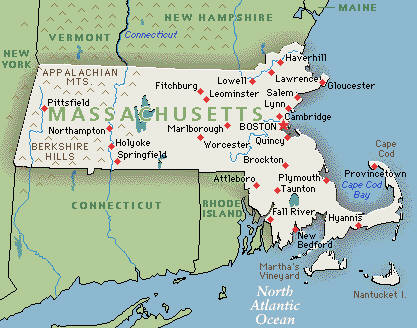
The Five Dumbest Regulations in Massachusetts

The Daily Caller’s Chris Moody has a list of the five dumbest regulations in Massachusetts.

This merely scratches the surface; state laws are so thorough as to forbid snoring with the windows open. Think of your neighbors!

Light Blogging Ahead

I will be without regular internet access for the next few days.

Back in action on Wednesday.

I leave you with yet another blow to terrorists’ reputation as being mostly competent; be not afraid of them.