Regulation of the Day 185: How to Wear Pants

Collinsville, Illinois officials know that when you look good, you feel good. That’s why they are now regulating the height at which people shall wear their pants. Some young people these days prefer to wear their pants somewhat low. This fashion trend is no doubt a direct reaction against World War II-era fashion, when men wore their pants much higher.

According to the new dress code regulations, Collinsville residents must not wear their pants more than three to four inches below the waist. First-time offenders get a $100 fine. A second offense nets a $300 fine and 40 hours of community service. There is no corresponding regulation for wearing pants super-high.

Collinsville regulators do not unanimously favor the new rules. Bob Knable, the city manager, has apparently heard of opportunity costs. Police forces only have so much time and resources. He points out that time officers spend eyeing peoples’ pants is time not spent on more serious matters.

Democracy in Action

Politico:

A new Massachusetts Institute of Technology study found that so-called “low-information voters” — those who watch a lot of TV but who aren’t up-to-date on policy issues — are most likely vote for a candidate based on looks alone.

Reforming Regulation through Executive Order

President Obama has issued two executive orders this year directing agencies to comb through their books and repeal unneeded or harmful rules. The first one repealed about 30 rules, and will save about $1.5 billion.

It will be about four months before the second rule’s savings become known. My hunch is it will be in the same ballpark as the first executive order.

In this short article and accompanying radio segment (see the upper right hand side for the audio), I put the executive orders in context and put forward an idea that would save even more money.

The Debt Limit Debate

Cato’s Chris Edwards and Dan Mitchell with some wise words about the debt limit debate, how we got where we are, and why neither party can be trusted with the public fisc.

Police Shut Down Renegade Lemonade Stand

Appleton, WI police taught some children a lesson about regulation’s true purpose by shutting down their lemonade and cookie stands. The children live about a block from an annual Old Car Show, and have been selling lemonade and cookies near the event for six years.

Vendors inside the car show didn’t appreciate the competition. So they talked the city government into passing a new ordinance that put the girls out of business.

After a round of bad publicity, city officials are thinking of re-writing the ordinance.

It’s Only Alright When the Government Does It

A Longmont, Colorado woman spent a night in jail and is being charged with felony sexual assault for returning the favor during a TSA pat-down.

Regulation of the Day 184: Picking up Dog Poop

A Vienna, Austria man was recently jailed for not picking up after his Great Danes. Having solved Vienna’s other problems, the city council recently passed new dog poop regulations. These include government-employed “Waste Watchers.” According to the Austrian Times, these “work from six a.m. to 11 o’clock at night handing out fines of up to 2,000 Euros for breaches in the law on dumping of waste and fouling of walkways.”

The 52-year old man was fined €1,380. When he told a court he could not afford the fine, he was jailed for two days.

As part of its new dog poop initiative, the government installed plastic bag dispensers throughout the city. Dog owners are required to use the bags to clean up after their dogs and place the final product in government-provided waste bins.

The offending man pleaded that his two Great Danes are simply too much for the plastic bags to handle. Great Danes can weigh as much as 200 pounds, and are prolific eaters.

The man should think about providing his own bags if the city’s aren’t up to the job. It is less than courteous for him to just leave the mess on the sidewalk. But a fine of up to €2,000 and possible jail time? That’s overkill.

Quotation of the Day

Fortune can bestow no higher benefit upon us, than the discord of our enemies.

-Tacitus, Germania, 33.179

Fun Fact of the Day

A lot of people like to make fun of the French. I don’t. France’s intellectual heritage is among the world’s finest. Even though contemp0rary politics there are decidedly illiberal, France was home to many of liberalism’s brightest lights.

The French Enlightenment gave the world Diderot, the encyclopedist; Voltaire, the conscience of Europe; Montesquieu’s grand narratives of history; Helvetius’ pre-Bentham utilitarianism; and Condorcet’s infinitely perfectible man. And that’s just for starters.

Economists everywhere owe a huge debt to the Physiocrats, especially Turgot and Quesnay, for what they taught a young Adam Smith when he traveled to France. Many of their lessons found their way into the Wealth of Nations. Bastiat, 160 years after his death, remains one of the discipline’s sharpest wits and most effective popularizers.

Add to that the deliciousness of French food and the fact that Gojira, one of my favorite metal bands, hails from Bayonne (video below), and the dramatic achievements of Corneille and Racine, and one can see why I think the French don’t deserve to be the butt of so many jokes.

Which brings me to today’s fun fact: the world’s first academic journal exclusively devoted to economics was founded in France. The Journal Oeconomique was founded in 1751, a full quarter of a century before the Wealth of Nations was published in 1776. Other pre-Smithian economics journals included the Gazette du Commerce and the Journal de l’Agriculture, du Commerce et des Finances.

Something to keep in mind next time you crack a joke about France.

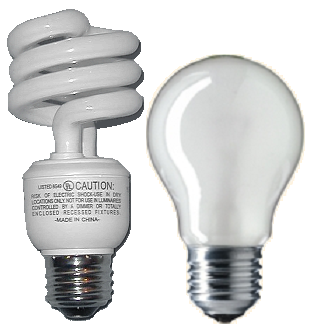
CEI Podcast for July 14, 2011: The Incandescent Light Bulb Ban

Have a listen here.

Earlier this week, GE CEO Jeffrey Immelt gave a speech at a conference on free enterprise. Energy Policy Analyst William Yeatman points out the irony of a career rent-seeker extolling free markets. GE spent $47 million in 2007 lobbying for an incandescent light bulb ban, cap-and-trade carbon regulations, and other government policies that would tilt the playing field in GE’s favor; its compact fluorescent and LED bulbs offer a higher profit margin.Yeatman also discusses a bill currently winding through Congress that would repeal the lightbulb ban.