
August 20 Is Lemonade Freedom Day

Kids have been setting up lemonade stands for as long as there has been lemonade. But in recent years, regulators have started shutting them down. Robert Fernandes, a father of two, has had enough. That’s why he has declared August 20, 2011 to be Lemonade Freedom Day.

Fernandes is encouraging kids and parents to set up lemonade stands that day without going through the permits, inspections, and fees that many towns require. For more information, visit LemonadeFreedom.org. There is also a Lemonade Freedom Day Facebook event page here.

Fernandes also links to a list of news stories about lemonade stand shutdowns. The list is disturbingly long.

That’s why on August 20, I’m going to take a stroll through my neighborhood to see if any young entrepreneurs are selling unlicensed lemonade. I encourage everyone to do the same.

This is a minor battle, as these things go. But the same obstacles to lemonade freedom apply throughout the economy. Federal regulations alone cost nearly an eighth of GDP to comply with. That sizable burden is a major reason why the economy is still struggling. Lemonade Freedom Day is one way to tell overzealous regulators to back off.

Police Shut Down Another Rogue Lemonade Stand

Abigail Krutsinger is 4 years old. She lives in Coralville, Iowa. A local tradition there is the RAGBRAI bike ride, where cyclists ride clear across Iowa. Abigail, seeing how exhausted the cyclists were when they reached Coralville, opened up a lemonade stand. It was a way to help out thirsty bikers, make a little bit of money, and learn a little something about running a business. Classic Americana.

In another display of classic Americana, police  quickly shut her down. Abigail, who is 4, never applied for a permit and a health inspection.

This is not an isolated incident. Similar crackdowns have happened in Wisconsin, Georgia, Oregon, and Maryland, and New York. Will there be more?

Brewers Postseason Countdown

The first-place Milwaukee Brewers (61-49) defeated the second-place St. Louis Cardinals (57-52) tonight, 6-2. By my calculations, that puts the Brewers’ magic number to clinch the NL Central division at 60.

Any combination of Brewer wins and Cardinal losses adding up to that number will guarantee the Brewers their first postseason appearance since 2008, and their second since 1982.

Good luck!

License to Rent-Seek

Few regulations are more blatantly anti-competitive than occupational licensing. Incumbents place barriers to entry to keep pesky competitors out of the market. Licensed occupations also enjoy an artificial 15 percent wage premium because of the supply restrictions. The Economist recently ran a column on licensing’s rent-seeking aspects:

But the people who care most about this issue—the cartels of incumbents—lobbied the loudest. One predicted that unlicensed designers would use fabrics that might spread disease and cause 88,000 deaths a year. Another suggested, even more alarmingly, that clashing colour schemes might adversely affect “salivation”. In the early hours of May 7th the bill was defeated. If Republican majorities cannot pluck up the courage to challenge a cartel of interior designers when Florida’s unemployment rate is more than 10%, what hope has America? The Licence Raj may be here to stay.

New Bastiat Book

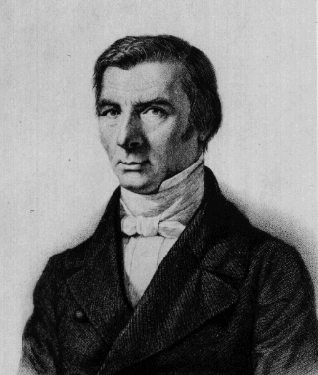
Frederic Bastiat, despite having died in 1850, just came out with a new book. The Man and the Statesman: The Correspondence and Articles on Politics, was just published by Liberty Fund. It’s available in hard copy for Liberty Fund’s typical low price, or for free in PDF format.

A majority of the letters and articles in the book have never before been translated into English.

Bastiat has five more books on the way; Liberty Fund is in the process of publishing his collected works in 6 volumes.

Arizona’s Immigration Laws Stall Recovery

My colleague Alex Nowrasteh in today’s San Jose Mercury News:

SB 1070 proponents claim that it decreased the unauthorized population in the state, and they’re probably right. But for that “achievement,” SB 1070 likely slowed Arizona’s recovery by increasing the regulatory burden for business and raising the cost of hiring all workers in Arizona.

Read the whole thing here.

Regulation of the Day 191: Sippy Cups

Children are messy. That’s why Richard Belanger, one of mankind’s unsung heroes, invented the sippy cup. By taking advantage of surface tension, liquid won’t spill out even if the cup is held upside down.  Even the most determined toddler has a hard time making a mess.

Then came the lawyers.

New York’s state legislature just passed a bill requiring warning labels to be put on all sippy cups sold in the state. It isn’t because sippy cups are dangerous. They don’t have sharp edges. They aren’t toxic. Nor are they a choking hazard. No, it’s because sometimes parents sometimes fill sippy cups with liquids that contain sugar, such as fruit juice. The labels warn that giving your child such drinks will cause tooth decay.

A similar bill passed last year, but fell victim to then-Gov. David Paterson’s veto pen. Current Gov. Andrew Cuomo’s stance on sippy cup policy is unknown. He will see some interest group pressure, though:

“I can show you photos of children who go to bed with sippy cups,” said Mark Feldman, executive director of the state Dental Association, which pressed for the bill.

“All you see is little black stumps that is all that is left of the teeth,” he added.

And I can show you a busybody who spends entirely too much time worrying about other people’s children. If his strongest argument is anecdotal hyperbole (possibly photoshopped?), then his case is weak indeed.

Either that, or the ADA felt the need to have a legislative accomplishment to brag about in its newsletter to prove its clout.

Bipartisan Regulatory Reform

Usually, “bipartisan” means “twice as stupid.” But for real regulatory reform to happen, both parties need to be involved. President Obama’s recent executive orders requiring agencies to comb their books and repeal unneeded regulations should save a few billion dollars. But that’s just a drop in a $1.7 trillion bucket. Over at Fox Forum, I explain one bipartisan idea that could potentially save much more:

Agencies cannot be trusted to clean out their own books because they have no incentive to. Agency administrators want to maximize their
missions and budgets. Having them police themselves will not yield real savings.

There is a relatively easy fix: get independent outsiders with no stake in the outcome go through the Code of Federal Regulations make the
repeal recommendations. President Obama should appoint a bipartisan repeal commission to do just that and then send its package of repeal
proposals to Congress.

Congress, worried about backlash from interest groups with vested interests in existing rules, would have every incentive to water down
the package. To avoid that, Congress should impose on itself a requirement to have a straight up-or-down vote on the package within a
short time-say, 10 legislative days-with no amendments allowed.

Read the whole thing here.

George Will on Liberalism’s Ascendancy

If anything good came out of the Bush years, it’s that they disabused a lot of people of conservatism. George Will, traditionally a solid conservative, is among them. He has always had a latent liberal streak (“liberal” in the word’s original sense). It began surfacing more frequently early in the Bush years as a reaction to that administration’s illiberalism.

Now, during what policy-wise is Bush’s third term, he has this to say in a column about Nick Gillespie and Matt Welch’s new book The Declaration of Independents:

America is moving in the libertarians’ direction not because they have won an argument but because government and the sectors it dominates have made themselves ludicrous. This has, however, opened minds to the libertarians’ argument.

The essence of which is the commonsensical principle that before government interferes with the freedom of the individual, and of individuals making consensual transactions in markets, it ought to have a defensible reason for doing so. It usually does not.

Regulation of the Day 190: How to Behave While in a Forest

Since time immemorial, Cook County, Illinois has had very strict personal conduct regulations for its forests. Among other things, it has been illegal to:

  • Hang out (only applies to felons)
  • Tell fortunes
  • Have your fly open
  • Juggle
  • Do a somersault
  • Park illegally (redundant?)
  • Perform acrobatic stunts

All those clandestine activities are now legal. Those laws are at least 100 years old, and were mainly intended to prevent traveling circuses and carnivals from setting up shop in the forests surrounding Chicago. No citations for any of these offenses have been issued within living memory.

That’s why Cook County’s forest preserve took the hygienic step of repealing the regulations. If a rule isn’t going to be enforced, or if it is clearly a relic of the horse-and-buggy era, it shouldn’t be on the books. Legislators around the country at all levels of government would do well to follow the example that Cook County’s forest preserve has set. It’s the regulatory version of spring cleaning.