The History of Liberty

Human history is a complicated tale. There are many ways to tell it. One is as a story of progress — from caves to huts to highrises. Another is regress — from harmony with nature to clanging, polluting machinery that destroys it.

Conflict is another common theme. Illiberals have spent the better part of the industrial era spinning tales of class struggle and racial or national conflict.

Competition is a less severe theme that many liberals like to stress. When church and state compete for power, the people are either left alone, or they can flee whichever is more oppressive. States that are numerous, small, and close have to have friendly, liberal policies, or else risk becoming little more than empty spaces.

Equality is still another. Many people think that rich and poor are less equal than before; look at income data. Others think that people are more equal than before. Slavery, monarchy, and titled nobility are largely things of the past. Status has (mostly) been replaced by contract.

History is much too complex for such simple conceits to explain everything. But all of them have at least some value for understanding where we came from, where we are now, and where we might be headed in the future.

There is one more aspect of history that has fascinated scholars from Thucydides to Lord Acton. That aspect is freedom. Like the others, it neither pretends to nor does explain everything.

But it does have one advantage. It ties together all the above narrative possibilities and more. Progress, regress, collective, individual, conflict, cooperation, more equality, less equality — they’re all there. And they all matter.

In my opinion, no living scholar synthesizes those disparate parts into a coherent whole better than Tom Palmer. The video below is a shortened version of a lecture that I have had the privilege of seeing a number of times over the years, with the added bonus of top-notch production values. This amateur history buff continues to learn from it to this day.

It’s 26 minutes long, which is about as long as an average sitcom. It is also far more rewarding, and at least as entertaining. If you have some spare time, it is well worth foregoing an episode of I Love Lucy to watch it. Click here if the embedded video doesn’t work. And do keep an eye out for part two.

CEI Podcast for January 18, 2012: Dropping the SOPA

Have a listen here.

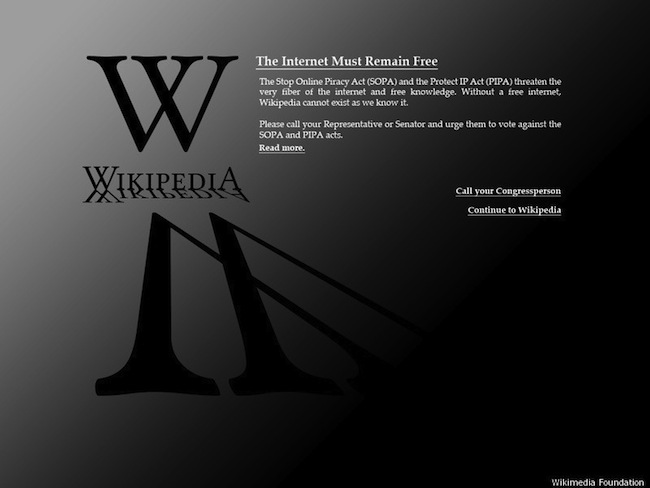
Wikipedia, Reddit, and other popular websites all went black today to protest SOPA and PIPA, two bills currently before Congress. Critics charge that the bills could potentially shut down the Internet as we know it. Associate Director of Technology Studies Ryan Radia explains how the bills would work, and how they would indeed stifle free speech.

Rick Moranis, Economist

Rick Moranis is an actor, comedian, and writer. Among other roles, he played Dark Helmet in Spaceballs, one of my favorite movies. Turns out he also knows a bit about the economic way of thinking. Here he is in today’s Wall Street Journal:

This morning, while I was grinding my blend of French, Colombian and Italian coffee beans, it occurred to me that I could be doing harm to the coffee shop and diner businesses in my neighborhood by making my own coffee at home. Might I have a responsibility and obligation to consume their product, either within their premises or brought right to my door by one of their speedy, undocumented-alien delivery men?

How much of this country’s economy am I personally destroying by my consumption preferences? I honestly never intended to do so much harm.

Read the whole thing.

Why? Just Because.

This picture is not a joke. The regulation is genuine. But it isn’t unique; I once wrote a Regulation of the Day about a similar federal rule.

(via Radley Balko and John Stossel)

Hard Times?

In the short run, absolutely. But — this matters — not in the long run, according to Michael Shermer, appearing on MSNBC’s Dylan Ratigan Show. Click here to watch.

The Humble Economist

I learned a lot from this long-form interview with George Mason economics professor Pete Boettke. One of my few regrets from my time at GMU is that I never took any of his classes. I try to make up for it by regularly reading Coordination Problem, where Boettke blogs with several other distinguished economists.

Here’s his response when the interviewer asks him why so many Austrian-influenced economists are libertarians. The correlation isn’t due to ideology:

What the position makes you have is not libertarianism, or anything like that, but humility. The economist is nothing more than a student of society, and any economist that tries to represent themselves as a saviour of society should be subject to ridicule.

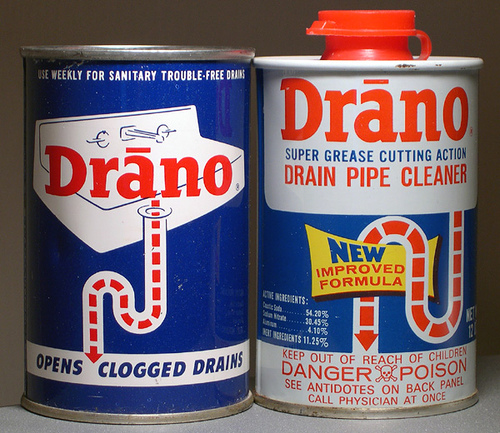
Regulation of the Day 206: Buying Drain Cleaner

If you have a sluggish drain and you live in Illinois, the government wants to keep track of you. As one of the 40,000 new laws across the country that took effect on January 1, the state of Illinois now requires consumers to show valid ID to buy drain cleaner. That’s not all:

Merchants must then log the buyer’s name, address, date and time of the purchase, the product and the product’s brand and net weight.

The bill was passed in response to a Taliban-style acid attack on two Chicago women. It is also an anti-drug law; drain cleaner can be used to make methamphetamine. It is unclear how showing ID and putting pen to paper would physically prevent either acid attacks or drug use.

CEI Podcast for January 12, 2012: Mistaken Deportations

Have a listen here.

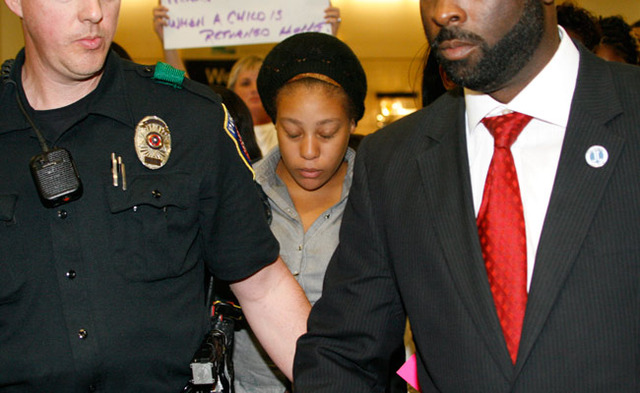
Immigration Policy Analyst Alex Nowrasteh tells Jakadrien Turner‘s story and explains what it means for the immigration reform debate. Turner is a 14-year old girl from Texas who was mistakenly deported to Colombia. Turner is not Hispanic, does not speak Spanish, and has no connections to Colombia whatsoever. It took six months of pleading and legal maneuvering before authorities allowed her to return home. This was not an isolated incident. The way to prevent future cases like this, Nowrasteh argues, is radically simplifying our overly complex immigration and citizenship laws.

A Bit of Economics Humor

Rhodes College economics professor (and sharp wit) Art Carden created a bunch of meme pictures to accompany a talk he gives about the nine basic principles of the economic way of thinking. This article briefly summarizes them. My two favorite pictures are below. Click here to see the rest.

TSA Officers Jailed for $40,000 Theft from Checked Baggage

My first advice for traveling with valuables is don’t. But if you must, don’t check them. If they won’t fit in your carry-on, consider FedEx or UPS.

Hopefully we’ll see fewer stories like that going forward, and more like John Deschamp’s. He is a TSA screener who found $5,000 in cash and turned it in instead of pocketing it.