
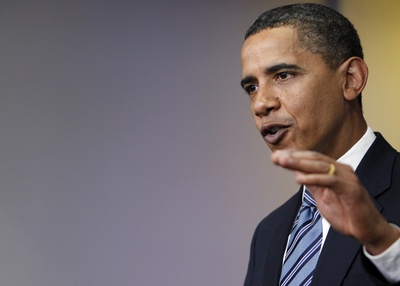
Meant to post this earlier. Here’s last night’s live-blog of the State of the Union:
8:46 Welcome to CEI’s live-blog of the 2010 State of the Union address. President Obama will be touching on all kinds of issues tonight. And I’ll have something to say about them all. But I’ll be paying special attention to what he has to say about regulation and spending. Keep refreshing this post every few minutes for fresh commentary.
8:54 Important people are filing in. Pundits are bloviating. Welcome to Washington.
8:58 Here comes the cabinet.
9:00 Peter Orszag and Christina Romer are there. Romer has done some excellent research on the Great Depression, by the way. Any monetarists out there would find much to like about what she has to say about monetary policy vs. fiscal policy.
9:06 The President enters. Much applause.
9:06 While waiting for the applause to die down, I’ll add that Romer thinks that monetary policy is what drives business cycles. Fiscal policy, such as stimulus spending, has little effect. I largely agree.
9:10 Speaker Pelosi introduces the President. Much applause. Many “thank yous.”
9:11 It begins.
9:11 He refers to the Constitution. Heh.
9:12 American exceptionalism. Neocons cheering somewhere, no doubt.
9:13 He inherited a bad situation. True enough. We must act? Not so much. The recession is largely a creation of over-active monetary and regulatory policy. Not a lack of policy.
9:14 First reference to “the children.”
9:15 He has said both “hope” and “change” already. Campaign 2012 has begun.
9:17 First standing ovation.
9:18 A government that matches our decency? Public choice theory is unknown on Capitol Hill, apparently.
9:18 He hates the bailout. Good! Why did he go through with it, then?
9:18 It was necessary. Unemployment would have doubled. Hyperbole. Now banks know they can continue taking stupid risks and get bailed out for it.
9:19 touts his fee on big banks that received bailouts.
9:20 20 tax cuts. Net tax cuts. While spending goes through the moon. Tax cuts are great, but spending cuts are more important. A tax cut now is a tax increase later if spending isn’t cut to match. An increase. Not a decrease. An increase.
9:22 Many jobs created. Touting the stimulus. Which takes money out of the economy, wastes some of it on bureaucracy, then puts it back into the economy. First instance of the broken window fallacy.
9:23 Anecdotes, people helped by stimulus spending. He sees what is seen. But not what is unseen. Those jobs, and that money, came from somewhere else. Each job created is one lost elsewhere.
9:25 Jobs, jobs, jobs. Bryan Caplan’s make-work bias lives.
9:25 Business creates jobs. Government can help. But only by taking money from somewhere else, and hurting businesses elsewhere. No net effect.
9:26 $30 billion transfer from “Wall Street” to “small businesses.”
9:27 small business tax credit. Eliminate capital gains tax on small businesses. Nice, but tax code simplification would be better. Lobbyists will be all over this one.
9:28 Infrastructure!
9:28 Rail! It’s the 19th century all over again.
9:29 Clean energy. Higher energy bills for all!
9:29 Keep jobs in America! Efficiency be damned! USA! USA! USA!
9:30 Jobs bill, ASAP. But full employment requires…
9:31 still waiting…
9:32 still waiting… the virtues of China’s economy…
9:33 financial reform! For starters. But don’t punish banks. Prevent recklessness. Good. Prevent dumb risks. House has already passed some reform. But lobbyists are all over.
9:34 And they will be as long as Washington is doling out money.
9:34 Plank 2: Innovation and science. More clean energy. More nuclear power. More offshore oil. More biofuels and clean coal. Comprehensive clean energy bil. Cap-and-trade light?
9:36 Consensus on global warming. Jeers from the crowd. Acknowledges doubts, touts clean energy again.
9:37 Plank 3 – trade. More exports! Double them in 5 years = 2 million jobs. National export initiative. Trade, of course, has almost zero effect on the number of jobs. It only affects the kinds of jobs. Also take measures to decrease imports. Renegotiate Doha. Is this a new protectionism?
9:40 4th plank – education. Only reward success. Not failure. Nice. Of course, that would mean less federal involvement in education, not more. Washington has no idea how to educate kids hundreds or thousands of miles away.
9:41 End taxpayer subsidy to banks for college loans. Substitute a tax credit and increase Pell grants. Forgive student loans after 20 years. Why bother paying back, then? This will bode well for future deficits.
9:43 Social Security fix – lend more to homeowners. Yeesh.
9:43 Health care!
9:44 Acknowledges unpopularity.
9:44 Anecdotes!
9:45 Blames insurance industry for regulatory failures. Emphasis on preventive care; no empirical research is cited for obvious reasons.
9:46 We can save money by spending money.
9:46 Reduce deficit by $1 trillion over 20 years. Last year and this year alone will incur nearly $3 trillion in deficits.
9:47 Temperatures cooling? Oh wait, he’s talking about health care.
9:48 Open to other proposals. Not bloody likely.
9:48 Pass a health care bill, any health care bill.
9:49 Spending.
9:50 Blames Bush for the deficit. Rightly so! Where’s he going with this, though?
9:51 Adding debt was the right thing to do. No mention of “the children” who will ultimately pay for it.
9:51 freeze certain types of discretionary spending for three years. This excludes most spending.
9:52. Save $20 billion this year. Or less than one percent of total spending.
9:53 Bi-partisan fiscal commission. Not exactly the Gramm Commission. Good idea, but beware the execution. Wayne Crews and I have done some research on this.
9:54 Pay-Go budget keeps spending in line. The data say otherwise.
9:54 Oh, the freeze won’t take effect until next year. The crowd laughs.
9:55 Says Bush cut regulations. Actually, he passed more than 30,000. See CEI’s Ten Thousand Commandments study for the exact numbers.
9;56 Deficit of trust in Washington, not just dollars. There’s a reason for that, you know. Two of them are the Republican and Democratic parties.
9:57 Excluded lobbyists from policymaking jobs. That isn’t actually true.
9:58 Doesn’t like the Citizens United decision. Or the First Amendment, for that matter. Wants a new campaign finance regulation bill. Presumably so it can be struck down on First Amendment grounds like the last ones.
9:59 I’m liking what he has to say on earmarks. Good luck to you, sir.
10:00 “can’t wage a perpetual campaign.” Tell that to Organizing for America.
10:01 Partisan politics get in the way of doing things. He’s right. And that’s exactly why I like gridlock.
10:02 Hey Republicans, no filibusters, please.
10:03 Will be talking more to the other side of the aisle.
10:03 National security!
10:04 Hope again. I haven’t been keeping track, but that’s at least 3.
10:05 Start getting out of Afghanistan in mid-2011. Good!
10:06 Out of Iraq by August. Good! Foreign aid to Iraq. Bad for Iraq!
10:07 Pork for veterans. Taking a page right out of the Gracchi playbook.
10:08 Nuclear deproliferation. I applaud the sentiment, but prohibition doesn’t work. Good luck to you, sir.
10:11 Would love to hear what Bill Easterly has to say about all the government-to-government transfer programs he’s touting.
10:12 Haiti. I completely agree with the ends. But the effectiveness of the means needs to be questioned.
10:13 Hate crimes. Thought crimes?
10:14 Let gays in the military. Nice! About bloody time.
10:14 Immigration. He has a positive view of immigration. Let’s hope that means much-needed liberalization. The more immigrants, the better. Those who are illegal, make them legal. It is the right thing to do. Obama says this is bi-partisan. I wish he was right.
10:16 Decries cynicism. There’s a reason for all that, you know.
10:19 Anecdote!
10:19 Another anecdote!
10:19 A third!
10:20 A fourth!
10:20 “I don’t quit!” Reminds me of Brett Favre’s advice to a startled referee: take two weeks off, then quit.”
10:21 End of speech.
10:26 Here comes Bob McDonnell’s Republican response. Get ready to be disappointed!
10:30 Thank yous and much applause.
10:31 Jobs. Jobs for all! Good end. The means?
10:31 So far, indistinguishable from Obama.
10:32 Calls for less taxation, regulation, etc. Quotes Jefferson. Says government is trying to do too much. Now he sounds different.
10:33 Likes Obama’s spending freeze. Says it’s small. Not often one hears a politician calls a spending non-increase anything other than draconian.
10:34 Likes bipartisanship. I like gridlock. Boo!
10:34 Likes the Shadegg health insurance reform. And medical malpractice reform. No specifics, though.
10:35 Energy. More of everything! Why isn;t anyone saying, “let the market decide?” Why must government, no matter the party, pick winners and losers?
10:36 Government energy policy can create jobs. Oh, wait, that costs money and jobs from elsewhere. Broken window fallacy again.
10:37 Education. Likes merit pay and school choice. Nothing about reducing federal involvement in this state and local issue.
10:38 Wars abroad. Daughter served abroad. Laudable. But nothing to do with the merits of nation-building.
10:39 Doesn’t like giving due process to the underwear bomber. Well, he’s probably guilty. Let’s find that out for sure and then punish him accordingly, then! What’s to be gained from denying due process?
10:40 I’m liking his rhetoric about taxes, spending, and regulation. But I’ll believe it when I see it. Which is probably never.
10:41 Haiti. Less than a paragraph.
10:42 Big role for government in creating opportunity.
10:43 One more call for bipartisanship, and a big sop to the Religious Right. An utterly conventional speech. If you thought liberals and conservatives have fundamental philosophical differences, think again. Two sides of the same coin.
10:44 That’s all for tonight. CEI scholars will have more in-depth analysis for you tomorrow. Thanks for reading!






 Inertia Wins!