Category Archives: Regulation of the Day

Regulation of the Day 165: Singing in Public

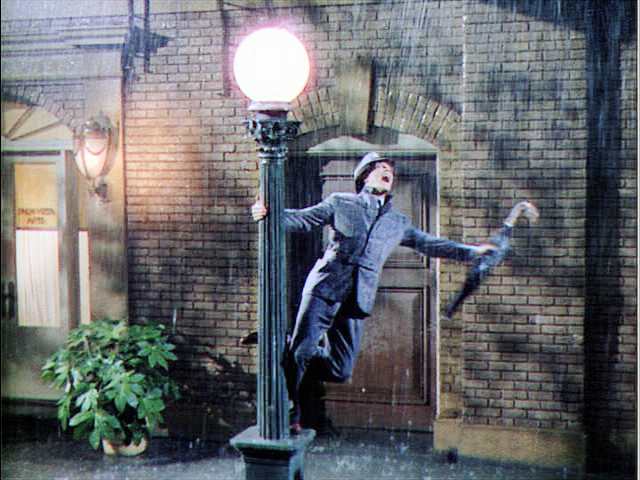
It is against the law to sing in public in Anderson, South Carolina. But the ban could be lifted as soon as today. The city council will vote on the right to sing as part of an effort to clean out the books of obsolete, redundant, and just plain weird laws.

Other obsolete rules set for repeal would cover “bomb shelters, parking meters (which no longer exist in the city) and house numbering rules that predate the current 911 system.” Still other ordinances are already covered by state law.

Laws that might have made sense in the 19th century might not today. Washington, D.C. still has rules on the books for how to herd livestock through city streets, for example. A big part of regulatory reform is doing a better job vetting new rules before they hit the books. But old rules shouldn’t be exempt from scrutiny, either.

Cities, states, and the federal government should make it a priority to comb through the books and eliminate old rules that don’t apply to today’s world, or that are already covered by other levels of government.


Regulation of the Day 164: Panhandling

If Montgomery County Executive Ike Leggett gets his way, panhandlers will need a government permit to ask people for money if they’re near a road. When panhandlers solicit motorists at intersections, they often have to step into the street. Leggett believes this is a safety hazard that requires a legislative fix.

Roadside panhandling is already illegal under Maryland state law, so the county ordinance is technically redundant. But the state ban appears to not be well enforced; hence the local law. Leggett’s permit proposal is likely a backdoor ban. The permits will exist, and panhandlers can apply for them. But none will be issued.

But suppose a permit does get approved. This would violate state law, would it not? Of course, people still panhandle at intersections anyway. So maybe neither the state nor the county ban matters so much.

(via Dan Mitchell)

Regulation of the Day 163: Switchblades

Switchblades are illegal. But Maine state representative Sheryl Briggs would like to end her state’s switchblade ban – but only for people with one arm.

One of her constituents is Paul Dumas, Jr., who lost an arm as a teenager. Because switchblades are spring-loaded, they can be opened with one hand. A retractable knife without a switchblade’s springs requires two hands to open.

That’s fine for most people. But it puts Dumas at a disadvantage. As he told the Associated Press, “I’m tired of opening knives with my teeth.”

Switchblade liberalization makes sense. For one, it would allow people like Dumas to live with a little more dignity.

For another, switchblade bans don’t even make sense. The federal ban was enacted in 1958, after an irrational moral panic involving West Side Story. Most states also have switchblade bans on the books. There was not an epidemic of switchblade violence at the time.

To this day, some shady people will ignore the ban and own switchblades; prohibition doesn’t work. But switchblade violence remains rare, depite most of the law-abiding population respecting the ban and being more vulnerable as a result.

Regulation of the Day 162: Breaking Wind

The southeast African country of Malawi is about to make farting illegal. The government there is trying to “mould responsible and disciplined citizens.”

Enforcement will be a problem. Even in places where the law allows gas to pass, fouling the air still violates social norms. People routinely shift blame, making claims such as “He who smelt it, dealt it.”

A Malawian woman told the Daily Mail, “Children will openly deny having passed bad air and point at an elder. Culturally, this is very embarrassing.” It also makes it difficult for a court to determine guilt.

While this particular regulation is quite humorous, it is a symptom of a serious problem in Malawi. The rule of law is weak there, and this has human consequences. Malawi ranks 106th out of 141 countries in the most recent edition of James Gwartney’s Economic Freedom of the World Index.

Countries ranked that low usually suffer from predatory governments and arbitrary justice systems. They also tend to have crushing poverty rates.

It is easy to imagine officials using this ordinance against political opponents, or even people they simply don’t like. Nor is breaking wind the only new offense in the government’s new morality initiative. The Daily Mail hints at the potential consequences:

The crime will be enforceable in a new ‘Local Court’ system which will also have powers to punish a range of other crimes in the bill set to be debated in the country’s parliament.

These include insulting the modesty of a woman, challenging to fight a duel, and trespassing on a burial place.

It also outlaws pretending to be a fortune teller, according to local press in the country.

Opposition leaders complain the new courts will be ‘kangaroo courts’.

Regulation of the Day 161: Crossing the Street

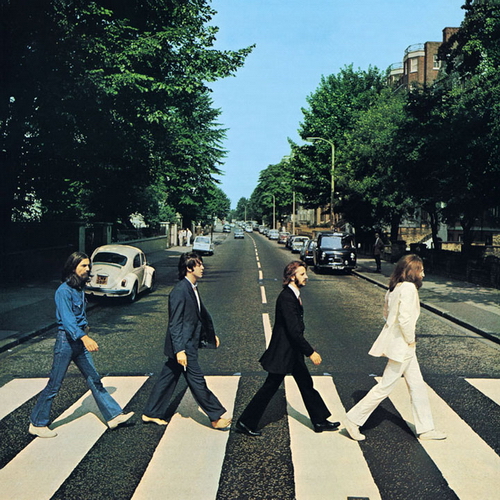
Three states are proposing to make it illegal to listen to your iPod while crossing the street. Legislators in California, New York, and Oregon are leading the charge, citing increasing pedestrian deaths. A similar proposal in Arkansas was retracted after constituents mobbed the state legislator who wrote the bill with hate mail.

Pedestrian deaths did go slightly up last year. But pedestrian deaths have been trending down for two decades, despite the rise of iPods and smartphones. Turns out that most people have enough common sense to pay more attention to traffic than their phone while crossing the street.

Legislating common sense is at best redundant. But in this case, it’s actually harmful. Police departments only have so many resources to go around. All the time and manpower they spend watching people cross the street is time and manpower not spent on more serious crimes. This is a solution without a problem.

Caroline May has more over at the Daily Caller (I am also quoted).

Regulation of the Day 160: Sleeping in Public

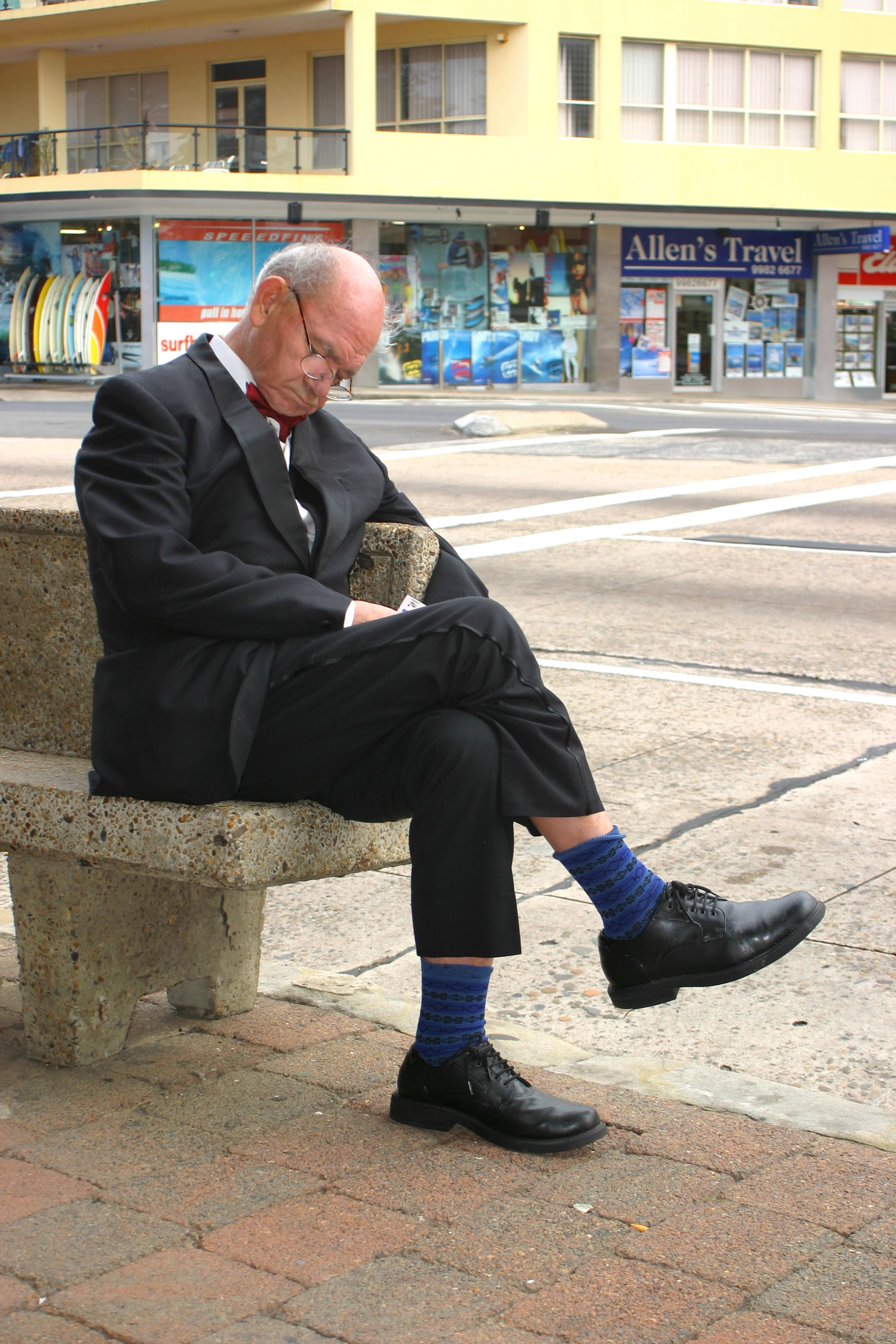
In Roselle Park, New Jersey, it is against the law to fall asleep in public. It is intended to address Roselle Park’s homelessness problem. Maybe the theory is that if you pass a law banning homelessness, or at least its trappings, nobody will be homeless anymore.

Or maybe it will merely keep them out of sight, and out of mind. After all, it can be depressing to see people sleeping on benches, at bus stops, and in parks. Especially if they clearly have nowhere else to go. And they can’t have that in Roselle Park.

Regulation of the Day 159: Playing Chess

Yacahuda Harrison, 49, likes to play chess. He and six of his friends were playing the classic strategy game in an Upper Manhattan park. Their game was broken up by “A squad of cops in bulletproof vests,” The New York Post reports.

This is because it is illegal for adults to be in said park unless they are accompanied by a child under 12 years old. The law is intended to keep molesters away from children.

No children were in the park when Harrison’s chess game was busted.

He and his accomplices were ticketed and have a December 28 court date.

Regulation of the Day 157: Unlicensed Barbering

In Orange County, Florida, barbering without a license is illegal. Perhaps owing to the absurdity of the regulation, the offense is only a misdemeanor. Barriers to entry, such as licensing, usually serve as ways for existing barbers to limit competition. But something else must be going on in Orange County. Look at how barber licensing is being enforced:

As many as 14 armed Orange County deputies, including narcotics agents, stormed Strictly Skillz barbershop during business hours on a Saturday in August, handcuffing barbers in front of customers during a busy back-to-school weekend.

It was just one of a series of unprecedented raid-style inspections the Orange County Sheriff’s Office recently conducted with a state regulating agency, targeting several predominantly black- and Hispanic-owned barbershops in the Pine Hills area.

The raids were performed without a warrant. Their ostensible goal was to put a stop to other crimes going on in the shops. But according to the Orlando Sentinel, “records show that during the two sweeps, and a smaller one in October, just three people were charged with anything other than a licensing violation.” There were 37 arrests in all.

(Via Radley Balko)

Regulation of the Day 156: Happy Meals

With an 8-3 vote, San Francisco’s Board of Supervisors banned the greatest menace facing it or any other city: happy meals.

Restaurants are no longer allowed to include a free toy with kid’s meals. “This is a challenge to the restaurant industry to think about children’s health first,” said the bill’s sponsor, Eric Mar. He was named Reason.tv’s Nanny of the Month for his troubles.

I’m guessing restaurants’ first thoughts about the ban are not printable on this blog.

There is a loophole, though. If a kid’s meal is under 600 calories, includes sufficient amounts of fruit and vegetables, and does not include a sugary drink, then restaurants may include a toy.

Children’s reactions are said to be less than positive. Hearing “no” now and again is an important part of not growing up spoiled; though parents are the ones who should be saying it. But who needs parents when the nanny state is here?

With an 8-3 vote, San Francisco’s Board of Supervisors banned the greatest menace facing it or any other city: happy meals.

Regulation of the Day 155: Miniskirts


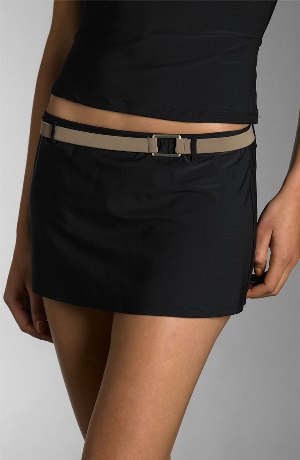
Italy, despite housing the Vatican in its borders, is not exactly known for uptight morality. But the small town of Castellammare di Stabia is. Located at a scenic point just south of Naples, the town lies within the shadows of Mt. Vesuvius, which famously erupted in 79 A.D.

Maybe that visible threat of apocalypse drove conservative Mayor Luigi Bobbio mad. He wants to ban miniskirts within town limits. Police officers would be tasked with paying close attention to women’s hemlines; no doubt many already do. Women who catch an officer’s eye could be fined as much as $700.

Other new regulations that Mayor Bobbio has proposed for Castellammare di Stabia would ban playing soccer in public, sunbathing, and blasphemy. Hopefully the punishment for that last one is less severe than in past centuries.