
Category Archives: Regulation of the Day

Regulation of the Day 175: Firing Dwarves

Starbucks is in some hot water for firing an El Paso employee on her third day back in 2009. The employee happens to be a dwarf. The Equal Employment Opportunity Commission is suing the coffee chain for violating federal law. Starbucks counters by saying that the employee posed a safety hazard to her colleagues.

She asked to be given a stool to help her perform her duties. That could pose a tripping hazard for others. In a business built around piping-hot liquid, tripping hazards can be dangerous indeed.

Maybe Starbucks broke the law; maybe it didn’t. The courts will decide in due time. But there’s good reason to think that this law is a bad one.

That’s because EEOC is ignoring an important unintended consequence. It’s trying to help.  But it is actually hurting the very people it wants to protect.

Starbucks is learning – the hard way – that every dwarf and every disabled person it hires is a lawsuit waiting to happen. It is easy to imagine this having a chilling effect on its hiring practices. Why hire any disabled people at all? It would be nice to help out and give a job to someone who needs it. Bt  for many employers, it’s just not worth the litigation risk.

With the economy as it is, it’s hard enough as it is to find a job, especially for people with disabilities. The EEOC is only making it harder on them. Good intentions are nice. But results are what matter. And the result of EEOC’s lawsuits is less employment equality, not more.
Regulation of the Day 174: Lying about the Size of the Fish You Caught

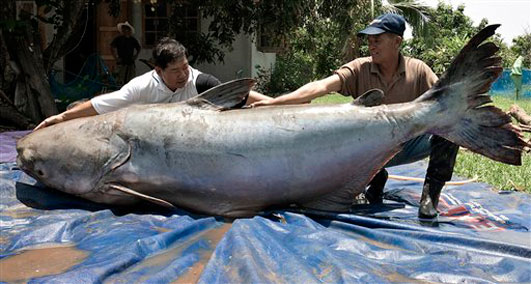
If you live in Texas, look over your shoulder before you tell a tall tale about your last fishing trip. The state legislature there just voted to make lying about the size of your catches in fishing tournaments a class A misdemeanor. And if the prize money is over $10,000, you could spend up to ten years in jail as a convicted felon.

In 2009, an especially devious fisherman in the Bud Light Trails Big Bass Ray Hubbard tournament “put a one-pound lead weight inside the stomach of the 10.49-pound bass he had entered to win the grand prize, a $55,000 fishing boat,” according to the New York Times.

Fishing tournaments, just like other competitive sports, have their own rules. Violators are punished. The NFL reserves the right to fine and suspend players for misconduct. Major League Baseball hands out 50 and 100-game suspensions for players caught using steroids. Pete Rose was banned from baseball for life for betting on his team.

The tournament organizers foolishly couldn’t punish their own cheater because they didn’t have a rule for it. But submitting a leaden fish is a kind of fraud, especially when the prize is $55,000. And in fact, the man was charged with felony theft. He served 15 days in jail, was hit with a $3,000 fine, plus five years of probation. His fishing license was also taken away for five years.

That’s precisely why the bill on Governor Rick Perry’s desk is unnecessary. One, theft is already illegal. Two, if the Bud Light Trail tournaments are competently run, they now have specific rules and punishments for cheaters. Seems like a classic “do something” bill that doesn’t do much at all.

Regulation of the Day 173: Yellow Pages

It’s creative destruction in action. San Francisco is phasing out the distribution of hard-copy Yellow Pages. About 1.6 million of the doorstops are delivered to San Francisco homes every year. Most people no longer use them. Between YellowPages.com, Google, Craigslist, and other online tools, consumers now have better options for finding what they need.

Next week, San Francisco’s city council will hold a vote to ban delivery of hard copy Yellow Pages to anyone who doesn’t specifically request one.

This issue doesn’t really need a regulatory solution, though. The books depend on ad sales to be profitable. As people use them less and less, advertisers become more reluctant to pay for ads. When revenues drop enough, it will no longer be worthwhile to print hard copies. This transition will happen just fine on its own.

Regulation of the Day 172: Bestiality and Baggy Pants

NBC Miami’s Brian Hamacher with the second-best lede I’ve read this week: “Floridians are going to have to start pulling up their pants and stop having sex with animals soon.

Florida’s state legislature passed an odd pair of bills on Wednesday. One would make bestiality a first-degree misdemeanor. The other would ban students from wearing their pants lower than legislators would like.

The bestiality bill, SB 344, is rather, ahem, detailed. I will spare you those details, and only point out that the bill would make it illegal to “Knowingly engage in any sexual conduct or sexual contact with an animal.” That means if someone unknowingly engages in the same (how?), they have not committed a crime. One wonders if any offenders will try to use that defense.

The baggy pants bill, SB 228, requires all Florida public school districts to add a droopy pants ban to their dress codes. The bill also prescribes punishments. First-time offenders get a verbal warning. A second offense means a suspension from extracurricular activities for up to five days. Every offense after that means up to three days of in-school suspension and no extracurriculars for up to 30 days. The student’s parents also get a note from the school.

Regulation of the Day 171: Cream Puffs

A new bill in the Wisconsin legislature would make the cream puff the state’s official dessert. An influential lobbying group consisting of fourth-graders from Mukwonago used Facebook and other media to pressure Sen. Mary Lazich into introducing the bill.

Despite support from the powerful Wisconsin Bakers Association, the Milwaukee Journal-Sentinel points that the cream puff bill’s success is not guaranteed. Previous attempts “to make Harley-Davidson the official state motorcycle and to recognize the microbe that turns milk into cheese failed to pass.”

This blog will be paying very close attention to the heated legislative battle in Madison to give the delicious cream puff its due. After all, the time that legislators spend on this is time they aren’t spending passing more harmful legislation.

Regulation of the Day 170: Kinder Eggs

Kinder eggs are a type of candy that enjoys worldwide popularity. They are chocolate eggs with a plastic shell underneath the outside layer of chocolate. After kids enjoy the chocolate, they can open up the plastic shell and find a toy inside. They are especially popular around Easter.

They are also illegal in the United States. The Consumer Product Safety Commission and the Food and Drug Administration have declared the toys to be a safety hazard. Children could choke on them.

A third agency, Customs and Border Patrol, confiscates about 25,000 kinder eggs per year. Most people know that kinder eggs aren’t actually a choking hazard, so they don’t know about the ban and think nothing of bringing some home from a trip.

NRO’s Mark Steyn recently had just such a run-in when he and his children returned from a trip to Canada:

My kids asked the CBP seizure squad if they could eat the chocolate in front of the border guards while the border guards held on to the toys to prevent any choking hazard — and then, having safely consumed the chocolate, take the toys home as a separate item. This request was denied.

As I noted in a previous Regulation of the Day:

According to WebMD, 66 to 77 children under 10 die every year from choking on food in the U.S. That’s out of more than 42,000,000 children under 10, according to my calculations from U.S. Census data.

That means your child’s odds of choking to death on food are about 1 in 545,000. And that’s assuming 77 deaths, the high end of the range. Little Timmy is literally more likely to be struck by lightning (1 in 500,000) than choke to death on a hot dog.

I’m sure that CPSC, FDA, and CBP would love to credit their diligence in enforcing the kinder egg ban for those reassuring numbers. But common sense says they shouldn’t.

Regulation of the Day 169: Singing “Kung-Fu Fighting”

A British man was arrested for singing the 1970s hit “Kung-Fu Fighting”. Simon Ledger and his band were performing the song at a bar on the Isle of Wight. An asian audience member found the song offensive. Rather than tell the band, or take his business to a different establishment, he went to the police, claiming racial abuse. Racism is a punishable crime in Britain.

Police found the singer and arrested him later that night, appropriately enough, at a Chinese restaurant.

Regulation of the Day 168: When Chickens Mate

In Hopewell Township, New Jersey, chickens are only allowed to mate on 10 pre-selected days per year. And that isn’t the only law that poultry must follow. They must be disease-free in order to mate. There are to be no more than 6 hens per half-acre lot. And roosters must keep their crowing in check – violating Hopewell’s strict crowing regulations means a two-year banishment from the property they disturbed.

Regulation of the Day 167: Wearing Perfume

Portland, Oregon is banning city government employees from wearing perfume or cologne at work. The ban also covers “aftershave or other scented products like hair sprays and lotion.”

Violators will be disciplined.

Regulation of the Day 166: Cowboy Poetry

This year’s budget battle is especially heated. Democrats want the federal budget to be $3.7 trillion. Republicans want it to be $3.6 trillion. Both sides are willing to shut down the federal government rather than give in.

That’s where cowboy poetry, of all things, comes in. This traditional American art form, which I’d never heard of until today, has suddenly become the latest front in the epic struggle over the size and scope of government.

It is currently official federal policy to financially support cowboy poetry. But the GOP wants to cut $61 billion, or 1.6 percent, out of President Obama’s proposed budget. And cowboy poetry funding is on the chopping block.

The main element of federal cowboy poetry policy is a week-long annual festival in Nevada. Nevada is also the home state of Sen. Harry Reid. He is furious about this dire threat to cowboy poets everywhere, calling his opponents “mean-spirited.”

Without the funding, he adds, “the tens of thousands of people who come there [to the festival] every year would not exist.”

If Sen. Reid is right, tens of thousands of people could literally vanish into non-existence if Republicans get their way. Maybe they should reconsider.

If only politicians had that kind of existential power over the $1.6 trillion budget deficit. Oh, wait. They do. All they have to do is spend less.

(via Dan Mitchell)