Category Archives: Elections

CEI Podcast for January 5, 2012: The Iowa Caucuses

Have a listen here.

Associate Director of Technology Policy Studies and Iowa native Ryan Radia takes a look at how the different strains of Republican voters are deciding on their party’s presidential nominee. In the years to come, Radia believes that the GOP will need to reinvent itself ideologically if it is to remain politically relevant.
Teddy Roosevelt’s Legacy

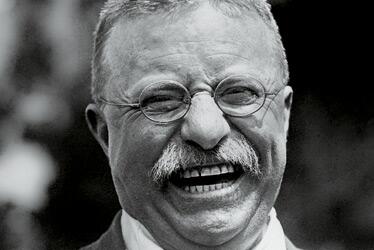
Gene Healy on presidential candidates’ bipartisan love for Teddy Roosevelt:

Modeling your re-election strategy on an obnoxious authoritarian’s failed third-party run for the presidency a hundred years ago is an interesting choice, but not necessarily a wise one. It’s a move of desperation, unlikely to work.

GOP front-runner Newt Gingrich calls himself “a Theodore Roosevelt Republican.” Despite (or because of?) T.R.’s many flaws, politicians from both parties have long found something irresistible about our pulpit-pounding 26th president.

But T.R.’s enduring appeal is an enduring mystery. What’s so attractive about Roosevelt’s political philosophy? A loudmouthed cult of manliness? A warped belief that war is a good tonic for whatever ails the national spirit? A contemptuous attitude toward limits on presidential power?

John McCain, the 2008 GOP nominee, also suffers from a Teddy Roosevelt complex, as Matt Welch details in his book McCain: The Myth of a Maverick. If there’s any lesson to be learned from presidential candidates’ shared T.R. fetish, it’s that only those truly in love with power can endure the the hell of the campaign trail to acquire it.

The Language of Politics

Yahoo’s Chris Moody has a great piece about how politicians choose their words. Hint: polls are involved.

Demagoguing Immigrants Wins No Votes

Today’s quote of the day from The Wall Street Journal‘s Political Diary newsletter is good stuff. Here it is in full:

“With Rick Perry suddenly pushing a flat tax and Herman Cain substantively revising his 9-9-9 revenue plan, GOP candidates may finally relinquish their feverish immigration obsession — one that’s destructive, distracting, demented, and downright dumb. Why spend a wildly disproportionate amount of energy exploring an issue that few voters consider a top priority, and where all Republican candidates fundamentally agree, rather than emphasizing real differences on the economic problems that will decide the election?

“Listening to the toxic trash talk at the Las Vegas debate, or watching attack ads that are already polluting the Internet, one might assume that the public viewed illegal immigration as the greatest challenge facing our civilization and believed the fate of the republic hinged on Mitt Romney’s past reliance on a lawn-service company that hired undocumented workers.

“Actually, no major poll of the last year — no, not one of them — showed robust public interest in immigration. This month, CBS News asked respondents to name ‘the most important problem facing this country today.’ Less than 2 percent came up with ‘illegal immigration,’ while a dozen other concerns, led by ‘the economy and jobs,’ of course, finished higher on the list. Over the summer, surveys from Bloomberg and Fox News found 3 percent and 2 percent, respectively, who identified immigration as a priority, with gas prices, the war in Afghanistan, health care, the deficit, education, and even nebulous concerns like ‘partisan politics’ and ‘moral values’ more frequently mentioned by the public” — syndicated columnist Michael Medved writing at thedailybeast.com on Oct. 24.

Republicans are even worse than Democrats on immigration issues. Medved is right. It would be nice if the GOP candidates would just stop talking about it. I don’t care if doing so would help them at the polls or not; I just think that economically illiterate anti-foreign bias is an ugly thing to behold.

Know Your Audience

Jon Huntsman is running for president as a Republican. Speaking to a tea party group on Sunday, he talked up his conservative credentials.

This bold stance garnered national headlines.

Wouldn’t it be more newsworthy if a professional vote-scrounger like Huntsman told an audience something they didn’t want to hear?

Democracy in Action

Politico:

A new Massachusetts Institute of Technology study found that so-called “low-information voters” — those who watch a lot of TV but who aren’t up-to-date on policy issues — are most likely vote for a candidate based on looks alone.

The Power of Incumbency: Charlie Rangel Edition

Over at the AmSpec blog, I look at the just-wrapped House ethics trial against Charlie Rangel. Worth noting: while that Damoclean sword was hanging over Rangel’s head, 80 percent of his district’s voters though him worthy of another term.

Nothing against Rangel; he has his problems, but he’s good on some issues, such as wanting to end the Cuban embargo. But the ease with which even ethically-challenged incumbents get re-elected is a sign that our democracy is not healthy.

CEI Podcast – November 4, 2010: Election Dissection

Have a listen here.

Myron Ebell, the Director of CEI’s Center for Energy and Environment, talks about the 2010 midterm election, what will happen in the lame-duck session, and the implications of two years of divided government.

Last Word on Voting

I wasn’t all that surprised by the overwhelmingly negative reaction to my article on voting. But I was surprised at its ferocity. I must have been insufficiently clear that I am not categorically against voting. Just that I gave the matter careful thought and decided against it this year.

Different people weighing the same arguments I did can easily come to a different conclusion. And that’s exactly why I put them out there. Not so people will do as I do, but to help them think for themselves and make the choice that’s right for them.

Then again, people do have an ingrained straw-man reflex. It often pops up when one’s sensibilities are offended. This easily happens with issues concerning democracy. Instead of taking seriously an idea you don’t like, just build a man out of straw that looks kind of like that idea, then knock it down and feel good about it.

That’s all well and good, but it’s hardly conducive to a civil exchange. It’s also a way to avoid having to take on the arguments that were actually made. I’ll just have to keep making them, then.

The math argument speaks for itself. Rep. Moran won re-election by 45,169 votes. I have one vote.

The expressive voting model provides a powerful reason for voting — for many people, much more powerful than the math. If I do vote in a future election, it will be for expressive purposes. After all, I’m not a categorical non-voter.

But I am mindful of alternative uses of my time. Voting is far from the only form of political participation. If I feel like I could be doing more good with the time I spend voting by doing something else, well then I’m going to do something else. If not, then I’ll vote. Different people will come up with different answers to that question. But one can’t assume it away, no matter how much one would like to.

There is only one argument people have lobbed at me that bothers me. It is that people who don’t vote lose the right to criticize government policies. That argument holds less water than a thimble. It also violates any reasonable notion of free speech, which is actually more important for democracy’s health than voting. As John Carney writes:

I’ve never understood this weird part of pseudo-democratic theory. It certainly isn’t part of the Constitution of the United States, which preserves the rights of free speech, free press and petitioning the government even for non-voters. If anything, the opposite should be true: by voting you are tacitly agreeing to abide by the outcome of the vote. By not voting, you are doing no such thing.

An Optimistic Take on the Election

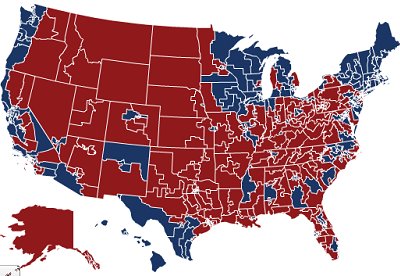
CEI President and Founder Fred Smith and I have an article in The Daily Caller expressing cautious optimism about yesterday’s election results. Our main points:

-We are (cautiously) optimistic because voters turned out in droves to make a statement against big government, not to endorse GOP policies. But no reforms will happen unless people keep fighting for them.

-Activists have a lesson to learn from the Bush-era anti-war movement. Anti-Iraq War protestors vanished into thin air almost the moment President Obama was elected. They gave up. That’s one reason there are still 50,000 troops in Iraq and America’s presence in Afghanistan has doubled. The next few years will be the true test of the tea party movement. Will it grow complacent in victory?

-GOP politicians have a lesson to learn from their 1994 victory and subsequent fall from grace. The 1994 Republicans gave up as reformers after about six months. Voters kept them around because they did a tolerable job of checking Clintonian excesses. But six years of one-party rule under Bush were more than enough to show that Republicans were far more concerned with staying in power than with shrinking government. Federal spending roughly doubled under Bush, and that was enough to give them the boot.

It will be interesting to see what happens. The 2010 election might be nothing more than a blip on the radar. Or it could be the start of a genuine reform movement that will take on the coming entitlement crisis. We’re hoping for the latter.