“Freedom of thought, in any valuable sense, includes freedom of speech.”

-J.B. Bury, A History of Freedom of Thought

“Freedom of thought, in any valuable sense, includes freedom of speech.”
-J.B. Bury, A History of Freedom of Thought
Comments Off on Why Freedom of Speech Matters
Posted in Free Speech, Great Thinkers, Pith
“Great men have two lives; one which occurs while they work on this earth; a second which begins at the day of their death and continues as long as their ideas and conceptions remain powerful.”
-Adolph A. Berle
Berle wrote those words a bout FDR. I read them in a biography of Pericles. May they also apply to great thinkers from John Locke to Adam Smith Charles Darwin to F.A. Hayek, all the way on down to today’s bright lights of liberalism who are alive and well.
Comments Off on Great Men (and Women)
Posted in Philosophy, Pith
Tagged adolph berle, david hume, f.a. hayek, fdr, grat men, great men, hayek, hume, john locke, locke, pericles, pith, quotations, quotes
Echoes of both Kant, and of human decency:
“[I]t is always immoral to treat men as means and not ends.”
-Bertrand de Jouvenel, Capitalism and the Historians (F.A. Hayek, ed.), p.96
Comments Off on Sound Advice for Policymakers
Posted in Books, History, Pith
Tagged bertrand de jouvenel, categorical imperative, de jouvenel, kant, means and ends
“[I]f it is too pessimistic a view that man learns nothing from history, it may well be questioned whether he always learns the truth.”
–Capitalism and the Historians, (F.A. Hayek, ed.), p.3
Comments Off on Hayek on History
Posted in Great Thinkers, History, Pith
Tagged capitalism and the historians, hayek, History

Politics vs. principle:
“The citizen is influenced by principle in direct proportion to his distance from the political situation.”
-Milton Rakove, early 20th century political scientist and father of the historian Jack Rakove.
Comments Off on Rakove’s Second Law
Posted in Pith, Political Animals

“The hardest thing about any political campaign is how to win without proving that you are unworthy of winning.”
-Adlai Stevenson
Comments Off on Political Wisdom
Posted in Elections, Pith, Political Animals
Tagged adlai stevenson, campaign, election, pith, politicians, politics, quotations, quotes

Before there were lawyers, there were philosophers. The Sophists, given a bad name by Plato, earned their bread by teaching people how to plead their cases in court. There being no professional lawyers in 5th century B.C. Athens, people had to represent themselves. Witness this tale (probably too good to be true) of the pre-Socratic Greek philosopher Protagoras:
It is said that [Protagoras] taught a young man on the terms that he should be paid his fee if the young man won his first law-suit, but not otherwise, and that the young man’s first law-suit was one brought by Protagoras for recovery of his fee.
Bertrand Russell, History of Western Philosophy, p. 75.
Comments Off on Before Lawyers
Posted in Books, General Foolishness, Great Thinkers, History, Philosophy, Pith
Tagged ancient greece, ancient philosophy, athens, bertrand russell, greece, greek philosophy, History, history of western philosophy, Philosophy, plato, protagoras, western philosophy

When Niccolo Machiavelli died in 1527, Washington, DC was still more than two and a half centuries away from being founded. But he understood perfectly how that dismal city would work, as Bertrand Russell reminds:
“In the absence of any guiding principle, politics becomes a naked struggle for power; The Prince give shrewd advice as to how to play this game successfully.”
-Bertrand Russell, History of Western Philosophy, xxii-xxiii.
Machiavelli was, in many ways, the first modern public choice theorist. Had he lived in a post-Adam Smith world, he would have made a fine economist. A politician’s guiding principle is usually not ideology. It is to remain in power. So they behave accordingly. The first lesson of economics is that people respond to incentives. If someone’s incentive is to get re-elected, they will behave in a way conducive to achieving that goal. Morality and the greater good compete for a distant second.
Comments Off on Politics 101: Machiavelli and Public Choice
Posted in Books, Great Thinkers, Pith, Political Animals, Public Choice
Tagged bertrand russell, Great Thinkers, machiavelli, Philosophy, the prince, washington, washington dc
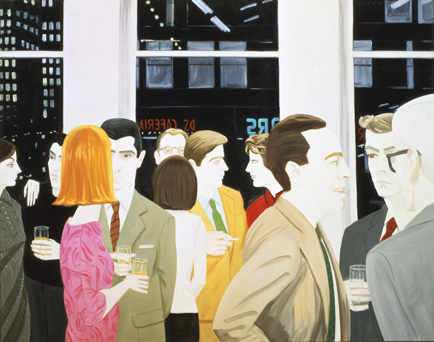
In Washington, the first question people ask you is usually, “what do you do?”
“I’m an economist,” I answer. “I work at a think tank.”
“Oh,” the usual response goes. Followed by an immediate change of subject.
So I’m not a hit on the DC cocktail party circuit. But this quotation made me swell with pride when I read it:
“Economics is not a dry subject. It is not a dismal subject. It is not about statistics. It is about human life. It is about the ideas that motivate human beings. It is about how men act from birth until death. It is about the most important and interesting drama of all–human action”
-Percy Greaves
Hat tip: the Foundation for Economic Education, which did much to introduce me to the economic way of thinking when I was younger, and continues to educate and inspire me today.
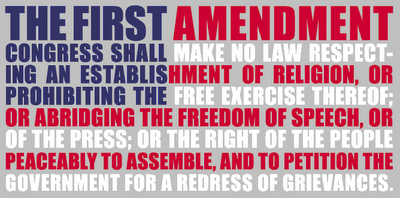
“If the First Amendment has any force, it prohibits jailing citizens for engaging in political speech.”
–Justice Anthony Kennedy, introducing today’s Citizens United decision.
Precisely. The correct way to rebut unwelcome speech is not to silence it. It is to counter it with more speech. Let the best arguments win. Advocating speech restrictions is a fancy way of saying, “my arguments are too weak to withstand criticism.” Get better arguments, then!
Free speech issues aside, there is a reason why McCain-Feingold is informally known as the Incumbent Protection Act. It stacks the deck against challengers. No wonder so many incumbent politicians from both parties have come out against today’s decision. It’s bad for their job security.
Comments Off on A Good Day for Freedom of Speech
Posted in Free Speech, Law, Pith
Tagged anthony kennedy, campaign finance, citizens united, Free Speech, justice kennedy, scotus, supreme court

 Inertia Wins!