Category Archives: Philosophy

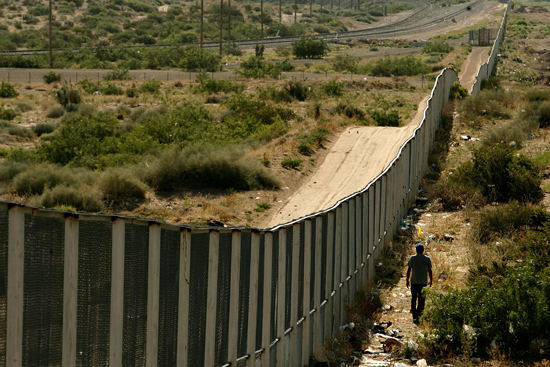
The State of the Immigration Debate

Alex Nowrasteh and I expected some negative feedback on our article today on immigration reform in The American Spectator Online. We’re probably in the minority for favoring liberalization. And we’re probably a minority of that minority for using the law of demand as our primary argument.

I have a special affection for the Spectator; they were the first outlet to publish me more than once. They’ve let me write on all kinds of issues, from sports to politics to toxicology to economics, no matter what perspective I come from. Even better, I’ve gotten tons of thoughtful feedback from some very smart readers over the years. And we got plenty of that today from people who disagree with us, as expected. This is always welcome.

But one of today’s commenters makes me concerned about the level of debate on immigration. This is especially important since this divisive issue is heating up again in the wake of Arizona’s new law. I’ve reprinted his or her comment below unedited, and will offer no further editorializing, other than that this commenter in no way reflects on the Spectator, and that I hope it is satire.

Northern Rebel| 4.27.10 @ 4:15PM

Our “President’ admires communist countries, so I suggest he adopt the methods to prevent illegal immigration, that they use:
Torture, and Execution!

I posit the notion, that if we shot people the second they crossed into our country, illegal immigration would be a problem no more.

After the first hundred or so shootings, people would realize that we were serious about protecting our borders.

Let the shooting begin!
Hayek’s Uneasy Relationship with Conservatives

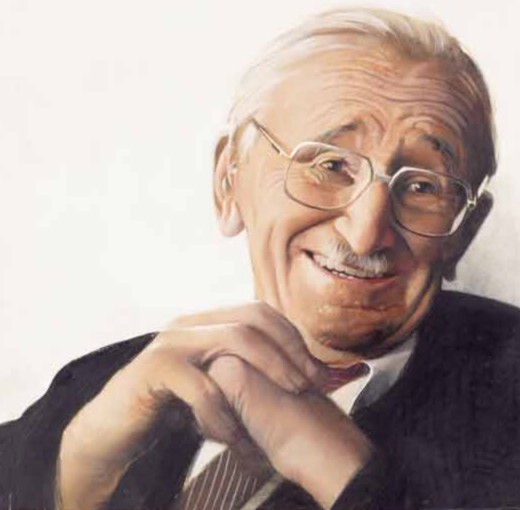
Bill Easterly does a good job of sticking up for Hayek.

Hayek could be quite different than Hayekians. That distinction needs to be made in this era of tea parties and the dominant liberal-vs.-conservative false dichotomy.

I think it’s great that some conservatives are boosting Hayek (I wish progressives would, too; they’d find a lot to like). It just appears they aren’t reading him very closely. Do bear that in mind before associating Hayek with conservatism.

Worth reading: Hayek’s essay, “Why I Am Not a Conservative.” Print it out. Read it closely. Mark up the margins with your notes and reactions. Agree or disagree, this essay rewards deep and careful thought. I’ve read it several times over the years, and every time I pick it up again I learn something new.

The Hayekian Approach to Health Care

George Will has a good column today. He does a wonderful job contrasting Hayek’s philosophy of humility before complexity with the early 20th-century progressive mindset of planning and scientistic design. The framework applies surprisingly well to today’s health care debate, with President Obama playing the role of Woodrow Wilson. Very thought-provoking.

Before Lawyers

Before there were lawyers, there were philosophers. The Sophists, given a bad name by Plato, earned their bread by teaching people how to plead their cases in court. There being no professional lawyers in 5th century B.C. Athens, people had to represent themselves. Witness this tale (probably too good to be true) of the pre-Socratic Greek philosopher Protagoras:

It is said that [Protagoras] taught a young man on the terms that he should be paid his fee if the young man won his first law-suit, but not otherwise, and that the young man’s first law-suit was one brought by Protagoras for recovery of his fee.

Bertrand Russell, History of Western Philosophy, p. 75.

Inside North Korea

The satellite image above  is one of the most eloquent arguments for capitalism and freedom that I have ever seen. Liberalism is light. Literally. And just as literally, its rejection means darkness. Some pictures say far more than a thousand words.

Which brings me to an online documentary on North Korea over at VBS.tv that I just finished watching. It’s about an hour long in all. Not only did these guys actually travel to Pyongyang, which is difficult enough, they managed to film their experience on the sly. And despite being threatened with jail more than once, they brought back a lot of footage. To my western eyes, this was quite a sight to see.

The host has a bit of the stereotypical, boorish, Ugly American in him. Not sure he makes the best ambassador. But it took a lot of guts to do what he did. If you want some first-hand footage of life in a totalitarian state, this is about as close as you can get. Worth watching.

Federal Government Shuts Down Due to Snow

Few people outside of the DC area are likely to notice, but the recent snowstorm shut down the federal government today. Another big snow is on the way, so the feds are also taking tomorrow off.

The Washington Post reports:

Official estimate [sic] that closing the federal government for a day due to the weather costs roughly $100 million in lost productivity and opportunity costs, meaning this weekend’s storm will have potentially cost taxpayers at least $250 million, for last Friday’s early dismissal and Monday’s and Tuesday’s closures.

That is dwarfed, of course, by the opportunity costs of having a $3.8 trillion federal government in the first place. Not to mention the productivity losses.The federal government spends $49.1 billion enforcing regulations that cost nearly $1.2 trillion. if even half of that were freed up, imagine the good that would come of it.

The billions and billions of dollars spent on earmarks and stimulus would do far more good if that money stayed in the productive sector, subject to the self-correcting mechanisms of profit and loss.

In short: America benefits when Washington busybodies take a few days off. So enjoy it while it lasts.

There is great wisdom in Mark Twain’s famous adage: “No man’s life, liberty, or property are safe while the congress is in session.”

Hayek on the Constitution of Liberty

The Foundation for Economic Education has just posted an audio file from its archives of Nobel-winning economist F.A. Hayek talking about his masterwork, 1960’s The Constitution of Liberty.

Have a listen here.

Hayek on Freedom

Think for a minute about how progress is made. It doesn’t follow a constant, linear path. It is unpredictable. It comes in violent fits and starts. It happens at the whim and fancy of genius.

Everyday life is much the same. Life is what you make of it. You have to be free to find what’s best for you. That means making wrong choices sometimes. It means not just trial, but error. Or, as Hayek put it:

“If we knew how freedom would be used, the case for it would largely disappear… It is therefore no argument against individual freedom that it is frequently abused.”

-F.A. Hayek, The Constitution of Liberty, p. 31.

On the Nature of Change: Calm Down!

One of history’s great debates is whether we will die in fire or ice. The proportion of the populace crying each variety of wolf varies according to the fashion of the time.

Vikings newly introduced to Christianity, taking note of their surroundings, sided with ice. They conceived of hell as a cold place, filled with blue devils.

A few centuries later, Dante wrote his Divine Comedy. Its famous first canticle, Inferno, had a very different, much hotter picture of hell.

Fast forward to our time. In the 1970s, ice was the fashion once again. Grant-seeking scientists and credulous journalists warned of imminently fatal global cooling. A new ice age was dawning.

In this decade, fire is all the rage again. Many of those same grant-seeking scientists and credulous journalists have changed their minds. Now global warming will cause catastrophe. And these 690 other things (!).

The particular charges change from generation to generation. But the verdict is always the same: apocalypse. A common thread runs from the Book of Revelations to Nostradamus to Rachel Carson to James Hansen. That threat is imminent doom. As one doomsayer after another is proven wrong, the litany gets quite tiresome.

The Earth has cooled over the last decade; we will die in ice.

But it’s gotten warmer over the last century. Fire, then.

But it’s cooler than it was in the High Medieval period. Ice.

But warmer than during the Dark Ages. Fire.

And so on.

Global temperatures will continue to change, ebb, and flow, whether or not we emit a given amount of CO2, and whether or not we care. Yet many people view climate change as a horror. It must be stopped at any cost.

There is a reason why global warming alarmists don’t like to use the phrase “global warming.” They prefer “climate change.” The prospect of a world two degrees warmer than the one we live in now isn’t very scary. But the notion of climate change does scare people. Framing it that way has been devastatingly effective in getting publicity and funding. It’s good for business.

Today’s dominant mindset that any climate change at all is bad is puzzling. It implicitly assumes that today’s climate is the best of all possible climates. Maybe that’s true. But maybe it isn’t. The trouble is that few climate activists seem to have had that thought. The idea of change is so scary that nobody has the presence of mind to ask if that’s a problem or not.

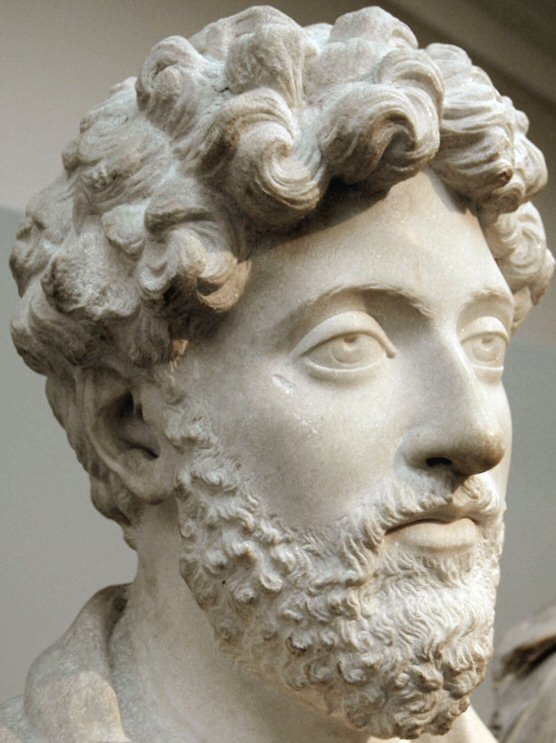
I give them the counsel of Marcus Aurelius, who lived during the (rather warm) second century AD: “To be in the process of change is not an evil, any more than to be the product of change is a good.”*

No, change simply is. It is a part of life. Let us observe, adapt, and live in peace with each other and the world that we all call home. I’m not scared. You shouldn’t be, either.

*Meditations, IV.42; trans. Maxwell Staniforth.

Marcus Aurelius: Emperor, Philosopher, Economist

Gibbon’s Decline and Fall begins with the death of Marcus Aurelius in 180 AD. It was all downhill from there.

Besides being a well-regarded emperor who was succeeded by an ill-regarded son, Marcus was a philosopher. Reading the works of Epictetus turned him into a devoted stoic as a young man. Marcus’ book Meditations remains the sterling example of the stoic mindset: civility, moderation in all things, and above all, taking triumph and tragedy with the same quiet dignity.

Marcus also had a bit of the economist in him. Despite predating Adam Smith by sixteen centuries, Meditations contains an excellent example of opportunity costs. Only the law of demand is more important in the economist’s toolkit. As a way of saying “mind your own business,” he writes:

Do not waste what remains of your life in speculating about your neighbours, unless with a view to some mutual benefit. To wonder what so-and-so is doing and why… means a loss of opportunity for some other task.*

*Meditations, III.4; trans. Maxwell Staniforth.