Category Archives: Great Thinkers

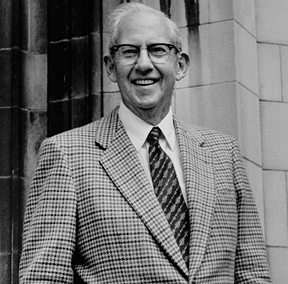
The Wisdom of George Stigler

George Stigler won a Nobel Prize for his work on the economics of regulation. He wrote extensively about regulatory capture, and in fact coined the term. He was one of only a few sane souls who stubbornly insisted that regulations be judged by their actual results, not their intended results. Good intentions, however noble, are not enough. Here’s an example of Stigler at his finest:

Regulation and competition are rhetorical friends and deadly enemies: over the doorway of every regulatory agency save two should be carved: “Competition Not Admitted.” The Federal Trade Commission’s doorway should announce , “Competition Admitted in Rear,” and that of the Antitrust Division, “Monopoly Only by Appointment.”

-George Stigler, “Can Regulatory Agencies Protect the Consumer?”, from The Citizen and the State: Essays on Regulation (1975), p. 183.
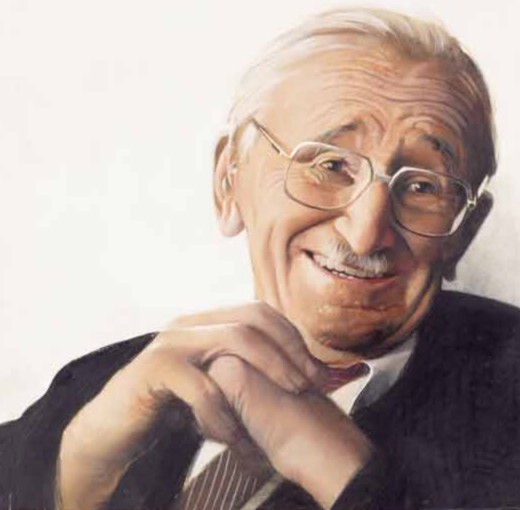
Hayek’s Uneasy Relationship with Conservatives

Bill Easterly does a good job of sticking up for Hayek.

Hayek could be quite different than Hayekians. That distinction needs to be made in this era of tea parties and the dominant liberal-vs.-conservative false dichotomy.

I think it’s great that some conservatives are boosting Hayek (I wish progressives would, too; they’d find a lot to like). It just appears they aren’t reading him very closely. Do bear that in mind before associating Hayek with conservatism.

Worth reading: Hayek’s essay, “Why I Am Not a Conservative.” Print it out. Read it closely. Mark up the margins with your notes and reactions. Agree or disagree, this essay rewards deep and careful thought. I’ve read it several times over the years, and every time I pick it up again I learn something new.

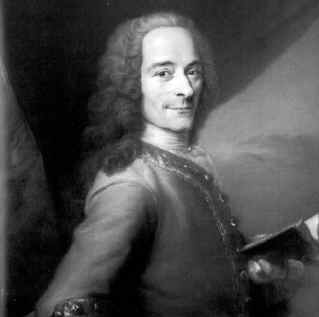
Voltaire on Government

Voltaire defined government as  “a device for taking money out of one set of pockets and putting it into another.”*

It appears Keynesian stimulus was debunked two and a half centuries before Keynes even came up with the idea. Economic growth comes from the creation of new wealth. The best government can do is shuffle around wealth created by others.

(*cf. Albert Jay Nock, Our Enemy, the State, p. 128)

Before Lawyers

Before there were lawyers, there were philosophers. The Sophists, given a bad name by Plato, earned their bread by teaching people how to plead their cases in court. There being no professional lawyers in 5th century B.C. Athens, people had to represent themselves. Witness this tale (probably too good to be true) of the pre-Socratic Greek philosopher Protagoras:

It is said that [Protagoras] taught a young man on the terms that he should be paid his fee if the young man won his first law-suit, but not otherwise, and that the young man’s first law-suit was one brought by Protagoras for recovery of his fee.

Bertrand Russell, History of Western Philosophy, p. 75.

Politics 101: Machiavelli and Public Choice

When Niccolo Machiavelli died in 1527, Washington, DC was still more than two and a half centuries away from being founded. But he understood perfectly how that dismal city would work, as Bertrand Russell reminds:

“In the absence of any guiding principle, politics becomes a naked struggle for power; The Prince give shrewd advice as to how to play this game successfully.”

-Bertrand Russell, History of Western Philosophy, xxii-xxiii.

Machiavelli was, in many ways, the first modern public choice theorist. Had he lived in a post-Adam Smith world, he would have made a fine economist. A politician’s guiding principle is usually not ideology. It is to remain in power. So they behave accordingly. The first lesson of economics is that people respond to incentives. If someone’s incentive is to get re-elected, they will behave in a way conducive to achieving that goal. Morality and the greater good compete for a distant second.

Hayek vs. Keynes Rap Video

The first project from EconStories. tv debuted today. It’s a rap video starring John Maynard Keynes and F.A. Hayek, called “Fear the Boom and Bust.” Amusing and deadly serious at the same time.

On a related front, Pete Boettke and Steve Horwitz have a new paper out applying a Hayekian view to the latest boom-and-bust cycle. It’s titled “The House that Uncle Sam Built,” and it’s worth reading.

Hayek on the Constitution of Liberty

The Foundation for Economic Education has just posted an audio file from its archives of Nobel-winning economist F.A. Hayek talking about his masterwork, 1960’s The Constitution of Liberty.

Have a listen here.

Hayek on Freedom

Think for a minute about how progress is made. It doesn’t follow a constant, linear path. It is unpredictable. It comes in violent fits and starts. It happens at the whim and fancy of genius.

Everyday life is much the same. Life is what you make of it. You have to be free to find what’s best for you. That means making wrong choices sometimes. It means not just trial, but error. Or, as Hayek put it:

“If we knew how freedom would be used, the case for it would largely disappear… It is therefore no argument against individual freedom that it is frequently abused.”

-F.A. Hayek, The Constitution of Liberty, p. 31.

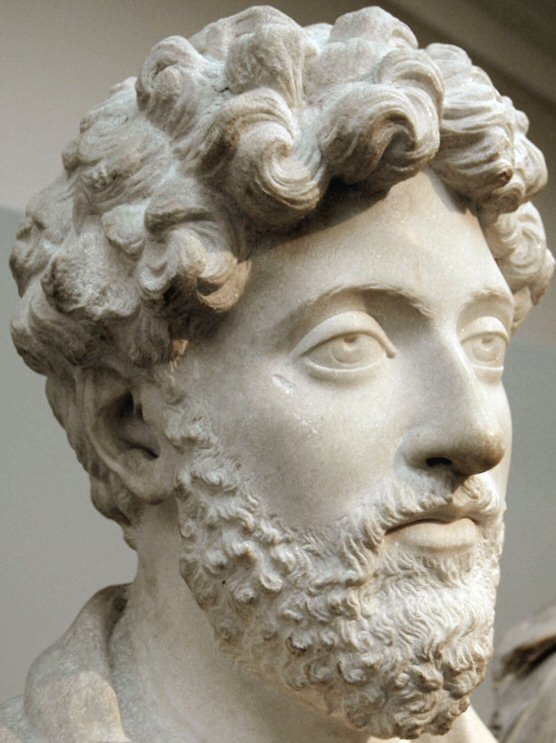
Marcus Aurelius: Emperor, Philosopher, Economist

Gibbon’s Decline and Fall begins with the death of Marcus Aurelius in 180 AD. It was all downhill from there.

Besides being a well-regarded emperor who was succeeded by an ill-regarded son, Marcus was a philosopher. Reading the works of Epictetus turned him into a devoted stoic as a young man. Marcus’ book Meditations remains the sterling example of the stoic mindset: civility, moderation in all things, and above all, taking triumph and tragedy with the same quiet dignity.

Marcus also had a bit of the economist in him. Despite predating Adam Smith by sixteen centuries, Meditations contains an excellent example of opportunity costs. Only the law of demand is more important in the economist’s toolkit. As a way of saying “mind your own business,” he writes:

Do not waste what remains of your life in speculating about your neighbours, unless with a view to some mutual benefit. To wonder what so-and-so is doing and why… means a loss of opportunity for some other task.*

*Meditations, III.4; trans. Maxwell Staniforth.

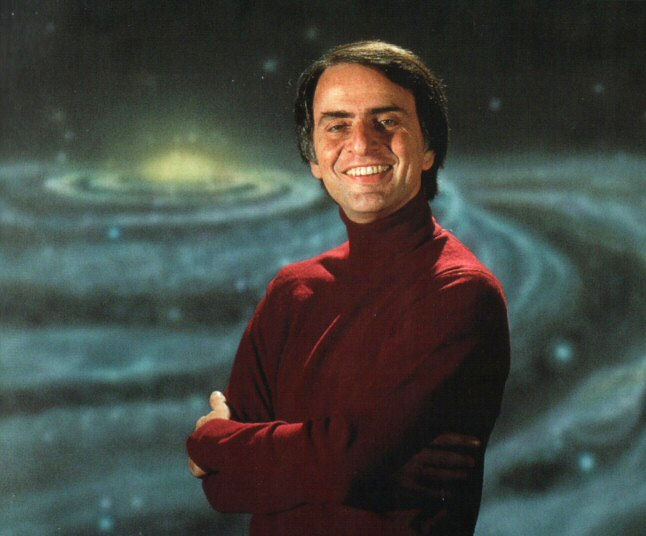
Happy Birthday, Carl Sagan

I’m a bit late on this, but Carl Sagan would have turned 75 on November 9. The Skeptic Society’s Michael Shermer has set up a nice tribute to him.

The thing I admire most about Carl Sagan isn’t his academic credentials, impressive though they were. It’s that he wasn’t afraid to be a popularizer. In fact, he embraced it. He has been an inspiration for what I hope to accomplish in my own professional life.

Will Durant’s book The Story of Philosophy is credited with introducing more people to its subject than any other book. What Will Durant did for philosophy (and later, with his wife Ariel Durant, history), Carl Sagan did for astronomy.

Some pointy-nosed academics looked down on Sagan for pandering to the masses. But Sagan did more in his too-short life to actually educate people than the lot of them combined. How many of those same disdainful academics were inspired to forge a career in science because of Carl Sagan? For a subject as esoteric as cosmology, this is no small achievement.

People who work in economics or public policy would do well to pay attention not just to what Carl Sagan did, but to how he did it. Intellectuals from all disciplines should follow the sterling example set by Carl Sagan.