“The furious behavior of an angry man is more likely to exasperate us against himself than against his enemies.”
-Adam Smith, Theory of Moral Sentiments

“The furious behavior of an angry man is more likely to exasperate us against himself than against his enemies.”
-Adam Smith, Theory of Moral Sentiments
Comments Off on Adam Smith on the New Tone
Posted in Great Thinkers, Pith, The Partisan Mind
Tagged adam smith, angry pundits, new tone, partisanship, theory of moral sentiments
Erasmus opens In Praise of Folly with a letter to Thomas More, author of Utopia. They became good friends when Erasmus stayed in England. He gave More this bit of praise:
“[S]uch is the excellence of your judgment that it was ever contrary to that of the people’s.”
Indeed.
Comments Off on Erasmus on Thinking for One’s Self
Posted in Books, Great Thinkers, Pith
Tagged desiderius erasmus, erasmus, erasmus quotes, in praise of folly, praise of folly, thomas more, utopia

People complain that the level of political discourse in America is lower than ever. That isn’t actually true if you look at the historical record. But the ratio of heat to light is still far too high.
Over at the Daily Caller, I share a bit of wisdom from the economist Joseph Schumpeter about how people can have a more constructive dialogue about the direction of the country.
Comments Off on Setting a New Tone
Posted in Great Thinkers, Publications, The Partisan Mind
Tagged daily caller, joseph schumpeter, new tone, partisanship, political discourse, The Partisan Mind, tone

Adam Smith’s An Inquiry into the Nature and Causes of the Wealth of Nations was published 235 years ago today.
Over at Cafe Hayek, Russ Roberts links to a few short resources about that long, long book (which I nonetheless recommend reading). Worth checking out.
Comments Off on The Wealth of Nations Turns 235
Posted in Economics, Great Thinkers, Philosophy
Tagged adam smith, cafe hayek, russ roberts, wealth of nations

One of the most selfish pleasures I’ve taken away from my time in George Mason University’s economics department is witnessing the accomplishments of the people I got to know there. Reading a former professor’s book, seeing a fellow grad student’s paper in a journal, or reading their op-eds and blog posts brings me endless delight.
That pleasure will be denied me with Doug Rogers. He was one of the best friends I made during that time. He passed away on January 30 in a car accident. He was 26. Right in the prime of life.
What a shame then, that the world will be denied his achievements. He was well on his way to becoming a fine economist. Scratch that. He already was a fine economist. For a quick example of the clarity and principle of his thought, see this article on the economics of prohibition that he authored for a recent issue of The Freeman, published by the Foundation for Economic Education.
We met in Peter Leeson’s class in development economics. For the uninitiated, development economics attempts to answer why some countries are rich while others are poor, and how poor countries can become rich. In short, one of this century’s defining issues. Class discussion often grew heated as a result. Doug was the class’ voice of reason.
There were radical free-market types in the room, and their opposites. Doug made no bones about siding with the former. But he never lost sight of the fact that both sides agree on ends, even when they disagree on means. The world would be a better place if more people shared Doug’s simple insight.
He also noticed that I would often wear a Green Bay Packers hat to class. After class one day, he asked if I played football. It turned out that Doug and some other grad students got together on weekends to play touch football. I grew up playing baseball, and had hardly touched a football in my life. But softball season was over by this time of year, and football seemed a more appealing way to get some exercise than the tedium of a gym. So I lied and said yes.
Lies rarely turn out well. This one did. I still come out most weeks, despite having graduated almost two years ago. The games themselves are fun enough. But the real treat is that I got to know a whole cast of characters who I am proud to call my friends.
Doug was definitely the leader of the gang. More often than not, he would send out the weekly emails to gauge attendance. He would get things started once we reached a quorum. He would call the plays in the huddle. Good ones, too. If you were playing receiver, you wanted Doug to be your quarterback. If you were defending against him, Doug was the last guy you wanted to cover.
When everyone’s endurance was flagging, Doug would promise to buy everyone burgers from Five Guys if we’d just play one more game. First team to score three touchdowns wins. It’ll be quick. So of course, we’d play. And everyone’s sides would be heaving with exhaustion by the time that third touchdown finally came. Then he’d flash a smile and say he was just kidding about the burgers. This was a regular enough occurrence that the group came up with a word for it: getting Dougled.
Then January 30, 2011 happened. No more reading Doug’s articles. More importantly, no more getting Dougled. I suspect our weekend football group will continue. If it doesn’t, so it goes. But if it does, it won’t ever be the same. The world of ideas will continue on as it ever did. But for the next half century or more, it will be missing an important voice. My life is far from the only one that will be left poorer by Doug’s death.
I don’t have any religious beliefs. But when I get to know a good person, I do have the habit of describing them as a good soul. Doug was a good soul. I will miss seeing what he would have accomplished had he lived longer. But more than that, I will miss him just being around. Here’s to you, friend. You’ll be missed. In fact, you already are.
Posted in Economics, Great Thinkers
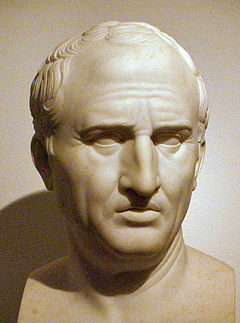
“There is nothing so absurd which has not sometimes been asserted by some philosophers.”
-Cicero, De Divinatione, ii, 58.
Comments Off on The Wisdom of Philosophers
Posted in Great Thinkers, Philosophy, Pith
Tagged cicero, cicero quotes, marcus tullius cicero, pedantry, philosophers, Philosophy
“There is no art which one government sooner learns of another, than that of draining money from the pockets of the people.”
-Adam Smith, The Wealth of Nations, p. 929.
Comments Off on What “International Tax Harmonization” Means
Posted in Books, Economics, Great Thinkers, Taxation
Tagged adam smith, tax harmonization, Taxation, taxes, wealth of nations
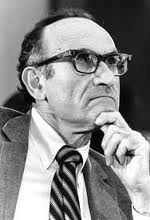
The man who deregulated air travel passed away yesterday at age 93. That man, Alfred Kahn, was a Cornell economics professor who did far more than teach. He revolutionized the role of economics in regulatory policy. He also did important work on electricity deregulation in addition to his famous work on deregulating air travel.
Kahn’s most famous book was The Economics of Regulation, which pointed out that regulations often hinder competition, not help it. His use of the economic way of thinking was distinctly unfashionable at the time. One of his greatest legacies is righting that wrong.
As a lifelong partisan Democrat, Kahn had credibility in political circles at a time when regulatory skeptics were shooed away from the corridors of power. After chairing the New York Public Service Commission, President Carter appointed him to lead the Civil Aeronautics Board in 1977, which he dismantled.
Before Kahn, airlines had to get permission from the CAB to establish new routes or terminate old ones. The CAB set ticket prices, not the market. This prevented profitable or high-demand routes from being given adequate service, and kept money-losing, little-traveled routes open. It prevented airlines from keeping up with their customers’ ever-changing needs.
The CAB was also a wonderful device for keeping pesky startups from competing with established industry giants such as Pan American. Southwest Airlines, for example, would only fly routes inside the state of Texas to avoid CAB regulations.
Once the CAB was abolished, Southwest and other small airlines tried out new business models and offering lower fares. Some of them prospered; others did a poor job giving people what they wanted and ceased to be. Today, air travel may not have the amenities it used to, but it cheaper, more flexible, and more adaptable than it was under the CAB.
Washington could use more people like Alfred Kahn. He had his successes in a few choice sectors of the economy, but many more still have Civil Aeronautics Boards of their own stopping them from reaching their potential. Let us learn from his example of a life well lived; a good place to start is Thomas McCraw’s Prophets of Regulation.
Comments Off on Alfred E. Kahn, 1917-2010
Posted in Economics, Great Thinkers, regulation
Tagged alfred kahn, cab, civil aeronautics board, cornell, deregulate to stimulate, deregulation, economics of regulation

Vice President Joe Biden recently said that every great idea of the last two-plus centuries came from government. My colleague Alex Schibuola and I rebut him over at The Daily Caller using Adam Smith’s book The Theory of Moral Sentiments as our weapon of choice. Biden, it turns out, is an almost perfect example of what Adam Smith described as the “man of system.” This is not a good thing.
As Smith put it:
The man of system … is often so enamored with the supposed beauty of his own ideal plan of government, that he cannot suffer the smallest deviation from any part of it … He seems to imagine that he can arrange the different members of a great society with as much ease as the hand arranges the different pieces upon a chess-board.
The problem, of course, is that human beings are not chess pieces. They have their own wants and desires. They move on their own. The man of system does not take this into account. This is why his plans fail time after time, even if he has the best of intentions.
Read our whole article here.
For those of you interested in learning more about Adam Smith, I couldn’t recommend him more highly. Don’t be scared off by his 18th-century prose style. Sit down with either of his books for less than an hour and you’ll develop an ear for it.
I don’t agree with everything Smith said; he invented the labor theory of value. But he was a keen observer of human nature. He was also a kindly soul, who wanted man to be free, happy, and prosperous. The overarching theme of his thought is mankind as social creature. Our social instincts color how we form our notions of morality (the impartial spectator theory), and explain why economies function the way they do (peaceful exchange, as opposed to simple theft).
The Theory of Moral Sentiments is available for free at the Online Library of Economics and Liberty. You can also get a hard copy or a Kindle edition from Amazon.
For help wading through and digesting Smith’s arguments, I recommend Russ Roberts and Dan Klein’s six-part podcast series about the book, and D. D. Raphael’s short and readable The Impartial Spectator: Adam Smith’s Moral Philosophy.
Other quality secondary sources on Smith include E.G. West’s short-yet-thorough biography, and P.J. O’Rourke’s On the Wealth of Nations, which pairs Smith’s economic theories with O’Rourke’s mordant wit.
In many places, lotteries are the only legal form of gambling. And even then, only the government is allowed to run them. This may be because lottery profit margins are often 30 percent or more. Casinos average about 5 percent. Lotteries are the worst possible deal for gamblers.
Why do people still play lotteries, then? It’s because humans have an inherent cognitive bias to overestimate the odds of success, and underestimate the odds of failure. This is a useful cognitive defect, because it encourages risk-taking. It was evolutionarily useful back in our hunter-gatherer days. And it remains so today; there would be far less entrepreneurship if people saw odds more clearly. But there are drawbacks. Lotteries are among them.
I didn’t know there were state-run lotteries in 1776, but apparently there were, because Adam Smith explains what a bad deal they are in The Wealth of Nations:
The world neither ever saw, nor ever will see, a perfectly fair lottery; or one in which the whole gain compensated the whole loss; because the undertaker could make nothing by it. In the state lotteries the tickets are not really worth the price…
Many people think that buying more tickets improves one’s odds of winning. But Smith saw that this was not a wise strategy:
There is not, however, a more certain proposition in mathematics, than that the more tickets you adventure upon, the more likely you are to be a loser. Adventure upon all the tickets in the lottery, and you lose for certain; and the greater the number of your tickets the nearer you approach to this certainty.
(Adam Smith, An Inquiry into the Nature and Causes of the Wealth of Nations, 124-25.)
Posted in Economics, Great Thinkers
Tagged adam smith, bias, cognitive bias, lotteries, probability, state lotteries, wealth of nations

 Inertia Wins!