Category Archives: Economics

The World Is Not Perfect

We shall never prevent the abuse of power if we are not prepared to limit power in a way which occasionally may prevent its use for desirable purposes.

-F.A. Hayek

Serious thinkers need to keep that in mind more often. Human imperfection is exactly why human freedom is a good policy for the world in which we live. By its very definition, utopia — “no place” — is a poor goal for this place.

Economists vs. Economics

Are economists ruining economics? Over at the American Spectator, I say why that may well be be the case. Key points:

-Economists can’t even predict whether the stock market will go up or down tomorrow. Yet many economists tell everyone who will listen that they know how to solve the financial crisis and dig out of a near-global recession. No wonder people aren’t taking them as seriously as they used to.

-Economics isn’t the problem. The economic way of thinking is as powerful a tool as any for understanding the world around us. But it has its limits. Too many economists have pretended those limits away out hubris, or for political reasons.

-Any economist saying he understands global business cycles when he can’t even understand the pencil poking out of his breast pocket is a charlatan. But the discipline he dishonors is as beautiful as poetry. Interested readers should take a look at Leonard Read’s classic short essay, “I, Pencil,” as a case in point.

On the Radio – Smart Meters

I will be on the Mark Carbonaro show on KION 1460 AM in California at 9:20 am EST this morning to talk about smart meters.

I’m for the concept, but against the execution.

Real-time congestion pricing is long overdue in electricity markets. But so far, smart meters aren’t doing a very good job at achieving that goal- with some very bad unintended consequences.

Unintended Consequences of Unemployment Benefits

This letter of mine ran in today’s New York Times in response to Paul Krugman’s July 4 column.

To the Editor:

Paul Krugman is at a loss to explain why some people oppose extending unemployment benefits. One reason people hold such an opinion is that when government subsidizes something, there tends to be more of it.

The more government subsidizes unemployment, the more people will indulge in it for longer periods of time.

Ryan Young
Washington, July 6, 2010

The writer is a journalism fellow at the Competitive Enterprise Institute.

Making a Difference – A Very Small Difference

The House passed a budget enforcement resolution yesterday. It sets 2011’s discretionary spending $7 billion below what President Obama has requested.

Next year’s discretionary spending target is $1.12 trillion for next year. The $7 billion difference represents savings of 0.625 percent. Barely a rounding error. If total spending (including mandatory and defense spending) ends up at $3.5 trillion next year, the savings becomes 0.2 percent.

Of course, 2010 discretionary spending was $1.39 trillion. 2011 spending will very likely end up much closer to that than the targeted $1.12 trillion. The appropriations process is not kind to non-binding resolutions, however well-intentioned. Especially when the resolution “doesn’t detail how Congress should reach that [deficit reduction] goal.”

Congress lacks the will to cut $270 billion of spending. The interests benefitting from that spending will scream bloody murder the second their programs are put on the chopping block. In an election year when incumbents are more fearful than usual, no politician worth his salt wants to cause an uproar.

Congress need not worry too much, though. Even in anti-incumbent years, re-election are almost always above 90 percent. The vast majority of congressional turnover happens through retirement, running for other office, or death.

The pattern is holding this year, so far. The University of Virginia’s Larry Sabato recently pointed out that 5 incumbents have lost their state primary elections this year, while 240 were re-nominated. That’s a 98 percent success rate. There will be a few more casualties, especially in the November general elections.

Most members are safe. They can, and should, rock the boat by cutting unnecessary spending. If anything, the most aggressive cutters might become folk heroes like Chris Christie in New Jersey. They just don’t have the guts.

I will be more than happy if Congress proves me wrong. We’ll find out over the next few months.

New Issue of the CEI Planet

The latest issue of the CEI Planet is online. In addition to articles on Andy Stern’s SEIU exit and Sen. Chuck Schumer’s anti-Facebook crusade, Wayne Crews and I make the case against a value-added tax on page 6.

The Rahn Curve

A little government can do a lot of good. A lot of government can do little good.

Rules protecting life, liberty, and property can create the stable conditions that entrepreneurs need to flourish. It works best when these rules are simple, clear, and few. But problems emerge when government takes on other missions.

Rules that are complicated, opaque, and numerous create instability. Entrepreneurs are less likely to invest or innovate if they fear the rules of the game might change tomorrow on a whim. Complying with regulations takes up time and effort that could be spent creating wealth. When governments get involved in business, businesses will involve themselves with government. This is an invitation to corruption, rent-seeking, and regulatory capture. Many backs get scratched, but economic growth suffers.

Dan Mitchell‘s latest video introduces the Rahn Curve, named after top-notch economist Richard Rahn, to illustrate that concept visually. Most academic studies on the subject estimate that governments that take up 15 to 25 percent of GDP is about the right size. The U.S. government consumes roughly 40 percent of GDP. That wide range is because different government policies have different effects, and because the complexity of even the smallest economies makes any macro-level study uncertain.

The academics might be guessing too high, though. Historical data from the 19th century show that the best-performing economies had governments around 10 percent of GDP. That includes the U.S. and most of Europe.

Returning to that size government wouldn’t even be particularly austere. the U.S. government would have a $1.4 trillion budget. Roughly what we had during the Clinton years.

I hope you’ll take a few minutes to watch. The Rahn curve contains valuable insights.

Crony Capitalism shouldn’t Be Confused with the Real Thing

Russ Roberts has a short appreciation of F.A. Hayek in today’s Wall Street Journal (subscription required). Worth reading, especially if you are new to Hayek.

Explaining Free Trade in Under Three Minutes

Sometimes, the fastest, most effective way to explain economics is to tell a story. One of the best-done examples is in Steven Landsburg’s book The Armchair Economist, where he tells David Friedman’s “Iowa Car Crop” story to get readers to think about trade (see pp. 197-99).

[T]here are two technologies for producing automobiles in America. One is to manufacture them in Detroit, and the other is to grow them in Iowa.

Okay… how does that work?

First you plant seeds, which are the raw material from which automobiles are constructed. You wait a few months until wheat appears. Then you harvest the wheat, load it onto ships, and sail the ships eastward into the Pacific Ocean. After a few months, the ships reappear with Toyotas on them.

Sounds almost magical. But it happens millions of times every day. The lesson is that trade is about specialization. A farmer doesn’t know how to build a car. But he can still have one by sticking to his specialty – growing wheat. He can trade his surplus to other people who do nothing but specialize in building cars.

This cuts both ways. Most factory workers don’t know a thing about farming. But by concentrating on building cars, they eat far better than if they grew their own wheat. The nature of trade is that everyone wins when they specialize. The only limit on specialization is the size of the market.

Restrictions on trade – tariffs, quotas, antidumping duties — shrink that market. And by shrinking the market, they limit specialization, which is the source of all prosperity. It’s good to grow cars in Iowa.

The lesson doesn’t apply to just wheat and cars. It applies to everything. Tom Palmer from the Atlas Economic Research Foundation makes that clear as day in this excellent video. If you want to learn the meaning of free trade in under three minutes, this is as good as it gets.

The Two Americas

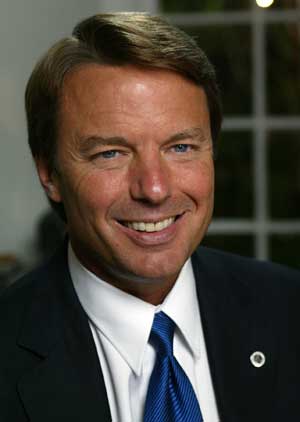
Maybe there is something to John Edwards’ “Two Americas” conceit after all. Except the warring factions aren’t the haves and have-nots. They are what Steven Malanga calls tax eaters and tax payers. And the two see the world very differently. See this revealing excerpt from today’s WSJ Political Diary (subscription required).

Pollster Scott Rasmussen uses several questions to break down voters demographically, but one of his most original tweaks is to differentiate between those voters he calls the “Political Class” and those he calls “Mainstream Americans.” The “Political Class,” representing about 14% of the electorate, tend to express “trust” in political leaders while rejecting suggestions that government is its own special interest and often works with big business against consumers. In contrast, “Mainstream Americans” represent about 75% of the voting public and identify with or lean toward a more populist skepticism about the intentions and actions of political leaders.

Striking is how the two groups divide on the question of repealing ObamaCare. “Mainstream Americans” support repeal by an overwhelming 73%, while the numbers are almost exactly reversed among the “Political Class,” 72% of whom oppose repeal.