Category Archives: Economics

Quantitive Easing, aka Printing Money

This video doesn’t get all the particulars right, but it gets most of them. And boy, does it have some good zingers. It has also gotten over 800,000 views; sometimes people do listen to good economics. Enjoy.

CEI Podcast – November 11, 2010: Taxing New IRS Regulations

This week I switch from host to guest. Have a listen here.

Fellow in Regulatory Studies Ryan Young explains how an IRS proposal for mandatory certification of tax preparers would hurt consumers and taxpayers. It is one more example of how regulation can hurt competition. Large tax preparation firms would benefit at the expense of individuals and smaller firms who can’t afford the added regulatory burden.

The Washington Version of Spending Cuts

Here’s a letter I sent to Politico:

Editor, Politico:

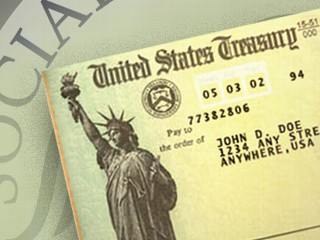
The title of your November 10 article, “Panel leaders propose Social Security cuts,” is inaccurate. A cut is when spending goes down. Social Security spending will go up if Erskine Bowles and Alan Simpson’s recommendations are enacted. They would increase spending at a slower rate than under current policy. But it would still increase.

An increase is not a cut. Not even in Washington.

Ryan Young
Fellow in Regulatory Studies
Competitive Enterprise Institute

Joe Biden’s Weak Case for Government Meddling

Joe Biden believes that government played a large role in the success of railroads in the 19th century. In this video, Don Boudreaux points out that that isn’t actually true. There were four transcontinental railroads. Three of them received subsidies.  The fourth was the Great Northern Railway, founded by Canadian immigrant James J. Hill. He alone rejected any special government favors.

All three subsidized railroads went into receivership. Hill’s Great Northern Railway remained solvent, and is still in business today as the BNSF Railroad.

Adam Smith on Lotteries

In many places, lotteries are the only legal form of gambling. And even then, only the government is allowed to run them. This may be because lottery profit margins are often 30 percent or more. Casinos average about 5 percent. Lotteries are the worst possible deal for gamblers.

Why do people still play lotteries, then? It’s because humans have an inherent cognitive bias to overestimate the odds of success, and underestimate the odds of failure. This is a useful cognitive defect, because it encourages risk-taking. It was evolutionarily useful back in our hunter-gatherer days. And it remains so today; there would be far less entrepreneurship if people saw odds more clearly. But there are drawbacks. Lotteries are among them.

I didn’t know there were state-run lotteries in 1776, but apparently there were, because Adam Smith explains what a bad deal they are in The Wealth of Nations:

The world neither ever saw, nor ever will see, a perfectly fair lottery; or one in which the whole gain compensated the whole loss; because the undertaker could make nothing by it. In the state lotteries the tickets are not really worth the price…

Many people think that buying more tickets improves one’s odds of winning. But Smith saw that this was not a wise strategy:

There is not, however, a more certain proposition in mathematics, than that the more tickets you adventure upon, the more likely you are to be a loser. Adventure upon all the tickets in the lottery, and you lose for certain; and the greater the number of your tickets the nearer you approach to this certainty.

(Adam Smith, An Inquiry into the Nature and Causes of the Wealth of Nations, 124-25.)

Regulation of the Day 158: Preparing Taxes

The IRS wants to require all tax preparers to register with them, pass an exam, and take continuing education classes. Over at Investor’s Business Daily, Caleb Brown and I explain why that would hurt consumers and taxpayers. Our main points:

-Since the IRS has the power to revoke registrations, tax preparers will have to be careful not to advocate too aggressively for their clients.

-There are at least 600,000 unregistered preparers. Many of them are retirees. Others have jobs, but prepare taxes on the side to help make ends meet. Still others are volunteers. They give their services for free to people who can’t afford a tax preparer. How many will give up, rather than jump through the proposed regulatory hoops?

-Big firms — with more than 500 employees — pay $7,755 per employee per year to comply with federal regulations. Their smaller rivals have to pay a whopping $10,585 per employee per year. That’s a built-in competitive advantage of nearly $3,000 per employee, courtesy of Washington. No wonder so many businesses have D.C. offices these days.

-H&R Block alone spent nearly $1 million on lobbying in the last half of 2009, much of it pushing for these very tax-preparer regulations. It wants the deck stacked even further in its favor.

-The best solution to this problem is simplifying the tax code. There is no legitimate reason for the tax code to be so complicated that most people have to turn to others for help.


Consistently Inconsistent

More than 60 different agencies publish more than 3,500 new regulations every year. There are more than 1,000 federal subsidy programs covering everything from mohair to ethanol. When the government involves itself in that many different projects, some of them are bound to contradict each other.

For example, the federal government spends more than $1 billion per year on anti-obesity programs. But the federal government also spent more than $12 million to help Domino’s Pizza tout its new recipe with 40 percent more cheese; this is roughly the opposite of an anti-obesity program.

Dairy Management, the USDA-funded program that gives taxpayers’ dollars to Domino’s, Pizza Hut, and other private firms, is designed to help dairy farmers. By encouraging restaurants to use more cheese in their recipes, the USDA is achieving its goal of giving dairy farmers more business. But it also undermines the competing federal goal of reducing obesity.

Government has a long history of undermining its own goals. One of the more famous examples involves paying farmers to destroy their crops in an effort to raise food prices during the Great Depression. When (frequently unemployed) non-farmers complained about having to pay more for food during those hard times, the federal government then took actions to lower food prices – while keeping in place the policies that raised them in the first place.

The spirit of consistent inconsistency goes beyond the government’s spending habits. Vice President Biden will have a meeting today in the White House about government transparency. It will be closed to the public.

Is Obama a Keynesian?

In which most of the interviewees mistake the famous economist for a country in Africa:

Note that these are all likely voters.

2010’s Record Election Spending Is Surprisingly Small

The Washington Post has a breathless write-up of this year’s midterm election spending:

In the latest sign of this year’s record-breaking election season, an independent research group estimated Wednesday that candidates, parties and outside interest groups together could spend up to $4 billion on the campaign.

$4 billion is a lot of money. The Post’s opinion staff writer thinks that’s frightening. $4 billion, of course, comes to $12.90 per person in a nation of 310 million people. So maybe not.

A bit more context: federal spending costs $11,290.32 per person. Regulation costs another $5,645.16 per person. That’s a total burden of $16,935.48 per person. American democracy is a very expensive form of government with surprisingly inexpensive elections.

Spending $12.90 to influence $3.5 trillion in spending and another $1.75 trillion in regulating seems like too little election spending, not too much. Total election spending is about the same as it was in 2000, when the federal budget was under $2 trillion.

Still, for a midterm, this year’s election spending is historically high. And a lot of people think there is too much money in politics. Fortunately, there is a surefire way for them to fix the problem: get politics out of our money.

Republicans and Democrats alike have made it clear that they have little interest in fundamental economic reform. So maybe the Post is right that they aren’t worth spending $12.90 on.

Unfortunately, as long as the Bush-Obama spending and regulating binge continues, people will be spending a lot more than $12.90 to get a piece of the action.

CEI Podcast – October 14, 2010: Antitrust Follies and Regulatory Reform

Have a listen here.

CEI Vice President for Policy Wayne Crews talks about why antitrust actually hurts competition, and offers some ideas for regulatory reform based on his recent articles for BigGovernment.com and The Washington Times, and on his annual Ten Thousand Commandments report.