Category Archives: Monetary Theory

Printing Money Troubles

There is a lot of talk lately about the Fed’s quantitative easing policy. It is an indirect way of printing money, and also a huge mistake. It turns out the Fed can’t even print money the direct way without making mistakes. A new $100 bill that is harder to counterfeit has been rolling off the presses recently. 1.1 billion of them have been printed so far, at a cost of $120 million.

CNBC reports:

An official familiar with the situation told CNBC that 1.1 billion of the new bills have been printed, but they are unusable because of a creasing problem in which paper folds over during production, revealing a blank unlinked portion of the bill face.

A second person familiar with the situation said that at the height of the problem, as many as 30 percent of the bills rolling off the printing press included the flaw, leading to the production shut down.

The total face value of the unusable bills, $110 billion, represents more than ten percent of the entire supply of US currency on the planet, which a government source said is $930 billion in banknotes.

Coincidentally, these would be the first bills to feature Timothy Geithner’s signature.

Quantitive Easing, aka Printing Money

This video doesn’t get all the particulars right, but it gets most of them. And boy, does it have some good zingers. It has also gotten over 800,000 views; sometimes people do listen to good economics. Enjoy.

The Deflating Quality of Economic Journalism

Cato’s Jagadeesh Gokhale with an example of the current state of economic journalism:

[NPR reporter Adam] Davidson: “Ladies and gentlemen, I have an amazing investment opportunity for you. Give me $100, just a hundred, and in one year I promise it will be worth 93 bucks. We call it the deflation special.”

My reaction: No, sir! Under deflation, $100 today would increase in value to $107 (assuming your implicit rate of deflation). Help! Stop the car! …Wait, I’m the one driving…what just happened?

Davidson: “All right, seriously, nobody is giving anybody a hundred bucks just so they can lose seven.”

My reaction: No, no, please, please take my money! I’d give you a million dollars if I had that amount. I really would!

It gets worse from there. Davidson completely misunderstands the effects of deflation — and thousands of listeners take him at his word. No wonder public understanding of economics is so poor.

People spend little time learning about economics in the first place because of rational ignorance. Compounding the problem is that in the little time they do spend learning — usually from economically untrained journalists — they get incorrect information from people who know not of what they speak.

I previously wrote about the troubled relationship between economics and journalism here and here.

Financial Fiasco

I recently finished reading Swedish economist Johan Norberg‘s book about the financial crisis, aptly titled Financial Fiasco. It’s both short and informative. Six chapters and 155 pages, all of them worth reading.

The first two chapters are about the two big regulatory causes of the recession. One, monetary policy that was too easy for too long. The price system works. When the Fed messes with that price system, prices send out the wrong signals. People behave accordingly. Two, a decades-long drive to raise homeownership rates caused a lot of people to take out loans they couldn’t afford. It was only a matter of time before the consequences would come to bear.

Chapters 3 and 4 are about how the private sector reacted to the incentives regulators gave them. Let’s just say they acted badly. If people can game the system, they often will. Norberg’s criticism of overly-complicated securitized mortgage packages is both shocking and infuriating.

Chapter 5 is about how the government and private sector reacted to the crisis once the housing bubble popped. The $700 billion bailout program to reward bad behavior comes under fire.

Norberg is in top form in Chapter 6. Having looked at the causes and consequences of the crisis, now he offers a way out. One lesson is that politicians will always behave badly. “Politicians who distribute pork they cannot afford are reelected; butcher shops that sell pork they cannot afford go bankrupt. (p. 150)” Politicians are just like you and me. They go wherever their incentives lead them. We need to approach them accordingly.

The way to a full recovery is not bailouts. It is letting bad companies fail. And just as important, letting good ones prosper. “Government support for companies is thus not a way to save jobs, as politicians try to make us believe. It is a way to move jobs from good companies to bad companies.” (p. 151) In the long run, bailouts keep the economy down by keeping jobs and resources away from where they would do the most good.

Financial Fiasco has echoes of Tocqueville; a foreigner is trying to figure out how America works. Norberg, like Alexis de Tocqueville, is uncommonly perceptive. His experience living under an economy more thoroughly mixed than America’s allows him to see things that have escaped American commentators. This is extremely valuable. The fact that his book is concise, well written, and accessible to those of us who don’t have economics Ph.Ds makes it even moreso.

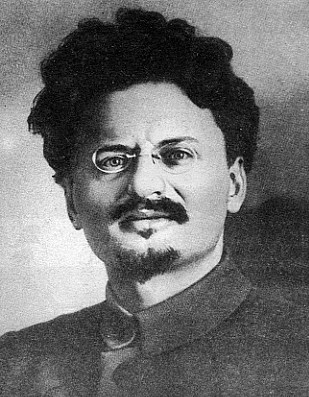
New Trotsky Biography

Robert Service’s new biography of Trotsky is reviewed in today’s Wall Street Journal. Having read Service’s excellent biography of Lenin a few years ago, this seems like a book worth reading. Joshua Rubenstein’s thoughtful review touches on some thoughts about socialism and socialists.

Socialism had three major failings. The first is what economists study most closely. It is the impossibility of economic calculation under socialism, because of the rejection of prices and money as a medium of exchange. Whether you support socialist ideals or not, it is literally impossible to achieve. Do away with prices and currency, and they will emerge in a different form. They are part of human society.

The second aspect of socialism intrigues philosophers: socialism genuinely sought to change human nature itself. People as they currently are are in no shape to realize Marx’s vision of communist society. So part of the communist program was to actively mold and change people so that vision could one day become a reality.

Before Marx came along, Plato’s Republic and Thomas More’s Utopia were also written about societies with a fundamentally changed human nature. More, knowing his ideal to be impossible, coined the word “utopia,” which literally means “no place.” His book is a pleasant dream (for a collectivist at least), but More knew it was one that could ever come true. We are they way we are. And we’re stuck that way, for better or worse.

This leads us to the third aspect of socialism, which most concerns Trotsky. This is, for me, the most remarkable part, and the most chilling. It is the sheer violence that accompanied Marxism-Leninism everywhere it was tried. And I mean everywhere. Every single country to adopt communism had a checkered human rights record. No exceptions. Not one had anything resembling freedom of speech or press, or due process, or property rights.

Most historians now estimate that communist governments killed around 100,000,000 people. Mostly their own citizens. At no other point in human history have governments been so murderous of their own people. No other ideology has had consequences so bloody as Marxism and its variants.

One reason for the violence is that it allowed the governments to maintain power; resistance is less likely when the prevailing climate is of fear. Another is that human nature is stubborn. If it is to be changed, force is required. But, of course, the basic tenets of humanity are immutable. We are who we are.

Communist leaders, including Trotsky, were simply chilling. Many of them come off as sadists. They seemed to actually enjoy bloodshed. Revel in it. Yet Trotsky still has his admirers today. They need to answer for why they look up to someone who would even have thoughts like the following, let alone give voice to such brutish impulses in public speeches:

“The strength of the French Revolution,” he shouted to a group of revolutionary sailors, “was in the machine that made the enemies of the people shorter by a head. This is a fine device. We must have it in every city.” And have it they did. Once in power, Trotsky advocated show trials and the execution of political prisoners; he suppressed other socialist parties and independent trade unions; he pushed for the censorship of art that did not support the revolution; and he created the institutions of repression that were later turned against him and his followers.

Hoover and the Great Depression

One of the oddities of U.S. history is that Herbert Hoover is regarded as a free-market president. He grew federal spending by 52% in just four years. Engaged in massive deficit spending. Created the Federal Home Loan Bank. And the Reconstruction Finance Corporation. Signed the Smoot-Hawley tariffs into law. And the Agricultural Marketing Act. And so on. Free-market, he was not.

The Hoover myth is showing some cracks, fortunately. Where most civics textbooks would blame Hoover’s laissez-faire policies for the Great Depression, a new paper by UCLA’s Lee Ohanian fingers Hoover’s labor market interventions.

I’m personally convinced the Depression was more of a monetary phenomenon than a fiscal one. But Ohanian is surely right that Hoover’s dictating to companies what wages shall pay their workers was a net negative for the economy.

It’s certainly possible to blame Hoover’s policies for the Great Depression. Just not on the grounds that those policies were free-market. People shouldn’t have to read obscure academic journals to find that out.

Money Is Not Wealth

Here’s a letter I sent recently to The New York Times:

Editor, The New York Times
620 Eighth Avenue
New York, NY 10018

To the Editor:

Eric Zencey’s article “G.D.P. R.I.P” (August 10) correctly points out that GDP has limited usefulness in measuring well-being. But his case is muddled by confusing money with wealth. Money is a unit of measure, like a mile or a ton. But it is not itself wealth.

He writes, “If you get into a fender-bender and have your car fixed, G.D.P. goes up.” It actually stays the same. If I don’t get into the accident, I’ll just spend the repair money on something else. While the accident may have no effect on GDP, it does have an effect on wealth; I am inarguably poorer. Instead of a working car plus a new tv, I can enjoy only the car.

Zencey’s confusion is itself an example of why GDP does a poor job of measuring well-being.

RYAN YOUNG
Fellow in Regulatory Studies
Competitive Enterprise Institute
Washington, Aug. 10, 2009

Fed’s Policies Contradict Each Other

My colleague Seth Bailey and I have this letter in today’s Financial Times:

Sir, Henry Kaufman frets that “libertarian dogma led the Fed astray” (April 28). Congress, not free-market ideology, is the real culprit.One reason is mission creep. The Fed’s original job was to keep inflation low by keeping the money supply in check. That’s it. The Humphrey-Hawkins Act of 1978 expanded that mission to include keeping unemployment low.

Low-inflation monetary policy and low-unemployment monetary policy contradict each other. If the Fed keeps inflation low, then it cannot lower unemployment rates through an artificial inflation-induced boom. If the Fed wants to lower unemployment, it must forgo low inflation. Worse, since a bust always follows an inflationary boom, business cycles become more volatile.

The results speak for themselves. The Fed can control inflation – if left free from political interference. But it cannot also accomplish its other missions, especially through the un-libertarian means of manipulating price levels. Where is the libertarianism?

Ryan Young and Seth Bailey,
Research Associates,
Competitive Enterprise Institute,
Washington, DC, US

A Thought on GDP

Ah, Gross Domestic Product. Is there anything more exciting?

Yes.

Even so, it’s important to know about. GDP is the best proxy we have for measuring wealth. Where GDP is low, people starve. Where it is high, even the poor are fat. If you’re going to have problems, which would you rather have? Making GDP grow is one of the central issues of the 21st century.

GDP is also flawed. Suppose I buy a wristwatch for $50; GDP goes up by $50. But I really like the watch. I value it at $200, four times what I paid. My personal wealth increases by $150, but GDP only counts a fraction of that. GDP systematically understates true wealth. It is inaccurate.

This doesn’t just affect my watch purchase. Remember, people won’t buy anything unless they value it more than the dollars it costs them. With every transaction, GDP systematically understates true wealth.

The problem with GDP is that it is measured in currency, which is only a proxy for wealth. True wealth, of course, is impossible to quantify.

Whoever comes up with a way around that has a Nobel with their name on it.

Inflation? Huh?

I had two separate conversations yesterday on the nature of inflation… such is the state of my life. It’s one of those topics that’s actually pretty easy to understand, but economists have made incomprehensible. This failure is depressingly common.

Anyway – figured I’d share a way of explaining it that econodorks and non-econodorks alike always seem to respond to.

Money is a unit of measure, like an inch or a foot or a kilogram. Instead of distance or weight, money measures wealth. It is not itself wealth, but only a measure of it; wealth exists independently of money. What inflation does is change the value of the unit of measure, without changing the amount of wealth that actually exists.

I’m about six feet tall. Let’s say I want to be ten feet tall. I can’t actually grow taller, so I’d have to redefine feet and inches. By reducing the value of the foot, I can be ten feet tall without actually having to grow. Put another way, it would take more feet to describe the same amount of height.

As with height, so with money. Inflation means that more dollars are required to describe the same amount of wealth. When new money is printed faster than new wealth is created, each dollar describes less wealth, and the result is inflation.

There are other causes, obviously, but that’s by far the biggest one.

While we’re on the subject, Cato’s annual monetary conference is today. Worth checking out.