Monthly Archives: January 2012

Hard Times?

In the short run, absolutely. But — this matters — not in the long run, according to Michael Shermer, appearing on MSNBC’s Dylan Ratigan Show. Click here to watch.
The Humble Economist

I learned a lot from this long-form interview with George Mason economics professor Pete Boettke. One of my few regrets from my time at GMU is that I never took any of his classes. I try to make up for it by regularly reading Coordination Problem, where Boettke blogs with several other distinguished economists.

Here’s his response when the interviewer asks him why so many Austrian-influenced economists are libertarians. The correlation isn’t due to ideology:

What the position makes you have is not libertarianism, or anything like that, but humility. The economist is nothing more than a student of society, and any economist that tries to represent themselves as a saviour of society should be subject to ridicule.

Regulation of the Day 206: Buying Drain Cleaner

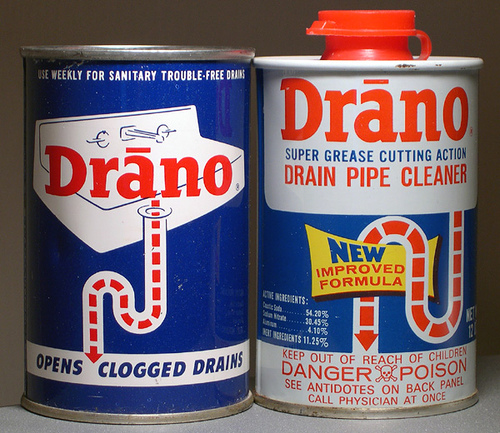
If you have a sluggish drain and you live in Illinois, the government wants to keep track of you. As one of the 40,000 new laws across the country that took effect on January 1, the state of Illinois now requires consumers to show valid ID to buy drain cleaner. That’s not all:

Merchants must then log the buyer’s name, address, date and time of the purchase, the product and the product’s brand and net weight.

The bill was passed in response to a Taliban-style acid attack on two Chicago women. It is also an anti-drug law; drain cleaner can be used to make methamphetamine. It is unclear how showing ID and putting pen to paper would physically prevent either acid attacks or drug use.

CEI Podcast for January 12, 2012: Mistaken Deportations

Have a listen here.

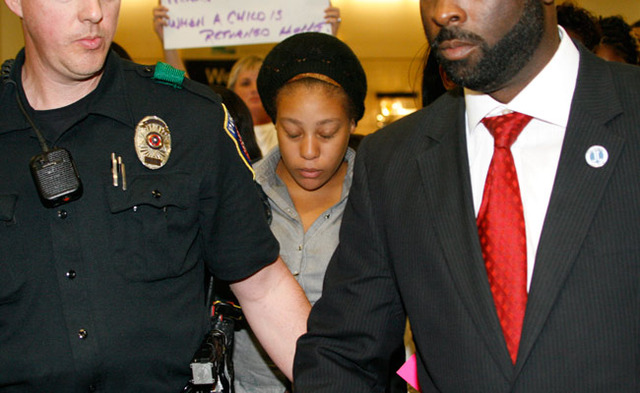
Immigration Policy Analyst Alex Nowrasteh tells Jakadrien Turner‘s story and explains what it means for the immigration reform debate. Turner is a 14-year old girl from Texas who was mistakenly deported to Colombia. Turner is not Hispanic, does not speak Spanish, and has no connections to Colombia whatsoever. It took six months of pleading and legal maneuvering before authorities allowed her to return home. This was not an isolated incident. The way to prevent future cases like this, Nowrasteh argues, is radically simplifying our overly complex immigration and citizenship laws.

A Bit of Economics Humor

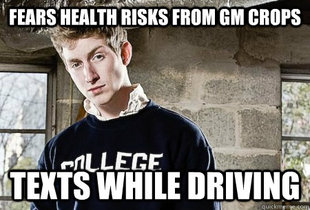
Rhodes College economics professor (and sharp wit) Art Carden created a bunch of meme pictures to accompany a talk he gives about the nine basic principles of the economic way of thinking. This article briefly summarizes them. My two favorite pictures are below. Click here to see the rest.

TSA Officers Jailed for $40,000 Theft from Checked Baggage

My first advice for traveling with valuables is don’t. But if you must, don’t check them. If they won’t fit in your carry-on, consider FedEx or UPS.

Hopefully we’ll see fewer stories like that going forward, and more like John Deschamp’s. He is a TSA screener who found $5,000 in cash and turned it in instead of pocketing it.

Lazy Economists

Comedy gold. Best line: “If it doesn’t fit in your model, assume it away. Idiot.” Click here if the embedded video doesn’t work.

Regulation of the Day 205: Singing the National Anthem

Francis Scott Key wrote the national anthem in 1814. He set his lyrics to an old English drinking song with an intentionally difficult melody. The range spans roughly an octave and a half, which is a challenge for any singer. Revelers in pubs would challenge each other to sing the melody without screwing it up; punishments for mistakes would often involve beer.

Even professional singers can’t always get through “The Star-Spangled Banner” unscathed, as Christina Aguilera found out at last year’s Super Bowl.

We’ll never know what Key would have thought of contemporary singers’ habit of improvising and embellishing his song with their own touches. But we do know that Indiana state Sen. Vaneta Baker, an Evansville Republican, is not a fan.

Sen. Baker introduced a bill that would require singers “to sign a contract agreeing to follow the guidelines and would set a possible $25 fine for violators.” It only affects performances at the state’s public schools and universities, as well as private schools that receive state funds. If her bill passes, it would not affect this year’s Super Bowl, which will be played in Indianapolis.

Singing out of key does not violate the terms of the contract. Not singing it “the way that we normally have it sung or heard throughout most of our state and our country” would. The bill would let schools set their own standards. But they will also be required to keep archives of every national anthem performance going back at least two years.

Given the amount of paperwork schools already have to deal with, this is just a bad idea. Surely Sen. Baker has better things to worry about in these troubled economic times.

Regulation of the Day 204: How to Buy Liquor

UPDATE: Welcome, Reason Hit & Run readers! More Regulations of the Day are here.

Self-checkout lanes have been popping up in grocery stores across the country over the last several years. Some people worry that without the adult supervision of a cashier, underage kids might be able to illegally buy alcohol at these self-checkout lanes. California state Rep. Fiona Ma even introduced a bill that took effect on January 1 that prohibits Californians of any age from using self-checkout lanes to purchase alcoholic beverages.

Has this been a huge problem in the past? Two independent studies have been done to find out. A 2009 UCLA study, cited by Rep. Ma to support her bill, found that underagers failed in 80.5 percent of their attempts. A separate study done by researchers at San Diego State, found that young hooligans had a 90.6 percent failure rate.

So yes, kids can buy booze at self-checkout lanes. But it’s probably less successful than other methods. As Joe Eskenazi put it in SF Weekly’s blog, “The best way to get alcohol remains to rely on a fake ID, theft, or someone’s skeezy 23-year-old cousin.”

Of course, there is another factor in play here, and likely Rep. Ma’s real motivation. That factor is rent-seeking. Many grocery cashier jobs are unionized. The more people use self-checkout lanes, the less they use the cashiers. Unions don’t appreciate the competition, so they work with lawmakers like Rep. Ma to legislate their preferences over consumers’.

According to Maplight.org, labor interests donated $150,450 to Rep. Ma’s campaign fund in 2009-10. They are by far her largest contributors.

This is an example of what economist Bruce Yandle calls a Baptist-and-bootlegger problem. Back in the old days, many Baptist preachers favored Prohibition because they believed drinking was morally wrong. Bootleggers favored Prohibition, too. Black market profits are far higher than in legal markets. So the bootleggers would manipulate the Baptists into favoring a bad policy by using the language of morality.

Fast-forward to today. Almost nobody wants increased underage drinking. And unions don’t want competition. So the bootleggers make up a story about how automated checkout lanes are causing runaway underage drinking. Social conservatives jump on board, wanting to strike a blow for morality. The bill gets passed, the Baptists feel good, and the bootleggers financially benefit. So do legislators.

Consumers, of course, are left out of this coalition.

The Dying Duopoly

Nick Gillespie and Matt Welch point out that duopolies rarely endure because they tend to abuse their customers. That creates an opening for competitors to enter the market.

Political markets are different than economic ones, but duopolies still have many of the same qualities — particularly regarding customer abuse. That’s why I was pleased to see a writeup in this morning’s Politico that the percentage of political independents is at an all-time high in a long-running Gallup poll. A full 40 percent of Americans have now opted out of the Republican-Democrat duopoly.