Monthly Archives: December 2009

Regulation of the Day 85: Peddlers

It is illegal to be a peddler in Wisconsin without a license. One of the requirements is five years of residency in Wisconsin. Because clearly, no one is trustworthy unless they’ve lived in Wisconsin for at least five years. The full list of requirements is here.

You can apply for your peddler’s license here.

(Hat tip to Jim Ulbright)

Explaining the Government Option in 41 Seconds

Watch this video by Caleb Brown, Austin Bragg, and Lester Romero. It’s part of a video contest; take a look at the other entries and vote if you like.

Regulation of the Day 84: The Size of Holes in Swiss Cheese

Talk about attention to detail. The federal government regulates the size of holes in Swiss cheese.

The majority of the “eyes” (technical speak for “holes”) must be between 3/8” and 11/16” for the cheese to qualify as Grade A or B. Anything bigger or smaller and the cheese is relegated to the barely-edible Grade C. Even if the cheese is otherwise perfect.

(Hat tip to Jonny Slemrod)

Regulation of the Day 83: Citations

The Code of Federal Regulations contains a regulation on how to cite the Code of Federal Regulations. It reads as follows:

The Code of Federal Regulations may be cited by title and section, and the short form “CFR” may be used for “Code of Federal Regulations.” For example, “1 CFR 10.2” refers to title 1, Code of Federal Regulations, part 10, section 2.

See for yourself at 1 CFR 8.9.

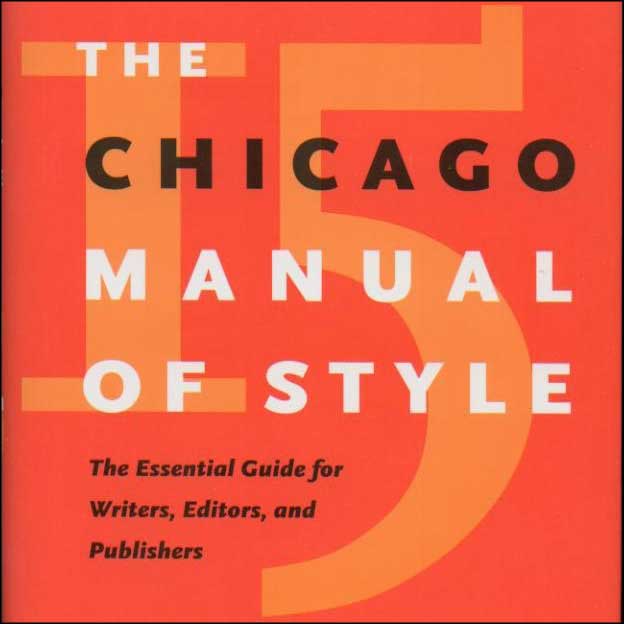
Standard citation formats are extremely useful. That would be why, even without regulation’s guiding hand, the private sector evolved the Chicago and MLA styles, among others.

Yet another example of spontaneous order at its finest.

On the Nature of Change: Calm Down!

One of history’s great debates is whether we will die in fire or ice. The proportion of the populace crying each variety of wolf varies according to the fashion of the time.

Vikings newly introduced to Christianity, taking note of their surroundings, sided with ice. They conceived of hell as a cold place, filled with blue devils.

A few centuries later, Dante wrote his Divine Comedy. Its famous first canticle, Inferno, had a very different, much hotter picture of hell.

Fast forward to our time. In the 1970s, ice was the fashion once again. Grant-seeking scientists and credulous journalists warned of imminently fatal global cooling. A new ice age was dawning.

In this decade, fire is all the rage again. Many of those same grant-seeking scientists and credulous journalists have changed their minds. Now global warming will cause catastrophe. And these 690 other things (!).

The particular charges change from generation to generation. But the verdict is always the same: apocalypse. A common thread runs from the Book of Revelations to Nostradamus to Rachel Carson to James Hansen. That threat is imminent doom. As one doomsayer after another is proven wrong, the litany gets quite tiresome.

The Earth has cooled over the last decade; we will die in ice.

But it’s gotten warmer over the last century. Fire, then.

But it’s cooler than it was in the High Medieval period. Ice.

But warmer than during the Dark Ages. Fire.

And so on.

Global temperatures will continue to change, ebb, and flow, whether or not we emit a given amount of CO2, and whether or not we care. Yet many people view climate change as a horror. It must be stopped at any cost.

There is a reason why global warming alarmists don’t like to use the phrase “global warming.” They prefer “climate change.” The prospect of a world two degrees warmer than the one we live in now isn’t very scary. But the notion of climate change does scare people. Framing it that way has been devastatingly effective in getting publicity and funding. It’s good for business.

Today’s dominant mindset that any climate change at all is bad is puzzling. It implicitly assumes that today’s climate is the best of all possible climates. Maybe that’s true. But maybe it isn’t. The trouble is that few climate activists seem to have had that thought. The idea of change is so scary that nobody has the presence of mind to ask if that’s a problem or not.

I give them the counsel of Marcus Aurelius, who lived during the (rather warm) second century AD: “To be in the process of change is not an evil, any more than to be the product of change is a good.”*

No, change simply is. It is a part of life. Let us observe, adapt, and live in peace with each other and the world that we all call home. I’m not scared. You shouldn’t be, either.

*Meditations, IV.42; trans. Maxwell Staniforth.

Financial Fiasco

I recently finished reading Swedish economist Johan Norberg‘s book about the financial crisis, aptly titled Financial Fiasco. It’s both short and informative. Six chapters and 155 pages, all of them worth reading.

The first two chapters are about the two big regulatory causes of the recession. One, monetary policy that was too easy for too long. The price system works. When the Fed messes with that price system, prices send out the wrong signals. People behave accordingly. Two, a decades-long drive to raise homeownership rates caused a lot of people to take out loans they couldn’t afford. It was only a matter of time before the consequences would come to bear.

Chapters 3 and 4 are about how the private sector reacted to the incentives regulators gave them. Let’s just say they acted badly. If people can game the system, they often will. Norberg’s criticism of overly-complicated securitized mortgage packages is both shocking and infuriating.

Chapter 5 is about how the government and private sector reacted to the crisis once the housing bubble popped. The $700 billion bailout program to reward bad behavior comes under fire.

Norberg is in top form in Chapter 6. Having looked at the causes and consequences of the crisis, now he offers a way out. One lesson is that politicians will always behave badly. “Politicians who distribute pork they cannot afford are reelected; butcher shops that sell pork they cannot afford go bankrupt. (p. 150)” Politicians are just like you and me. They go wherever their incentives lead them. We need to approach them accordingly.

The way to a full recovery is not bailouts. It is letting bad companies fail. And just as important, letting good ones prosper. “Government support for companies is thus not a way to save jobs, as politicians try to make us believe. It is a way to move jobs from good companies to bad companies.” (p. 151) In the long run, bailouts keep the economy down by keeping jobs and resources away from where they would do the most good.

Financial Fiasco has echoes of Tocqueville; a foreigner is trying to figure out how America works. Norberg, like Alexis de Tocqueville, is uncommonly perceptive. His experience living under an economy more thoroughly mixed than America’s allows him to see things that have escaped American commentators. This is extremely valuable. The fact that his book is concise, well written, and accessible to those of us who don’t have economics Ph.Ds makes it even moreso.

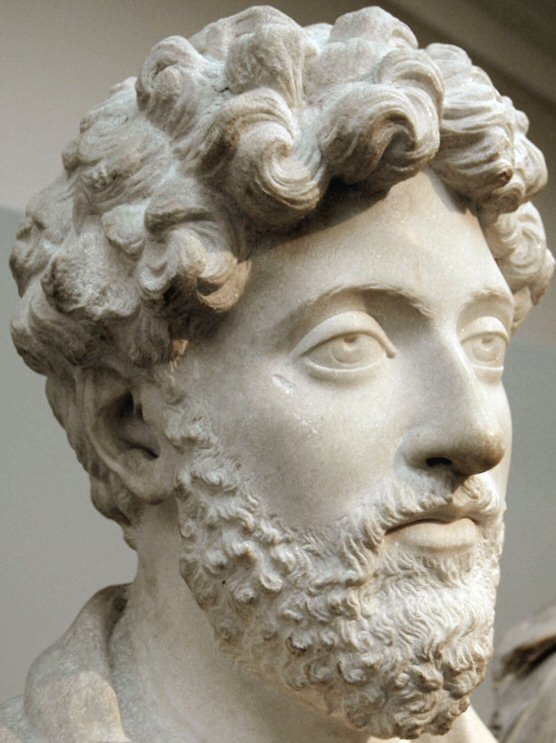
Marcus Aurelius: Emperor, Philosopher, Economist

Gibbon’s Decline and Fall begins with the death of Marcus Aurelius in 180 AD. It was all downhill from there.

Besides being a well-regarded emperor who was succeeded by an ill-regarded son, Marcus was a philosopher. Reading the works of Epictetus turned him into a devoted stoic as a young man. Marcus’ book Meditations remains the sterling example of the stoic mindset: civility, moderation in all things, and above all, taking triumph and tragedy with the same quiet dignity.

Marcus also had a bit of the economist in him. Despite predating Adam Smith by sixteen centuries, Meditations contains an excellent example of opportunity costs. Only the law of demand is more important in the economist’s toolkit. As a way of saying “mind your own business,” he writes:

Do not waste what remains of your life in speculating about your neighbours, unless with a view to some mutual benefit. To wonder what so-and-so is doing and why… means a loss of opportunity for some other task.*

*Meditations, III.4; trans. Maxwell Staniforth.

Regulation of the Day 82: Veterinarians

Did you know that the federal government is in the veterinary accreditation business? It’s true. Federal certification requires completion of veterinary school, state certification, plus an orientation course that covers:

(A) Federal animal health laws, regulations, and rules;
(B) Interstate movement requirements for animals;
(C) Import and export requirements for animals;
(D) USDA animal disease eradication and control programs;
(E) Laboratory support in confirming disease diagnoses;
(F) Ethical/Professional responsibilities of an accredited veterinarian; and,
(G) Animal health procedures, issues, and information resources relevant to the State in which the veterinarian wishes to perform accredited duties.

Poll: Used Car Salesmen More Ethical than Congress

According to a new poll, “Congressmen were rated as having a “low/very low” ethical standards by 55 percent of 1,017 adults across the nation.”

The same poll found that 45% of 1,017 adults across the nation had either never heard of Congress, or are big believers in grade inflation.

The shocking part is that used car salesmen only out-performed Congress by four points.

Antitrust as Corporate Welfare for Aggrieved Competitors

Wayne Crews and I have an article in today’s American Spectator about the antitrust crusade against Intel. Our key points:

-An FTC picking winners and losers is not capitalism. It is crony capitalism.

-Chips in “Wintel” desktop computers increasingly constitute just one subset of a vast semiconductor market. Only a small fraction of the chips in non-PC devices are Intel’s — and these devices are where the future lies.

-Regulators’ charges against Intel have changed over the years, but their verdict always remains the same: guilty. Suspicious.

-We’d be better off prosecuting the DOJ and the FTC for colluding against free enterprise.