
CEI’s Battered Business Bureau: The Week in Regulation

topeka shiner
This week in the world of regulation:

  • Last week, 68 new final regulations were published in the Federal Register. There were 84 new final rules the previous week.
  • That’s the equivalent of a new regulation every 2 hours and 28 minutes — 24 hours a day, seven days a week.
  • All in all, 1,998 final rules have been published in the Federal Register this year.
  • If this keeps up, the total tally for 2013 will be 3,646 new final rules.
  • Last week, 1,750 new pages were added to the 2013 Federal Register, for a total of 43,686 pages.
  • At its current pace, the 2013 Federal Register will run 78,572 pages.
  • Rules are called “economically significant” if they have costs of $100 million or more in a given year. One such published last week, for a total of 17 so far in 2013.
  • The total estimated compliance costs of this year’s economically significant regulations ranges from $5.78 billion to $10.39 billion.
  • So far, 138 final rules that meet the broader definition of “significant” have been published in 2013.
  • So far this year, 333 final rules affect small business; 30 of them are significant rules.

Highlights from final rules published last week:

  • Last week’s economically significant regulation comes courtesy of the Affordable Care Act. By changing eligibility requirements for Medicaid and the Children’s Health Insurance Program (CHIP), the federal government hopes to save $465 million in spending over five years. The rule contains nary a word about compliance costs, so I am scoring this rule as zero-cost in our running compliance cost tally.
  • The Topeka shiner is a federally endangered fish. The biggest ones are a few inches long. The Fish and Wildlife Service is establishing a “nonessential experimental population” of them in northern Missouri.
  • Just in time for a record-breaking summer heat wave, the Energy Department issued new energy conservation standards for room air conditioners. The rule also affects clothes dryers.

For more data, go to TenThousandCommandments.com.

The Million-Dollar Bus Stop Breaks

arlington super stop
Arlington, Virginia recently caused a national stir when it built a $1 million bus stop. The prototype “super stop” was intended to be a model for future stops along Columbia Pike. The road has been a target for multiple redevelopment efforts, including a possible 19th-century-style streetcar running along a fixed route.

While the super stop does have a heated concrete floor, it is only partially enclosed, so it doesn’t shelter riders from wind. Riders also quickly found out that its rakishly angled roof doesn’t keep rain out.

Today, the video screen that displays bus arrival times stopped working. The current heatwave proved too much for it to take. A new cooling fan should arrive in the next two weeks. Until then, the super stop will be a bus stop like any other, unless it rains, or is windy. Then it will be worse than other stops.

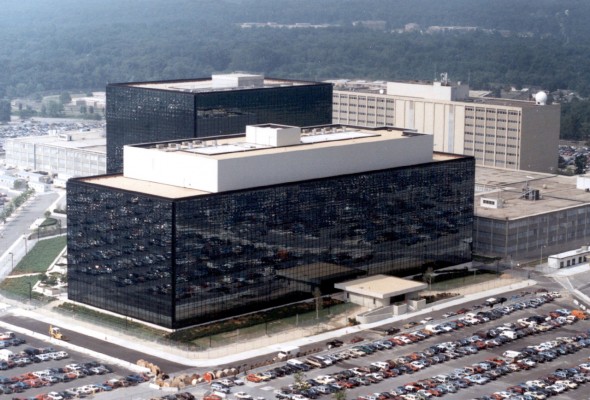
CEI Podcast for July 18, 2013: The NSA Gets Sued

NSA-headquarters-tight-730a-590x400
Have a listen here.

In the wake of the NSA’s spying scandal, several groups are filing a lawsuit challenging the NSA’s actions as unconstitutional. Associate Director of Technology Studies Ryan Radia shares many of the suit’s criticisms of the NSA, and adds a few of his own.

The Founding Free Traders

Here’s a letter I sent to the Racine Journal Times, my hometown paper:

Alderman Dan Sharkozy’s July 11 op-ed argues that the founding fathers built trade protectionism into the Constitution. He is mistaken. The Constitution, by banning trade restrictions between the states, created what was at the time the world’s largest free trade zone. This was on purpose.

Imagine if the only outside products that Racine’s consumers were allowed to buy must come from Kenosha. Or if companies like S.C. Johnson were allowed to export to Kenosha, or nowhere at all. Even Pat Buchanan would have to admit that these trade barriers would be less than helpful to Racine’s economy. Our forebears were similarly forbidden from importing or exporting most goods from anywhere but Britain; hence a certain revolution we just celebrated on July 4.

Adam Smith, who unlike Pat Buchanan was an economist, wrote of our natural “tendency to truck, barter, and exchange one thing for another.” The desire to forcibly stop people from doing so because they speak different languages or look different from each other comes from a morality that one can only hope remains foreign.

Ryan Young

Fellow in Regulatory Studies, Competitive Enterprise Institute, Washington, D.C.

Racine native, Walden III alumnus

Mission Creep

The TSA is now searching parked cars at airports.

Regulation of the Day 232: Pulling a Rabbit Out of a Hat

rabbit in magician hat
Marty Hahne is a magician in Missouri. He has been putting on magic shows for kids for almost 30 years under the nom de guerre Marty the Magician. Back in 2005, he got in trouble with the USDA. Turns out he was using an unlicensed rabbit for his grand finale of pulling a rabbit out of a hat. Hahne quickly found out that the USDA’s regulations for magicians’ rabbits, in force since 1966, are both strict and extensive.

Eight years later, the agency is still harassing him. Here are some of the indignities the USDA is inflicting on Hahne and his animal assistant:

Hahne has an official USDA license, No. 43-C-0269, for Casey — a three-pound Netherland dwarf rabbit with a look of near-fatal boredom. The rules require Hahne to pay $40 a year, take Casey to the vet and submit to surprise inspections of his home.

Also, if Hahne plans to take the rabbit out of town for an extended period, he must submit an itinerary to the USDA. The 1966 law that started all of this was four pages long. Now, the USDA has 14 pages of regulations just for rabbits.

Now, under new regulations, “animal exhibitors” such as Hahne are required to file written disaster plans to the USDA covering at least 21 types of disaster, from broken air conditioners to hurricanes. Hahne’s disaster plan for Casey is 28 pages long, and is considered short for its genre. An attorney was kind enough to draft it for him pro bono.

When the Washington Post picked up on Hahne’s story, it spread like wildfire on weird news sites, and the Internet had a collective belly laugh at the USDA’s expense. After this blow to its pride, the agency reluctantly announced that Secretary Tom Vilsack has ordered a review of the regulations, insisting that “common sense be applied.”

This is not the same as saying the agency will liberalize its strict magicians’ rabbit policy. But the phrase “common sense” does imply it.

Slow News Day

jayz
The Hill
: GOP lawmaker: Jay-Z’s new album is ‘pretty sick’

The FTC’s Uneasy Relationship with Innovation

The Sherman and Clayton Acts form the backbone of U.S. antitrust policy. But another piece of legislation gives the government the power to regulate business practices on scales smaller than monopoly. In 1914, President Woodrow Wilson signed the Federal Trade Commission Act into law, which created the FTC. In particular, section 5 of the FTC Act  should give pause to America’s entrepreneurs. It states:

“Unfair methods of competition in or affecting commerce, and unfair or deceptive acts or practices… are hereby declared unlawful.”

Deceptive business practices should be, and are, illegal. Fraud has been against the law for a long time. The worrying part is the term “unfair methods of competition,” which the law never defines.

Congress could have enumerated which business practices were to be made illegal, but it chose not to. FTC Commissioner Joshua Wright, in a recent policy statement, cites (p.3) a Senate Committee Report on the 1914 FTC Act noting “that there were too many unfair practices to define, and after writing 20 of them into the law it would be quite possible to invent others.” So Congress delegated its lawmaking authority over to the new FTC.

Its primary reason for doing so was a then-fashionable Progressive Era emphasis on scientific, expert management. Congressmen, being generalists, lack the specialized knowledge that full-time agency employees have. Since the agencies know better, they should be given wide discretion as to defining what constitutes an unfair business practice.

A public choice theorist might add that delegation also allows Congress to shift blame away from itself when FTC actions prove unpopular. Delegation could also give members plausible deniability if the FTC decides to punish businesses for political or ideological reasons.

Commissioner Wright’s policy statement attempts to give more clarity to what business practices the FTC will and will not allow, and he even addresses some public choice concerns. Some of his major principles:

  • Consumer harm is the rationale for antitrust policies, not competitor harm.
  • Maintaining the competitive process is more important than maintaining certain individual competitors.
  • The FTC is not allowed to punish businesses to advance public policy goals. It may only intervene for economic reasons, such as when the competitive process is in danger.
  • An unfair business practice will have the effect of “increased prices, reduced output, diminished quality, or weakened incentives to innovate.” (p.7)

He goes on to provide several examples of business practices that are and are not allowed.

Wright also cites a wise quote from Ronald Coase, who won the economics Nobel in 1991. It neatly sums up the antitrust enterprise:

“[If] an economist finds something – a business practice of one sort or another – that he does not understand, he looks for a monopoly explanation. And as in this field we are very ignorant, the number of ununderstandable practices tends to be very large, and the reliance on a monopoly explanation, frequent.”

Coase’s observation has consequences for the tech sector, which relies heavily not just on new, continuously evolving technologies, but on new business practices that haven’t been tried before. Without a prior track record of how a practice works, it is difficult for the defendant to prove that it increases efficiency, or or for the plaintiff to prove it is anti-competitive. The result is a lot of legal uncertainty in a sector that already has more uncertainty than most.

Hopefully Wright’s efforts to clarify the FTC’s muddled enforcement criteria will bear some fruit. Until then, watch out, especially if you’re a tech company trying out new, untested business practice. As Coase has warned, It may come back to haunt you.

CEI’s Battered Business Bureau: The Week in Regulation

homer bart truckers
This week in the world of regulation:

  • Last week, 84 new final regulations were published in the Federal Register, despite the July 4th holiday. There were 78 new final rules the previous week.
  • That’s the equivalent of a new regulation every 2 hours — 24 hours a day, seven days a week.
  • All in all, 1,930 final rules have been published in the Federal Register this year.
  • If this keeps up, the total tally for 2013 will be 3,650 new final rules.
  • Last week, 1,371 new pages were added to the 2013 Federal Register, for a total of 41,936 pages.
  • At its current pace, the 2013 Federal Register will run 78,139 pages.
  • Rules are called “economically significant” if they have costs of $100 million or more in a given year. No such rules were published last week, for a total of 16 so far in 2013.
  • The total estimated compliance costs of this year’s economically significant regulations ranges from $5.78 billion to $10.39 billion.
  • So far, 132 final rules that meet the broader definition of “significant” have been published in 2013.
  • So far this year, 324 final rules affect small business; 28 of them are significant rules.

Highlights from final rules published last week:

For more data, go to TenThousandCommandments.com.
The Apple E-Book Ruling and Antitrust Absurdity

A recent ruling against Apple over its e-book pricing policies highlights the absurdity of antitrust laws, as I point out in the Daily Caller:

Under American anti-trust laws, there are three things no business should ever do. They are as follows: Charge higher prices than your competitors, charge lower prices than your competitors, and charge the same price as your competitors.

Higher prices mean that you have market power, and you are abusing it. Lower prices mean that you are trying to unfairly undercut your competition. And if you charge the same price as your competitors, that means you are colluding with them (although in economics, it can also be evidence of near-perfect competition).

It goes downhill from there. Read the whole thing here.