Category Archives: The New Religion

CEI Podcast for October 25, 2012: The Changing Climate Debate


Have a listen here.

Director of Energy and Global Warming Policy Myron Ebell discusses his recent PBS Frontline appearance, and how the debate over global warming has shifted in the last few years. The issue has all but fallen off the radar as economic difficulties have supplanted environmental concerns in the public mind.
Fact of the Day

While researching for a project I’m working on, I learned that from 1999-2011, the EPA passed 4,995 new regulations. That’s an average of 384 per year — more than a regulation per day.

CEI Podcast for September 13, 2012: CEI Sues the EPA


Have a listen here.

The EPA has been stonewalling a Freedom of Information Act (FOIA) request from the Competitive Enterprise Institute since 2010. Since the EPA has no intention to comply with the law, CEI has sued the EPA in a case that could set a major precedent in government transparency. Energy Policy Analyst William Yeatman explains how agency officials have been using private email accounts to conduct official business, arguing that non-governmental email accounts are exempt from outside scrutiny. CEI argues that basic transparency demands that public information be made public.

The U.S. Biological Survey: How Species Become Endangered

Two interesting factoids from chapter 3 of Clarence Birdseye’s biography:

The U.S. Biological Survey, founded in 1885, was a branch of the Department of Agriculture largely engaged in the wholesale extermination of wild animals considered a nuisance by farmers and ranchers. Its leading victims were wolves and coyotes, and it hired hunters and trappers to kill them… There was considerable controversy about the vicious steel traps that would hold an animal by the leg until it starved to death.

And:

In fact, one of the main missions of the 1973 Endangered Species Act was for the Department of the Interior to bring back all the animal populations it had destroyed at the beginning of the century with the U.S. Biological Survey.

The Environmental Impact of iPhones

One doesn’t usually think of electronic gadgets as being environmentally friendly. But Cato’s Marian Tupy makes a good point about the iPhone. By replacing legions of bigger, clunkier items like newspapers and magazines, alarm clocks, compasses, and even white noise machines, smart phones can drastically reduce the amount of raw materials people need to maintain a first world lifestyle.

It’s an underappreciated point about capitalism and the innovation it makes possible that should be made more often. Click here to read Marian’s post, which is accompanied by a cool graphic.

CEI Podcast for May 17, 2012: Ethanol’s Overstated Benefits


Have a listen here.

Senior Fellow Marlo Lewis takes apart a study claiming that ethanol lowers gas prices by more than a dollar per gallon in some regions. Unrealistic assumptions and dodgy methodology make the results less than trustworthy. Ethanol, Lewis argues, is widely used only because the federal government requires it to be. If it had to compete on a level playing field like most other products, it would be a flop.

CEI Podcast for March 22, 2012: Human Achievement Hour


Have a listen here.

From 8:30 to 9:30 pm on Saturday, March 31, buildings in major cities around the world will go dark in observance of Earth Hour. The point is to show that modernity and the environment are incompatible. At the same time as Earth Hour, millions of people will leave their lights on to celebrate Human Achievement Hour. Michelle Minton, CEI’s Fellow in Consumer Policy Studies and also the founder of Human Achievement Hour, explains.

CEI Podcast for February 23, 2012: Global Warming and Mass Movements


Have a listen here.

In 1841, the Scottish writer Charles Mackay observed, ” the cup of life is not bitter enough to our palate, and we distill superfluous poison to put into it, or conjure up hideous things to frighten ourselves at, which would never exist if we did not make them.” CEI Warren Brookes Fellow Matt Patterson believes this glass-half-empty aspect of human nature applies directly to today’s global warming debate.

CEI Podcast for November 23, 2011: The Most Expensive Regulation of All Time?

Have a listen here.

What is the single most expensive regulation of all time? Energy Policy Analyst William Yeatman has one candidate: the EPA’s proposal to regulate mercury emissions from coal-powered plants. If it passes, the regulation would cost at least ten billion dollars per year to benefit a very small group of people: pregnant women who have subsistence-level income, and eat mostly large fish caught in inland freshwater bodies.

CEI Podcast for September 15, 2011: Solyndra


Have a listen here.

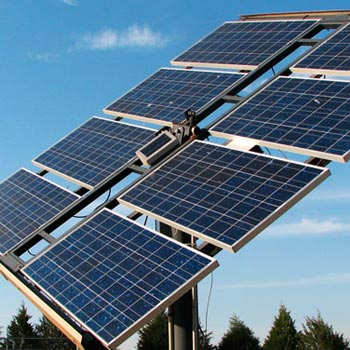
Myron Ebell, Director of CEI’s Center for Energy and Environment, takes a look at the brewing Solyndra scandal. Solyndra is a company that makes solar panels and recently declared bankruptcy. In 2009, the federal government gave Solyndra a $535 million loan even though its own analysts predicted the company would go bankrupt in 2011. The company’s cozy relationship with political figures, including a major political donor with an investment stake, make the loan — and its low interest rate — look rather suspicious.