Category Archives: Regulation of the Day

Regulation of the Day 75: Food Containers

The Code of Federal Regulations has 28 sections on food containers. Metal, glass, plastic, flexible, rigid – if you can put food in it, there are rules for it.

Recent innovations, such as easy-open tabs on cans, have prompted the Department of Agriculture to issue a 13-page update to its food container inspection regulations. If you have some spare time on your hands, you can have a look by clicking here.

Regulation of the Day 74: Grass Length in Jupiter, Florida

In Jupiter, Florida, residents whose lawns are taller than eight inches risk $250 per day fines. The city council voted last night on raising the fines to $1,000 per day.

Jupiter, of course, is about as far away from America as one can get.

But wait, there’s more:

The town code regulates items such as when garbage cans can be placed outside, noise volume, parking of boats, heights of fences, the number of tenants and landscaping. Lawns cannot be higher than eight inches in developed residential areas.

Regulation of the Day 73: Snow Globes as Terrorist Threat

snow-globe

Some of the TSA’s critics say the agency its own reductio ad absurdum. TSA’s latest action does nothing to improve security, but much to prove its critics correct. Snow globes are now banned from carry-on luggage (hat tip: Radley Balko).

This means one of two things: either grandmothers with snow globes in their carry-ons are the biggest terrorist threat facing the country, or the TSA is doing something wrong.

The way to prevent terrorism is to make terrorism difficult. Banning snow globes doesn’t make terrorism any more difficult.

Yes, larger snow globes probably violate the TSA’s three-ounce limit for liquids. But they are not bombs. They are, in fact, snow globes.

Regulation of the Day 72: Brass Toys, Killer of Children

crying-little-boy-thumb3837750

Brass is an alloy of copper and zinc. These days, it often also contains up to 2% lead to make it more workable. That means it runs afoul of federal standards for lead in children’s toys.

Fortunately, it turns out that children handling toy cars or other toys with brass parts does not raise their lead concentrations to anywhere near harmful levels. No harm, no foul, right?

Doesn’t matter, say regulators. No exceptions.

Toymakers presumably choose brass because it is cheap, durable, and better than alternative materials. Now they will have to turn to those second-best materials despite no evidence of harm.

There is also one benefit being overlooked. Copper alloys such as brass have natural antibacterial properties, a definite plus when children are involved.

So the next time you see little Johnny crying because he’s sick and his toy car’s axle is broken, you’ll know who to blame.

Regulation of the Day 71: Waistlines

waistline

In Japan, it is illegal for men to have a waist larger than 33.5 inches. The limit for women is 35.4 inches. Those in violation are forced to undergo counseling (Hat tip to CEI colleague Megan McLaughlin).

The law, passed last year, is part of an effort to keep obesity rates low and avoid related health problems.

One problem with using wasitlines as the primary metric is that results can vary among measurers. According to one article, “Satoru Yamada, a doctor at Kitasato Institute Hospital in Tokyo, published a study two years ago in which several doctors measured the waist of the same person. Their results varied by as much as 7.8 centimeters.”

That’s almost ten percent of the average waistline. It is sad that Japanese regulators have a strong enough nanny-state streak to legislate allowable physical dimensions. But the lack of precision in enforcing their edict must be maddening for the people involved.

Regulation of the Day 70: Combustible Dust

combustible dust

OSHA has published a proposed rule to regulate one of the greatest threats to mankind: combustible dust.

It is defined as “all combustible particulate solids of any size, shape, or chemical composition that could present a fire or deflagration hazard when suspended in air or other oxidizing medium.”

Maybe it speaks well of workplace safety if OSHA has made combustible dust one of its highest priorities.

A pessimist might counter that OSHA, having regulated everything else, has been reduced to regulating obscurities in its never-ending search for something to do, and for someone to command.

Regulation of the Day 69: Owning More than Three Cats

Crazy_Cat_Lady

A new ordinance in Dudley, Massachusetts makes it illegal to own more than three cats without government consent. (Hat tip: Drudge)

Having solved all of the community’s other problems, regulators now have the time to turn their attention to what is apparently a spat between neighbors. One resident is upset that the 15 cats (!) owned by a neighboring woman have been sullying his yard.

I might suggest that Coaseian bargaining might be a better solution than a law.

A fiat decision in favor of one party will leave at least one disputant dissatisfied. In this case, the cat lady is looking to move to a different town. Why not treat both parties as equals with rights to need to be respected? That approach is far more likely to generate an outcome everyone is happy with.

Presumably the offended neighbor is willing to pay some amount to keep the cats off of his yard. The cat lady is also willing to pay some price to keep her cats. Let them bargain, then. Maybe they can split the cost of building a fence. Whatever they agree on. The point is that there is a missing market here.

Allowing the parties to bargain creates that missing market. It allows the neighbors to come to a peaceful, mutually agreeable solution. Passing a law favoring one over the other is simply unfair.

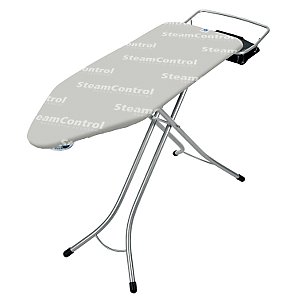
Regulation of the Day 68: Ironing Tables

ironing table

Regulation begets rent-seeking. When government assumes the power to regulate imports, domestic firms will lobby to use that fact to their advantage.

Case in point: Home Products International (HPI), an American company, makes ironing tables. So does Hardware, a Chinese company. I personally have no idea which firm makes the better ironing table. That’s for consumers to decide.

Or at least it should be for consumers to decide. But it doesn’t always work that way in practice. HPI seems to have already made that decision for us.

At HPI’s request, the International Trade Administration will continue to add anti-dumping duties to the price of the Chinese-made ironing tables. That way HPI doesn’t have to worry as much about competing. Sorry, consumers.

Is this fair? Of course not. But all too often, it is how regulation works.

Regulation of the Day 67: Oysters

oysters

My colleague Richard Morrison brought to my attention a new FDA rule that requires oysters harvested between April and October to be sterilized before they are eaten. The goal is to prevent a rare – and sometimes fatal – bacteria from harming anyone.

An unintended consequence is that the state of Louisiana is up in arms. The sterilization rule essentially bans raw oysters, a local delicacy, for seven months every year. Sterilization also affects the flavor of cooked oysters, a common ingredient in Cajun cooking.

Restaurateurs are livid. One describes the rule as “ludicrous.”Another calls it “a nuclear bomb” for the oyster industry. State officials are also upset, and have issued strongly worded statements opposing the rule.

Regulation of the Day 66: Trick or Treating

Trick or Treating

“Supervisors in Dunkard Township say they are taking the steps for safety reasons,” reads a recent news article describing a new regulation. Regulators often cite safety to explain their latest doings. But it might be a bit of a stretch for justifying what Dunkard Township is doing: banning trick-or-treating.

That’s right. Regulators have banned a staple of childhood. Trick-or-treating is dangerous. Far too dangerous for children. Yet some parents were going to let their kids go anyway. Officials were left with no choice.

The government will hold a four-hour Halloween party to make up for it.