Category Archives: Philosophy

Time to Leave Afghanistan

Bill Easterly’s surprisingly Hayekian take on Afghanistan is worth a read:

News sources say that President Obama will choose “escalate” with additional troops for Afghanistan in his speech at West Point tonight. I and many like-minded individuals find this disastrous.

“Like-minded” means that critics of top-down state plans for economic development are also not fans of top-down state plans for military development. If the Left likes the first, and the Right likes the second, that just shows you how incoherent Left and Right are.

The Obvious Reply Is “No I Didn’t”

“No college sophomore has ever turned in a paper denying the existence of free will without first choosing to do so.”

-Stephen Landsburg, The Big Questions, p. 68.

(Hat tip to my fiancée’s quick wit)

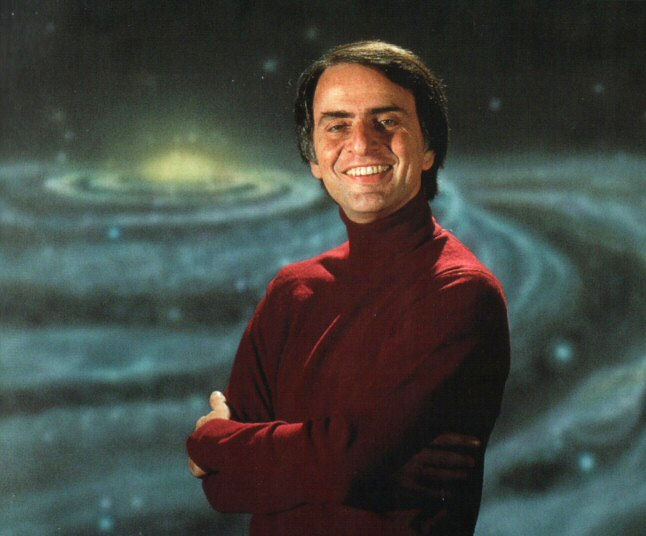
Happy Birthday, Carl Sagan

I’m a bit late on this, but Carl Sagan would have turned 75 on November 9. The Skeptic Society’s Michael Shermer has set up a nice tribute to him.

The thing I admire most about Carl Sagan isn’t his academic credentials, impressive though they were. It’s that he wasn’t afraid to be a popularizer. In fact, he embraced it. He has been an inspiration for what I hope to accomplish in my own professional life.

Will Durant’s book The Story of Philosophy is credited with introducing more people to its subject than any other book. What Will Durant did for philosophy (and later, with his wife Ariel Durant, history), Carl Sagan did for astronomy.

Some pointy-nosed academics looked down on Sagan for pandering to the masses. But Sagan did more in his too-short life to actually educate people than the lot of them combined. How many of those same disdainful academics were inspired to forge a career in science because of Carl Sagan? For a subject as esoteric as cosmology, this is no small achievement.

People who work in economics or public policy would do well to pay attention not just to what Carl Sagan did, but to how he did it. Intellectuals from all disciplines should follow the sterling example set by Carl Sagan.

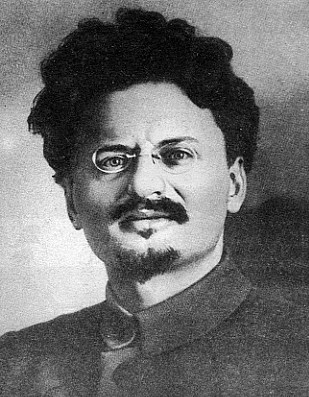
New Trotsky Biography

Robert Service’s new biography of Trotsky is reviewed in today’s Wall Street Journal. Having read Service’s excellent biography of Lenin a few years ago, this seems like a book worth reading. Joshua Rubenstein’s thoughtful review touches on some thoughts about socialism and socialists.

Socialism had three major failings. The first is what economists study most closely. It is the impossibility of economic calculation under socialism, because of the rejection of prices and money as a medium of exchange. Whether you support socialist ideals or not, it is literally impossible to achieve. Do away with prices and currency, and they will emerge in a different form. They are part of human society.

The second aspect of socialism intrigues philosophers: socialism genuinely sought to change human nature itself. People as they currently are are in no shape to realize Marx’s vision of communist society. So part of the communist program was to actively mold and change people so that vision could one day become a reality.

Before Marx came along, Plato’s Republic and Thomas More’s Utopia were also written about societies with a fundamentally changed human nature. More, knowing his ideal to be impossible, coined the word “utopia,” which literally means “no place.” His book is a pleasant dream (for a collectivist at least), but More knew it was one that could ever come true. We are they way we are. And we’re stuck that way, for better or worse.

This leads us to the third aspect of socialism, which most concerns Trotsky. This is, for me, the most remarkable part, and the most chilling. It is the sheer violence that accompanied Marxism-Leninism everywhere it was tried. And I mean everywhere. Every single country to adopt communism had a checkered human rights record. No exceptions. Not one had anything resembling freedom of speech or press, or due process, or property rights.

Most historians now estimate that communist governments killed around 100,000,000 people. Mostly their own citizens. At no other point in human history have governments been so murderous of their own people. No other ideology has had consequences so bloody as Marxism and its variants.

One reason for the violence is that it allowed the governments to maintain power; resistance is less likely when the prevailing climate is of fear. Another is that human nature is stubborn. If it is to be changed, force is required. But, of course, the basic tenets of humanity are immutable. We are who we are.

Communist leaders, including Trotsky, were simply chilling. Many of them come off as sadists. They seemed to actually enjoy bloodshed. Revel in it. Yet Trotsky still has his admirers today. They need to answer for why they look up to someone who would even have thoughts like the following, let alone give voice to such brutish impulses in public speeches:

“The strength of the French Revolution,” he shouted to a group of revolutionary sailors, “was in the machine that made the enemies of the people shorter by a head. This is a fine device. We must have it in every city.” And have it they did. Once in power, Trotsky advocated show trials and the execution of political prisoners; he suppressed other socialist parties and independent trade unions; he pushed for the censorship of art that did not support the revolution; and he created the institutions of repression that were later turned against him and his followers.


Cell Phones, Cancer, and Certainty

cell phone-2

CNN reports: “Last summer, Dr. Ronald Herberman, then director of the University of Pittsburgh Cancer Institute, issued a warning to about 3,000 faculty and staff, listing steps to avoid harmful electromagnetic radiation from cell phones.”

“Electromagnetic radiation” is a fancy way of saying light waves.

Herberman has been on his cell phone crusade for a while now; I diagnosed him with a severe case of The Certainty last year.

Still, let’s assume he’s right that cell phones cause tumors. What actions should be taken? I present the following CDC data on leading causes of death as a way to guide our priorities:

Heart disease: 631,636
Cancer: 559,888
Stroke (cerebrovascular diseases): 137,119
Chronic lower respiratory diseases: 124,583
Accidents (unintentional injuries): 121,599
Diabetes: 72,449
Alzheimer’s disease: 72,432
Influenza and Pneumonia: 56,326
Nephritis, nephrotic syndrome, and nephrosis: 45,344
Septicemia: 34,234

Deaths from cancer attributable to cell phone use? Zero. There is an important lesson to be learned here.

Think of it like this: every dollar and every hour of researchers’ time spent investigating cancer risks from cell phones is money and time not spent curing heart disease. Or cancer itself. Or stroke. These “big three” combine to end more than a million lives each and every year.

Which is a better use of limited research resources? Herberman, by bringing funding and attention to a non-issue, is quite possibly costing lives that could otherwise be saved.

The Certainty has very high costs. In Herberman’s case,  measurable in lives.

20th Anniversary of the Fall of the Berlin Wall

The Berlin Wall fell twenty years ago today. CEI released a video to mark the occasion.

See also Fred Smith’s writeup, re-posted here in its entirety:

On November 9, 1989, the Berlin Wall came crashing down. Today marks the twentieth anniversary of that great day – one of the greatest in the history of human freedom. Communism in Germany finally collapsed, setting off a domino effect that would reach Moscow within two years. Families torn apart for nearly three decades came together in tearful, happy reunions as the world watched. The Cold War was finally, mercifully, ending.

Many historians cite World War I as the twentieth century’s opening act. Sixteen million souls died in that war over nothing. Two of the nations it toppled became the Soviet Union and Nazi Germany. Communist and fascist governments would combine to kill more than one hundred million people over the next seven decades. Those needless deaths are the twentieth century’s legacy, every bit as much as the transistor or rock ‘n roll.

The fall of the Berlin Wall was that short, bloody century’s coda.

November 9, 1989 was also the start of something better. It was a nation’s way of saying that it was ready to move on to better times. To a new world defined not by oppression, ideology, and servitude, but by freedom. Sweet, precious, fragile freedom. Seeing the footage on the news was like witnessing something being born. The hope and potential that surround every birth were glimmering in people’s eyes. It was beautiful.

What Berlin’s people did on that day also inspired half a continent to send the same message to their leaders. What a noble achievement. How worthy of commemoration, now that twenty years have passed.

What a shame, then, that this milestone has been treated more like a millstone by the media. Reporters more concerned with today’s news cycle are giving at best perfunctory attention to a day that showed us all that is good about humanity.

To partially right that wrong, CEI has produced a short video commemorating what the Berlin Wall’s fall symbolizes. I hope you will watch it and enjoy it. Of course, it is hard to convey in a few short minutes what the people living in that Wall’s shadow went through for 29 long years.

So put yourself in their shoes. Think what they thought. Look right in the eyes of those separated families as they try to catch glimpses of each other over that wall. And the people who risked their lives escaping. And the soldier carrying back the body of someone who didn’t make it. What was going through his mind as he carried out his grisly task? That might give you an idea of what the Berlin Wall meant.

We all need to remember the Berlin Wall. We need to say to each other, “Never again.” And we have to mean it.

A Lesson in Cause and Effect

Ari Fleischer, President Bush’s former press secretary, has a piece in today’s New York Times that is, to be polite, dumb.

His article is a lament that the Yankees only seem to win championships when Democrats are in the White House. Fleischer is both a Republican and a Yankee fan. What is he to do?

Yes, Fleischer presumably wrote with tongue in cheek. His argument is still stupid.

Correlation does not equal causation. There is no causal relation between the current president’s party afiliation and who wins the World Series. Fleischer has no need to fret about his divided loyalties. Maybe one reason the Times is doing do badly is that it too often uses its scarce op-ed space for fluff instead of substance.

Why We Don’t Know What We Don’t Know

Here’s one theory, courtesy of my recent Steven Landsburg kick:

Steven Pinker points out that understanding the origin of the universe is not a terribly useful skill; it confers no reproductive advantage, so there’s no reason we should have evolved brains capable of thinking about such a question. Nature is too good an economist to invest in such frivolities.

-Steven Landsburg, More Sex Is Safer Sex: The Unconventional Wisdom of Economics, p.190.

I think there’s something to it. Though our ignorance of the answer to the question probably has more to do with its sheer magnitude.

Regulation of the Day 64: Starting a Business in Sacramento, California

assembly-line
Sit back and think for a minute about what man has the potential to create. Think about the magnitude of our achievements in just the last century. Life expectancy has doubled. Population has sextupled. For the first time in history, famine is primarily a political phenomenon, not a natural one. The human mind is capable of creating limitless, endless wealth.

Unfortunately, the human mind is nearly as adept at preventing that wealth from being created. Sacramento, California is home to some of the experts.

Katy Grimes researched what it would take to open a small factory there. “By the time I discovered that 22 government agencies would be involved in permitting and licensing, I realized that Sacramento is not an easy place to do business,” she writes.

She’s right. And when doing business is difficult, there is less of it. That means less wealth is created. Opportunities vanish into thin air. One of the tragedies of over-regulation is the amount of wealth, opportunity, and prosperity that never come to pass. Think of how many plants are never opened because of over-regulation. How many jobs are never created. How many products are never invented.

Supporters of strict business regulations say the rules keep people safe. Maybe that’s true. Maybe it isn’t. But they do keep us poorer.

Goldman Sachs and Crony Capitalism

Over at NPR, George Mason professor Russ Roberts looks at why Goldman Sachs prospers as Bear Stearns and Lehman Brothers die, despite following more or less similar business practices. Key point:

[C]apitalism is a profit and loss system. The profits encourage risk-taking. The losses encourage prudence. If the taxpayer almost always eats the losses for the losers, you don’t have capitalism. You have crony capitalism.

The content deserves close study. So does the delivery; Russ is one of the clearest economics writers there is.