As debt-limit talks heat up, President Obama told Rep. Eric Cantor, “Don’t call my bluff.”
This implies that he was bluffing.
If the President wants to win the negotiations, he would be better off keeping that information to himself.

As debt-limit talks heat up, President Obama told Rep. Eric Cantor, “Don’t call my bluff.”
This implies that he was bluffing.
If the President wants to win the negotiations, he would be better off keeping that information to himself.
Comments Off on Bad Negotiating Tactics
Posted in Argumentation, Political Animals, Spending
Tagged cantopr, debt limit, debt limit negotiations, obama, raising the debt limit
It’s because people rely on ad hominems and straw-man arguments. These leave the opponents’ actual arguments untouched, and resolve nothing.
So true is it that, in science as elsewhere, we fight for and against not men and things as they are, but for and against the caricatures we make of them.
-Joseph Schumpter, History of Economic Analysis, p. 90.
Comments Off on Schumpeter on Why People Are Bad at Arguing
Posted in Argumentation, Books, Economics, Great Thinkers
Comments Off on Individualism Doesn’t Mean Isolationism
Posted in Economics, Philosophy
Tagged adam smith, daily kos, Don Boudreaux, individualism, wealth of nations

Hayek’s The Constitution of Liberty is a work of great depth. It’s one of those books that one doesn’t read, so much as study. But the extra effort brings ample rewards. Still, it isn’t the most approachable book. For one, its length requires a commitment that many readers aren’t willing to make. For another, Hayek’s verbose prose style does not make for easy reading.
Fortunately, the good folks at IEA have just released Eugene Miller’s summary of all the arguments Hayek makes in The Constitution of Liberty. You can download it for free here. Besides being a good companion to read alongside the original, it looks easier for more casual readers to digest.
IEA has given similar treatments to some of Hayek’s other works. Take a look if you’re new to Hayek, or would like a refresher course on works you’ve already read.
Comments Off on Making Hayek More Approachable
Posted in Books, Economics, Philosophy
Tagged constitution of liberty, hayek, iea, institute for economic analysis

Adam Smith’s An Inquiry into the Nature and Causes of the Wealth of Nations was published 235 years ago today.
Over at Cafe Hayek, Russ Roberts links to a few short resources about that long, long book (which I nonetheless recommend reading). Worth checking out.
Comments Off on The Wealth of Nations Turns 235
Posted in Economics, Great Thinkers, Philosophy
Tagged adam smith, cafe hayek, russ roberts, wealth of nations
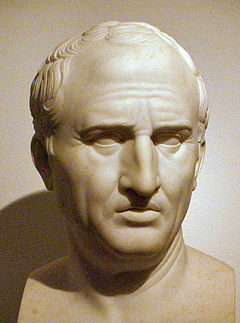
“There is nothing so absurd which has not sometimes been asserted by some philosophers.”
-Cicero, De Divinatione, ii, 58.
Comments Off on The Wisdom of Philosophers
Posted in Great Thinkers, Philosophy, Pith
Tagged cicero, cicero quotes, marcus tullius cicero, pedantry, philosophers, Philosophy

“But he was primarily an artist and therefore knew that in nature the intermediary colors predominate and an absolute white and an absolute black are rarely found.”
–Hendrik WillemVan Loon, describing Desiderius Erasmus‘ The Praise of Folly.
Wise words for Republicans, Democrats, good-government types, anarchists, and all the other ideologies that suffer from too much Certainty.
Comments Off on Words for the Wise
Posted in Books, Certainty, Philosophy, Pith

Overuse (and misuse) of the word “like” is an obstacle to clear speaking and clear thinking. It is also a signal to the rest of the world that one need not be taken seriously.
Christopher Hitchens has an amusing article on the history of “like,” pointing out that “in some cases the term has become simultaneously a crutch and a tic, driving out the rest of the vocabulary as candy expels vegetables. But it didn’t start off that way, and might possibly be worth saving in a modified form.”
I largely agree. Read the whole thing over at Vanity Fair.
Comments Off on Like, Totally
Posted in Argumentation, General Foolishness
Tagged chris hitchens, christopher hitchens, hitchens, language, like, vanity fair
The Southern Poverty Law Center has officially designated the Family Research Council a hate group. The SPLC defines hate groups as having “beliefs or practices that attack or malign an entire class of people, typically for their immutable characteristics.”
The Family Research Council’s views on gay rights accurately fit that description. Something about the SPLC’s move smacks of a PR stunt, more about politics than policy. But it is technically accurate.
Of course, people should be free to dislike other people for any reason they wish — even if those reasons border on bigotry, as they do with FRC. Bigotry and homophobia are wrong, but they shouldn’t be crimes; freedom of thought and all that.
But an organization that wants to use the power of the state to enforce its moral views deserves universal opprobrium. Morality is an individual issue. Not a government one. That FRC is so eager to use the cudgel of government to make people abide by their views is troubling. And not just because I don’t share those views.
This whole controversy highlights the fundamental contradiction at the heart of conservatism, which I don’t think gets nearly enough attention. Many conservatives hold fairly free-market economic views. They don’t think government can do a good job running the economy. Yet they assume that the same government that can’t deliver the mail on time is somehow able to achieve their overarching vision of a more moral society.
Not the most internally consistent philosophy.
Comments Off on Family Research Council Designated a Hate Group
Posted in Philosophy, The Partisan Mind
Tagged bigotry, conservatism, family research council, frc, gay rights, hate groups, social conservatism, splc
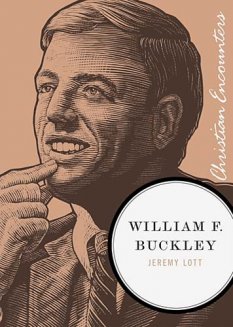
Jeremy Lott, a former Warren Brookes Fellow at CEI and an editor for RealClearPolitics, is the author of the new book, William F. Buckley. Jeremy talks about the book and the complicated, sometimes adversarial relationship between conservatism and libertarianism — a gap Buckley spent much of his life trying to bridge.
Comments Off on CEI Podcast – September 30, 2010: William F. Buckley
Posted in Books, CEI Podcast, Philosophy
Tagged buckley, cei, jeremy lott, national review, realclearpolitics, realclearpolitics.com, warren brookes, warren brookes fellowship, wfb, william f. buckley


 Inertia Wins!