“[I]f it is too pessimistic a view that man learns nothing from history, it may well be questioned whether he always learns the truth.”
–Capitalism and the Historians, (F.A. Hayek, ed.), p.3

“[I]f it is too pessimistic a view that man learns nothing from history, it may well be questioned whether he always learns the truth.”
–Capitalism and the Historians, (F.A. Hayek, ed.), p.3
Comments Off on Hayek on History
Posted in Great Thinkers, History, Pith
Tagged capitalism and the historians, hayek, History

Before there were lawyers, there were philosophers. The Sophists, given a bad name by Plato, earned their bread by teaching people how to plead their cases in court. There being no professional lawyers in 5th century B.C. Athens, people had to represent themselves. Witness this tale (probably too good to be true) of the pre-Socratic Greek philosopher Protagoras:
It is said that [Protagoras] taught a young man on the terms that he should be paid his fee if the young man won his first law-suit, but not otherwise, and that the young man’s first law-suit was one brought by Protagoras for recovery of his fee.
Bertrand Russell, History of Western Philosophy, p. 75.
Comments Off on Before Lawyers
Posted in Books, General Foolishness, Great Thinkers, History, Philosophy, Pith
Tagged ancient greece, ancient philosophy, athens, bertrand russell, greece, greek philosophy, History, history of western philosophy, Philosophy, plato, protagoras, western philosophy

Ancient Roman consuls – equivalent to our presidents – wore togas edged in purple to mark their high status. As Republic became Empire, new emperors were said to “ascend to the purple.”
Purple clothing was a status symbol for most of human history. It was the ancient equivalent of the Mercedes-Benz. Originally discovered in the glands of shellfish (reputedly by Heracles’s dog!), it took 12,000 of the creatures to get just 1.5 grams of dye. Purple garments could be as rare and costly as gold in some places.
Modern innovations such as inexpensive synthetic dyes, the Minnesota Vikings, and purple M&Ms have taken away the color’s exotic reputation. But no worry. Federal regulators are doing what they can to bring it back.
Alpinil Industries, a dye manufacturer in India, sells its carbazole violet pigment 23 cheaply. Too cheaply, it seems. Even commoners can afford to buy products colored with their purple hues!
Irate American competitors convinced the government in 2004 to put an anti-dumping duty on Alpinil’s purple dye. That raised the price to match pricey American-made dyes. Purple would once again be reserved for the rich.
Now that the tax has been in place for five years, the Department of Commerce is wrapping up an investigation to see if it has been working as intended. A repeal would be best for consumers. Don’t expect to see it happen, though.
The benefits are concentrated to a few dye manufacturers, who have a strong incentive to lobby to keep the status quo. Meanwhile, the costs are diffused onto millions of consumers, none of whom have much incentive to spend thousands of dollars in an effort to save themselves a few pennies.
Posted in Economics, History, International, Regulation of the Day, Trade
Tagged alpinil, ancient rome, anti-dumping, concentrated benefits, consul, department of commerce, diffused costs, dumping, dye, free trade, heracles, hercules, protectionism, Public Choice, purple, purple dye, rome, Trade
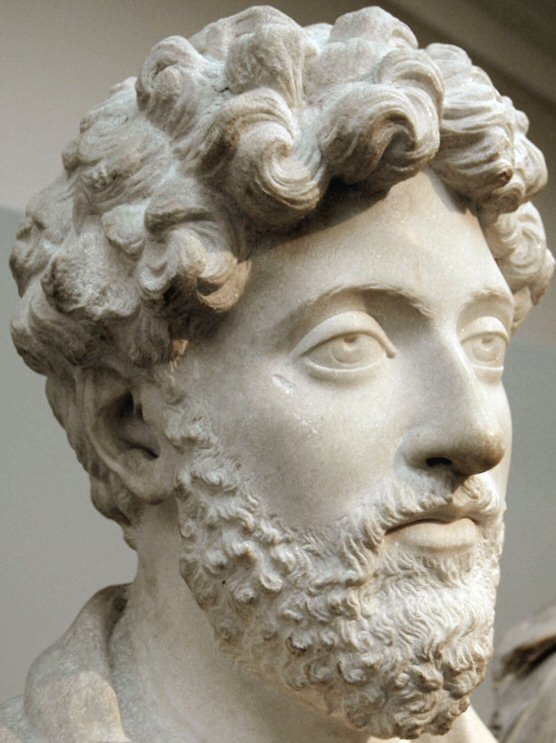
Gibbon’s Decline and Fall begins with the death of Marcus Aurelius in 180 AD. It was all downhill from there.
Besides being a well-regarded emperor who was succeeded by an ill-regarded son, Marcus was a philosopher. Reading the works of Epictetus turned him into a devoted stoic as a young man. Marcus’ book Meditations remains the sterling example of the stoic mindset: civility, moderation in all things, and above all, taking triumph and tragedy with the same quiet dignity.
Marcus also had a bit of the economist in him. Despite predating Adam Smith by sixteen centuries, Meditations contains an excellent example of opportunity costs. Only the law of demand is more important in the economist’s toolkit. As a way of saying “mind your own business,” he writes:
Do not waste what remains of your life in speculating about your neighbours, unless with a view to some mutual benefit. To wonder what so-and-so is doing and why… means a loss of opportunity for some other task.*
*Meditations, III.4; trans. Maxwell Staniforth.
Comments Off on Marcus Aurelius: Emperor, Philosopher, Economist
Posted in Books, Economics, Great Thinkers, History, Philosophy
Tagged adam smith, commodus, decline and fall, Economics, edward gibbon, epictetus, gibbon, marcus aurelius, meditations, opportunity costs, Philosophy, stoic, stoicism
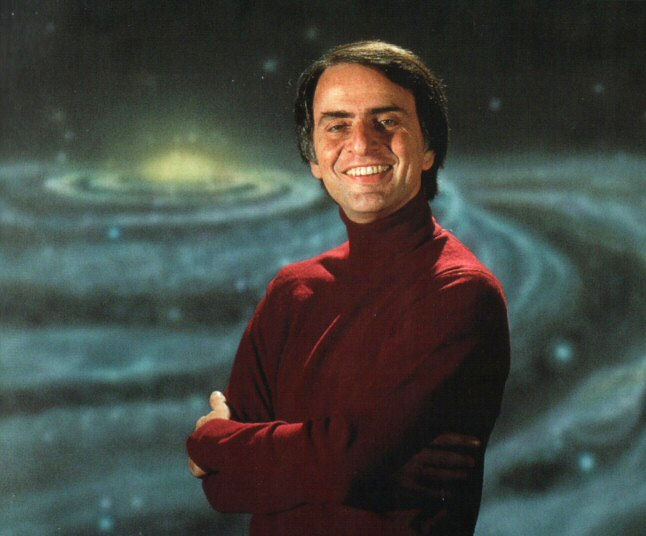
I’m a bit late on this, but Carl Sagan would have turned 75 on November 9. The Skeptic Society’s Michael Shermer has set up a nice tribute to him.
The thing I admire most about Carl Sagan isn’t his academic credentials, impressive though they were. It’s that he wasn’t afraid to be a popularizer. In fact, he embraced it. He has been an inspiration for what I hope to accomplish in my own professional life.
Will Durant’s book The Story of Philosophy is credited with introducing more people to its subject than any other book. What Will Durant did for philosophy (and later, with his wife Ariel Durant, history), Carl Sagan did for astronomy.
Some pointy-nosed academics looked down on Sagan for pandering to the masses. But Sagan did more in his too-short life to actually educate people than the lot of them combined. How many of those same disdainful academics were inspired to forge a career in science because of Carl Sagan? For a subject as esoteric as cosmology, this is no small achievement.
People who work in economics or public policy would do well to pay attention not just to what Carl Sagan did, but to how he did it. Intellectuals from all disciplines should follow the sterling example set by Carl Sagan.
Comments Off on Happy Birthday, Carl Sagan
Posted in education, Great Thinkers, History, Philosophy
Tagged ariel durant, astronomy, carl sagan, cosmology, education, michael shermer, pedagogy, popularization, popularizer, will durant
The Berlin Wall fell twenty years ago today. CEI released a video to mark the occasion.
See also Fred Smith’s writeup, re-posted here in its entirety:
On November 9, 1989, the Berlin Wall came crashing down. Today marks the twentieth anniversary of that great day – one of the greatest in the history of human freedom. Communism in Germany finally collapsed, setting off a domino effect that would reach Moscow within two years. Families torn apart for nearly three decades came together in tearful, happy reunions as the world watched. The Cold War was finally, mercifully, ending.
Many historians cite World War I as the twentieth century’s opening act. Sixteen million souls died in that war over nothing. Two of the nations it toppled became the Soviet Union and Nazi Germany. Communist and fascist governments would combine to kill more than one hundred million people over the next seven decades. Those needless deaths are the twentieth century’s legacy, every bit as much as the transistor or rock ‘n roll.
The fall of the Berlin Wall was that short, bloody century’s coda.
November 9, 1989 was also the start of something better. It was a nation’s way of saying that it was ready to move on to better times. To a new world defined not by oppression, ideology, and servitude, but by freedom. Sweet, precious, fragile freedom. Seeing the footage on the news was like witnessing something being born. The hope and potential that surround every birth were glimmering in people’s eyes. It was beautiful.
What Berlin’s people did on that day also inspired half a continent to send the same message to their leaders. What a noble achievement. How worthy of commemoration, now that twenty years have passed.
What a shame, then, that this milestone has been treated more like a millstone by the media. Reporters more concerned with today’s news cycle are giving at best perfunctory attention to a day that showed us all that is good about humanity.
To partially right that wrong, CEI has produced a short video commemorating what the Berlin Wall’s fall symbolizes. I hope you will watch it and enjoy it. Of course, it is hard to convey in a few short minutes what the people living in that Wall’s shadow went through for 29 long years.
So put yourself in their shoes. Think what they thought. Look right in the eyes of those separated families as they try to catch glimpses of each other over that wall. And the people who risked their lives escaping. And the soldier carrying back the body of someone who didn’t make it. What was going through his mind as he carried out his grisly task? That might give you an idea of what the Berlin Wall meant.
We all need to remember the Berlin Wall. We need to say to each other, “Never again.” And we have to mean it.
Posted in History, International, Philosophy
Tagged 11-9-89, 1989, 9-11-89, berlin, Berlin Wall, cold war, communism, East Germany, freedom, German Democratic Republic, Nazi Germany, november 9, the lives of others, USSR, World War 2, world war ii, WWII
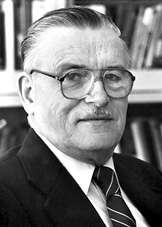
James Buchanan was one of the founding fathers of public choice theory, along with Gordon Tullock and some others (Bill Niskanen, Mancur Olson, et al). Public choice, despite the obscure name, is quite simple. It says that market behavior does not end where government begins. Politicians and other government actors are not angels. They are just as self-interested as you or I. Public choices are subject to the same incentives as private choices.
Buchanan’s simple, powerful insight won him the economics Nobel in 1986. Don Boudreaux made some brief remarks at Buchanan’s recent 90th birthday celebration. They’re worth reading, especially if you aren’t familiar with Buchanan and his very distinguished place in the history of economic thought. Also worth reading is his Nobel lecture.
Comments Off on Happy 90th Birthday to Nobel Laureate James Buchanan
Posted in Economics, History, Public Choice
Tagged Economics, economics nobel, james buchanan, james m. buchanan, nobel, Public Choice
Comments Off on Geographical Determinism?
Posted in Great Thinkers, History, Science, The New Religion
China is a very different place than it was twenty years ago. It was on this day in 1989 that one anonymous, brave soul halted those tanks in their tracks during the Tiananmen Square protests.
Slow but steady economic liberalization has lifted as many as half a billion people out of poverty in China since Mao’s death. Most of that progress has happened since the Tiananmen massacre. And the process has accelerated in recent years.
Economist Alex Tabarrok, speaking at a TED conference, described China’s new economic freedom as “the world’s greatest antipoverty program of the past three decades.”
But not everything has changed since Tiananmen. China still does not have a free press. There is no freedom of speech or religion. In many ways, the Chinese government is as repressive as ever. If China is to be a great nation again, it must be free. If the Chinese people follow the peaceful example of the Tiananmen Tank Man, it will happen.
Comments Off on Twenty Years since Tiananmen Square
Posted in History
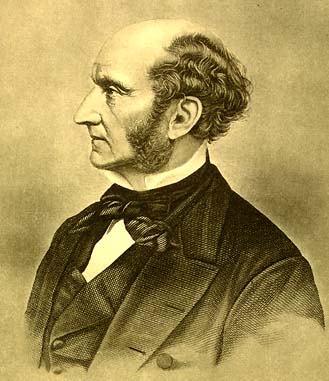
John Stuart Mill was born on this day in 1806. He is best known for classical liberal writings like On Liberty and The Subjection of Women. College students today also learn about his philosophy of utilitarianism, inherited from father James Mill and family friend Jeremy Bentham.
Mill had an unusual life story, told in one of the most compelling autobiographies in literature. John’s father gave him an intensive education that, for example, had him reading ancient Greek at age three. John never had any formal schooling, and the only children with whom he was allowed contact were his siblings.
His father’s pedagogical experiment worked in that it gave John one of the most formidable intellects of his age. But it failed in other ways. His strict upbringing resulted in a nervous breakdown at age 20 that set him back years. He was always socially awkward, and didn’t marry until age 45 — itself an interesting story.
Mill made important contributions to economics, political science, and philosophy. A deep love of liberty runs through them all. I don’t personally agree with everything he wrote (utilitarianism leads to absurd conclusions when taken too far), but he remains one of brightest lights in the classical liberal pantheon. Happy birthday, John Stuart Mill.
(Cross-posted at Open Market)
Comments Off on Happy 203rd Birthday, John Stuart Mill
Posted in Economics, Great Thinkers, History, Philosophy
Tagged 1806, autobiography, Economics, j.s. mill, john stuart mill, js mill, liberty, on liberty, Philosophy, political science, subjection of women, utilitarianism

 Inertia Wins!