
Category Archives: Great Thinkers

Rest in Peace, Christopher Hitchens

Christopher Hitchens passed away last night from complications related to esophageal cancer. He was 62. He was also one of the most entertaining pundits on either side of the Atlantic. He was often in error, never in doubt, hyper-educated but not pedantic, and he possessed an unparalleled command of the English language. His prose is a joy to read, whether or not one agrees with his arguments.

One reason I admire Hitchens is his willingness to champion unpopular causes when he thought them just. Take for example his unapologetic, unadulterated hatred of Christmas — a loathing I have shared for many years.

In this short video, he compares the holiday season to life in a one-party state. This is that magical time of year when you can’t go anywhere without hearing the same music everywhere.  Or without hearing talk of the Great Leader and His son, the Dear Leader — the reason for the season. And so on. Click here if the embedded video doesn’t work. Note: contains a bit of adult language.

Rest in peace, Christopher Hitchens. You lived a heck of a life. Pity it couldn’t have been a longer one.
Advice for Legislators – and Economists

Wise words:

“Whether one is made happy or unhappy by the conclusions of economics does not affect the validity of these conclusions. And these scientific conclusions should not be presented in a manner that might suggest that they did make the economist happy (or otherwise).”

-Israel Kirzner, Ludwig von Mises: The Man and His Economics, p. 165.

Which Is More Useful?

Here’s why I so love Voltaire:

I don’t know which is the more useful to the state: a well-powdered lord who knows precisely when the king gets up in the morning… or a great merchant who enriches his country, sends orders from his office to Surat or Cairo, and contributes to the well-being of the world.

I found this quotation on page 398 of Deirdre McCloskey’s Bourgeois Dignity. Too good not to share.

The First Rule of Driving in DC is Don’t

Study: Washington is home to America’s worst drivers

New Bastiat Book

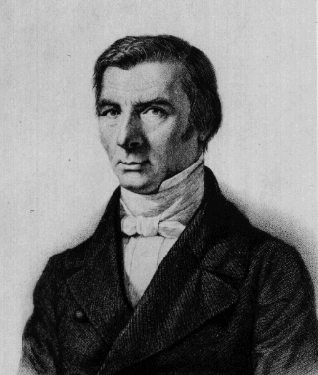
Frederic Bastiat, despite having died in 1850, just came out with a new book. The Man and the Statesman: The Correspondence and Articles on Politics, was just published by Liberty Fund. It’s available in hard copy for Liberty Fund’s typical low price, or for free in PDF format.

A majority of the letters and articles in the book have never before been translated into English.

Bastiat has five more books on the way; Liberty Fund is in the process of publishing his collected works in 6 volumes.

Happy 99th Birthday, Milton Friedman

Reason.tv celebrates the occasion with a short video:

Nietzsche on Women

I am currently engrossed in William L. Shirer’s The Rise and Fall of the Third Reich. It is a superbly well-written — and chilling — history of one of illiberalism’s purest expressions.

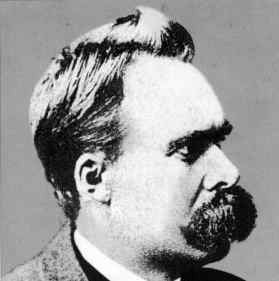
Nietzsche, the unthinking man’s favorite philosopher, had a large influence on Hitler’s thought. He contributed, among other things, to the National Socialists’ less-than-enlightened views on women. Discussing that influence in a footnote on page 100, Shirer gives two Nietzsche quotes worth repeating:

Men shall be trained for war and woman for the procreation of the warrior. All else is folly.

And, from Thus Spake Zarathustra:

Thou goest to woman? Do not forget thy whip!

Bertrand Russell, ever sharp of tongue, and knowing of Nietzsche’s lifelong aversion to the fairer sex, rebutted on p. 730 of his History of Western Philosophy:

[N]ine women out of ten would get the whip away from him, and he knew it, so he kept away from women, and soothed his vanity with unkind remarks.

Game, set, match.

Fun Fact of the Day

A lot of people like to make fun of the French. I don’t. France’s intellectual heritage is among the world’s finest. Even though contemp0rary politics there are decidedly illiberal, France was home to many of liberalism’s brightest lights.

The French Enlightenment gave the world Diderot, the encyclopedist; Voltaire, the conscience of Europe; Montesquieu’s grand narratives of history; Helvetius’ pre-Bentham utilitarianism; and Condorcet’s infinitely perfectible man. And that’s just for starters.

Economists everywhere owe a huge debt to the Physiocrats, especially Turgot and Quesnay, for what they taught a young Adam Smith when he traveled to France. Many of their lessons found their way into the Wealth of Nations. Bastiat, 160 years after his death, remains one of the discipline’s sharpest wits and most effective popularizers.

Add to that the deliciousness of French food and the fact that Gojira, one of my favorite metal bands, hails from Bayonne (video below), and the dramatic achievements of Corneille and Racine, and one can see why I think the French don’t deserve to be the butt of so many jokes.

Which brings me to today’s fun fact: the world’s first academic journal exclusively devoted to economics was founded in France. The Journal Oeconomique was founded in 1751, a full quarter of a century before the Wealth of Nations was published in 1776. Other pre-Smithian economics journals included the Gazette du Commerce and the Journal de l’Agriculture, du Commerce et des Finances.

Something to keep in mind next time you crack a joke about France.

Schumpeter on Why People Are Bad at Arguing

It’s because people rely on ad hominems and straw-man arguments. These leave the opponents’ actual arguments untouched, and resolve nothing.

So true is it that, in science as elsewhere, we fight for and against not men and things as they are, but for and against the caricatures we make of them.

-Joseph Schumpter, History of Economic Analysis, p. 90.

Schumpeter on Ideology

Schumpeter believed that, because people are fallible creatures, even the scientific method isn’t entirely objective. Ideology is reflected in, say, a scientist’s (or an economist’s) choice to research one topic instead of another, or the patterns they find (or miss) while interpreting the data:

“It embodies the picture of things as we see them, and wherever there is any possible motive for wishing to see them in a given rather than another light, the way in which we see things can hardly be distinguished from the way we wish to see them.”

-Joseph Schumpeter, History of Economic Analysis, p. 42