Category Archives: Great Thinkers

Why James Buchanan Deserved His Nobel

Better-Than-Plowing-and-Other-Personal-Essays-Buchanan-James-M-9780226078168
Sometimes offhand comments are the most revealing of all about someone’s character. Many Nobel laureates are defined by their vanity at least as much as their accomplishments. Not Buchanan. In an aside near the end of an autobiographical essay — written, at least in part, so he could shoo away pesky journalists asking about his life story, telling them to read this instead — he remarks that he doesn’t even feel like a part of the discipline whose highest honor he had recently won:

I am not, and never have been, an economist in an narrowly defined meaning. My interests in understanding how the economic interaction process works have always been instrumental to the more inclusive purpose of understanding how we can learn to live one with another without engaging in Hobbesian war and without subjecting ourselves to the dictates of the state. The “wealth of nations,” as such, has never commanded my attention save as a valued by-product of an effectively free society.

-James Buchanan, Better than Plowing and Other Personal Essays, p. 17

Right in line with the subtitle of Buchanan’s favorite book of his, The Limits of Liberty: Between Anarchy and Leviathan. The Buchananite approach is so much more relevant to the real world than the discipline’s conventional approach of inapplicable, if pretty, mathematical gymnastics.

James Buchanan, 1919-2013

james buchanan
Economics has lost one of its greats. James Buchanan has passed away at age 93. Born on a Tennessee farm in 1919, he continued working as a farmhand to put himself through college, milking cows twice a day. From there he went on to a long and varied career, culminating in his being awarded the 1986 economics Nobel.

He won that Nobel for his role in developing public choice theory. After the Prize Committee made its announcement, a flock of economically innocent reporters asked him to explain what the heck that was. They were astonished at his simple answer: it is applying the economic way of thinking to politics. It is treating politicians the same as everyone else – self-interested, responsive to incentives, a bit vain, eager to please and be pleased – flesh and blood human beings, basically. The reporters scoffed; why, that’s nothing more than common sense!

Maybe so, he replied. But most economists don’t actually think that way.

It says a lot about the state of the discipline that Buchanan distinguished himself by simply having common sense. Economics since Paul Samuelson has been plagued by physics envy, and Buchanan stuck out like a sore thumb for being more in the mold of Adam Smith, who was more interested in people than disciplinary prestige. Today’s economists are fixated on being quantitative. They want to be scientists and engineers. Leading journals simply will not publish articles that don’t contain regression analysis or at least some sophisticated mathematics. It’s not scientific otherwise.

Buchanan’s most famous book, The Calculus of Consent, has plenty of equations and geometric analysis; he spoke his discipline’s language. But the book wasn’t about appearing scientific. It was about how people behave in the real world. Buchanan rejected the perfect competition model, which sacrifices a great deal of realism to achieve its mathematical elegance. Instead, Buchanan simply applied the economic way of thinking as consistently as possible.

Buchanan also didn’t want to be a savior of humanity, unlike the Galbraiths and Krugmans of the world. “Economics is the art of putting parameters on our utopias,” he said. He was more humble than that. He wanted to be a student of humanity. And he was a good one.

The whole reason Buchanan was wary of over-mathematicization in economics is that the human condition is messy. The clean, elegant models his colleagues were constructing didn’t much resemble real people. And that is a problem; economics is about people. At its core, it is a social science. It is about how people exchange with each other, and the different ways people find to get along (or not) with each other.

Economics is also a way of thinking. What made Buchanan stick out was his dogged consistency in thinking like an economist. That’s what led him to public choice in the first place. Most economists, seeing a market failure, automatically recommend political solutions. Buchanan, knowing that political institutions are subject to all the same foibles as market institutions, was wary of such easy fixes. Buchanan, with typical pith, argued instead for looking at “politics without romance.” The real world is often too complicated for intellectuals’ grand plans to work.

That remarkable consistency led Buchanan to make a lot of contributions besides public choice. Much of Buchanan’s early work had to do with deficit spending. He was against it, which was as unusual in the 1950s as it is today. Even so, his books Democracy in Deficit [PDF] and Public Principles of Public Debt remain influential in today’s spending debate .

He also changed the shape of the ongoing Pigou-Coase debate by inventing the concept of club goods. A club good lies somewhere between a public good and a private good. An apple is a private good because if you eat it, I can’t. It’s gone. National defense is a public good because it is both non-rival – your enjoyment of it doesn’t diminish mine – and non-excludable. The military defends everyone, not just some.

But that dichotomy leaves out a whole host of goods that have some characteristics of both – cinemas, public pools, and cable television come to mind. If one person is in a pool and another person gets in, there’s still plenty of room for both. Their fun is non-rivalrous. But as more and more people get in, everyone’s fun becomes more and more rivalrous, with diminishing returns. The solution to this problem is to set up a club – charge members a fee to join, and build a fence to exclude non-members. Buchanan’s club goods concept has implications not just for pools and theaters, but for communications networks, utilities, and anything that may be subject to a natural monopoly.

Perhaps my favorite bit of Buchananite wisdom is his dichotomy between pre-constitutional analysis and post-constitutional analysis. People respond to incentives, remember. And the rules of the game are what shape those incentives. If you want different results, often you need different rules. A constitution, at heart, is what sets up those rules. What the different branches of government are, what their powers are, how they are elected or appointed, and so on.

Pre-constitutional analysis looks at these different rules and what incentives they provide. It’s more theoretical. Post-constitutional analysis is more empirical – now that these rules are actually in place, how are people behaving? As someone interested in institution-level reform, this way of thinking is invaluable in my own work.

But enough on his intellectual contributions. James Buchanan was a person, too. I only met Buchanan once, and very briefly at that. But even in that brief interaction his kindly Southern genteel manner that charmed friend and foe alike was apparent. He may have been in his 80s at the time, but his eyes and his mind were still sharp, and he was anything but cranky. He worked into his 90s, and age never dulled him. But time wins all battles, and now one of the world’s purest economists is gone. He will be missed.

Different Visions of Honesty

David Hume was the exemplar of Enlightenment thought. In one of philosophy’s oddest couples, he was good friends for a time with Jean-Jacques Rousseau, who did much to inspire the Romantic movement that arose in reaction against the Enlightenment. Here is one way in which they differed:

Rousseau and Hume were, at one time, the best of friends. But they had a falling out that made waves throughout Europe. The way both men reacted was indicative of their very different philosophical systems:

While both writers invoked the claim of honesty, the word meant very different things to the opposing camps. For Suard and, of course, for Hume, honesty entailed scientific and empirical method – above all, a rigorous fidelity to texts and contexts. On the other hand, Rousseau measured honesty by inward feeling and the subjective criterion of sentiment. The distance between the Enlightenment and the Counter-Enlightenment can be measured in this confrontation of methods.

-Robert Zaresky and John T. Scott, The Philosophers’ Quarrel: Rousseau, Hume, and the Limits of Human Understanding, location 2756 in the Kindle edition.

The Opportunity Costs of War

“War costs more than its expense,” a wise writer has said; “it costs everything it stops from being earned.”

-Benjamin Constant, Principles of Politics Applicable to All Governments, p.281.

The wise writer in question is Jean-Baptiste Say, one the 19th century’s finest economists.

Milton Friedman Turns 100


If he were still alive, Milton Friedman would be celebrating his 100th birthday today. I saw him speak a couple times, and even met him once. I was fresh out of college and reading Capitalism and Freedom at the time. He and his wife and co-author Rose were kind enough to sign my copy.

Friedman earned a reputation as a demanding professor, and he deserved it. But he and Rose were both very kind in person. Despite the vast gulf between their accomplishments and mine, they listened carefully to what I had to say and took me seriously. And it was clear they weren’t just doing it to be nice. That’s just how they were. They treated everyone that way.

That basic kindness animated the Friedmans’ political philosophy, as well as how they argued for it. Their critics who haven’t bothered with the ideological Turing test argue that the Friedmans were stooges of the rhetorical one percent; it was actually the bottom one percent that was their main concern.

Even a quick look at the data show that where economies are relatively free, the people are rich. The further a country moves away from free markets, the poorer its people tend to be. When the empirical data are that overwhelming, advocates for the global poor have no choice but to argue for economic and political freedom. It was for them that the Friedmans argued for economic and political freedom, and against the draft and drug prohibition.

In the two-minute clip from an interview with Phil Donahue below (click here if the embed doesn’t work), Friedman makes that point clearly and eloquently. But note that he also does it with a smile, and with humor. Milton Friedman’s ideological friends and foes alike have much to learn from his substance as well as his style. It’s a shame he’s not around to teach us in person, but he left behind an extensive body of work that, for a second-best option, will do quite nicely.

Ideas Are More Powerful than Censorship

Another Benjamin Constant quotation; he is quite possibly the most underrated political philosopher of the 19th century. He deserves at least as much acclaim as Mill, Cobden, Bagehot, Bentham, Ricardo, and other better-known liberal giants of that era.

Now that I’m a bit further along in the book, expect to see a few more of these in the coming weeks. Constant can be dense at times, but he is surprisingly quotable. Ideas are more powerful than censorship. He explains why in a single sentence:

“Averting ideas you think dangerous by scorning them or suppressing them violently, is to suspend their present consequences only briefly, and to double their influence to come.”

-Benjamin Constant, Principles of Politics, p.14.

The best response to speech you don’t agree with isn’t to scream, “shut up!” It’s to rebut it with speech of your own — on the merits. That’s what the marketplace of ideas is all about. May the best ideas win.

Why Opinion Pages Are Insipid

Benjamin Constant, in 1815, presciently describes nearly every U.S. newspaper’s editorial page two centuries later, from David Brooks on the right to E.J. Dionne on the left:

The ambition of the writers of the day is at all times to seem more convinced than anyone else of the reigning opinion. They watch which way the crowd is rushing. They dash as fast as they can to overtake it. They think thereby to acquire glory for providing an inspiration they actually got from others.”

-Benjaimin Constant, Principles of Politics Applicable to All Governments, p.4.

As opposed to, say, thinking for oneself and consistently applying the basic principles one believes in.

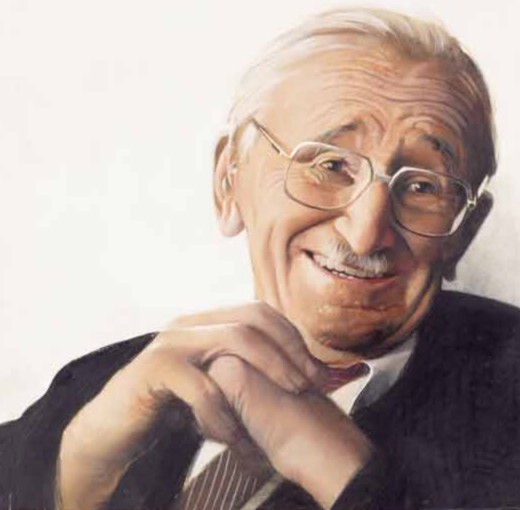
Twenty Years without Hayek


F.A. Hayek died twenty years ago today. In his long career – his first book was published in 1929, his last in 1988 – he made important contributions to economics, philosophy, and even psychology. He even won a Nobel Prize along the way.

If there is a unifying theme to Hayek’s diverse body of work, it is an emphasis on intellectual humility. He was a dogged opponent of capital-C Certainty, and was always quick to remind would-be social engineers that there are limits to their knowledge. The unintended consequences of their grand plans are somewhat less limited.

Hayek’s grandfather was a professor of natural science, and his father was a doctor who moonlighted in botany. As happens to many boys growing up in scientifically-minded households, the young Hayek was fascinated with evolution. This would profoundly influence his economic thought when he grew up, especially his concept of spontaneous order.

Human language, Wikipedia, and the economy are all examples of spontaneous order. Designs, even complicated ones, don’t always require a designer. Just as the process of natural selection allows species to adapt to their environment over time without someone planning it all, nobody invented the English language. Nobody directed its evolution from Shakespeare to text messages. Jimmy Wales, partially inspired by Hayek, created the Wikipedia website. But he certainly didn’t direct its army of contributors beyond a few basic ground rules, which themselves spontaneously evolved.

And as the 20th century showed, nobody can plan a national economy without severe unintended consequences.

That’s why one of Hayek’s most famous quotes is, “The curious task of economics is to demonstrate to men how little they really know about what they imagine they can design.” It’s a fancy of way of telling his fellow economists to please be humble.

Hayek first gained fame for his business cycle theories. He joined the London School of Economics in 1931, just as Keynes was rocketing to fame. The men became close friends, but their ideas were rather different. Keynes thought the way out of the Great Depression was investment. Since the private sector wasn’t investing enough to grow the economy, the solution was an expertly designed policy of inflation, lower interest rates, and public investment projects – stimulus.

Hayek counseled humility instead. Economies are so complicated, and so dynamic, that no expert on earth can accurately foresee unintended consequences. When experts tinker with interest rates, they change peoples’ behavior. They’ll invest in one thing instead of another, and nobody can quite predict how. When prices are distorted, peoples’ decision-making is distorted with it.

When people can’t accurately determine the highest-valued uses for their resources, the result is malinvestment. Too much investment in housing leads to too little investment in other areas that create more value. This does much to explain why the housing crisis is doing so much damage today.

Their friendly debate was the talk of the profession. Politicians almost universally sided with Keynes because he counseled them to do things they already wanted to do anyway; politics is not a humble profession. Most economists did, too. The discipline was becoming ever more quantitative, and economists were becoming more and more confident in their ability to precisely direct an economy. They were falling for the fatal conceit.

Hayek’s most popular book, The Road to Serfdom, was written in a barn in England during World War II. The London School of Economics temporarily moved out of London to avoid the blitz. Hayek’s new office was less than glamorous, but at least it was safe. The basic message is that economic intervention doesn’t work, and the usual political reaction to these failures is more intervention. Travel down this road long enough, and the result is a total state, or something close to it. The people will wake up one day to find that they have lost their freedom.

Hayek’s critics, and even many of his supporters, forget that Hayek thought that the road to serfdom is a two-way street. An intervention here and there does not, therefore, mean the end of civilization. But people must be eternally vigilant to make sure interventions don’t metastasize.

In the 1950s, Hayek turned his attention elsewhere. Seeing economists’ still-growing scientific pretensions, he published a book on methodology, The Counter-Revolution of Science, in 1952. In it, he calls this new science-fetish “scientism,” and once again counsels humility. Economics has scientific aspects, but it is not a pure science the way that physics or chemistry is. Economists forget this at our peril.

Economies, and the millions of humans who participate in them, are so complex, so fickle, and so unpredictable, that even the most rigorous multivariate regression analysis is unlikely to actually reflect real world conditions. Economists work with models, which are necessarily simplifications. They can’t account for every relevant factor. What’s more, economic plans based on flawed data are likely to be flawed themselves. There’s a knowledge problem here.

Hayek also published The Sensory Order in 1952, which remains widely cited in the psychological literature – an impressive feat, considering that psychology departments tend not to be bastions of free-market Hayekians. Drawing on his belief that human cognitive capabilities are less than perfect, the book outlines Hayek’s theory of how the mind processes and filters information that the senses send to it.

Whereas The Road to Serfdom was mainly negative in outlook, Hayek spent his later years writing more positive works. If Serfdom is about what should not be, 1960’s The Constitution of Liberty is about what should be. Think of it as Hayek’s answer to Plato’s Republic or Thomas More’s Utopia. It also contains his famous essay “Why I Am Not a Conservative,” which you can read online here.

In the 1970s, he would expand on this vision in the three-volume Law, Legislation, and Liberty. Hayek saw a world of difference between law and legislation. People often use the words interchangeably, but they are not the same. To avoid confusion, Hayek turned to Greek and borrowed the words metis and legis.

Metis is essentially social custom. It evolves as a spontaneous order, and adapts over time to changing circumstances; natural selection operates in the social sphere, not just in nature. Examples of metis include what is considered rude or polite, how one does business, and how a society is structured. The point is that they evolve bottom-up, and are deeply ingrained in society’s fabric.

Legis is where we get the English word legislation. These are top-down edicts from legislators. When they mesh well with already-existing metis – as with property rights protections – legis tends to work quite well, and can even enhance metis. But when it oversteps its bounds, as often happens in the hands of experts who believe they know better than the rest of us, the result is failure. Law is stronger than any piece of legislation.

Hayek capped his career with what is probably his most approachable book, The Fatal Conceit. It’s as good a summation of his life’s work as one will find. Given spontaneous order, the importance of metis over legis, and the knowledge problem, people who still arrogantly believe their grand plans will work without unintended consequences have fallen for the fatal conceit.

As always, the underlying theme is humility. Twenty years after Hayek’s death at age 92, that message is as important as ever.

Popularization Matters

Academic scientists often look down on Carl Sagan because he spent so much time on popular-level projects, like the Cosmos television series. The man even wrote a novel. Heaven forbid.

Ask many of those same scientists who got them interested in the subject in the first place. What sparked their fascination? Who is ultimately responsible for giving them the gall to advance scientific frontiers? They’ll probably say it was Carl Sagan, or someone like him.

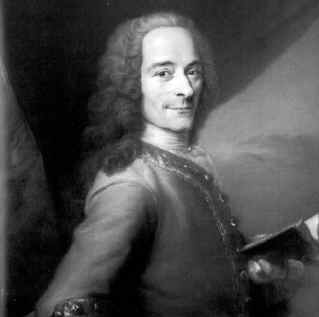
This tension between academics and popularizers goes back centuries. I’m on a Voltaire kick at the moment, so do indulge. Referring to Diderot’s massive, expensive Encyclopedie (to which Voltaire contributed), he wrote:

“Twenty folio volumes will never start a revolution; it’s the pocket books at thirty sous that represent the real threat. If the Gospels had cost 1,200 [Roman] sestertia, the Christian religion would never have established itself.”

Roger Pearson, Voltaire Almighty: A Life in Pursuit of Freedom, p. 298.

Not a bad point. Ideas originate with academics, and they’ll play with them for some time in the journals. But popularizers usually find a way to sneak ideas down to the masses eventually; Sagan and Bastiat and all that. Think of it as division of labor. Some create, others disperse.

The process works much faster in the Internet age. The primary obstacle now is IQ, not access. But it still holds. The point is that there is a role for both ivory tower academics and popularizers.

Given the disdain that each side holds for the other, it’s probably best that they be kept separate. But as someone who straddles the line between the two, I humbly propose that both sides find a way to get along. After all, when it comes to the pursuit of knowledge and a better life for all, we’re all friends. Let’s act like it.

Quote of the Day


“I have only ever addressed one prayer to God, and it is very short: ‘My God, please make all our enemies ridiculous.’ God has granted my wish.”

-Voltaire