Category Archives: Great Thinkers

The Economic Way of Thinking about Stimulus Packages, Part II

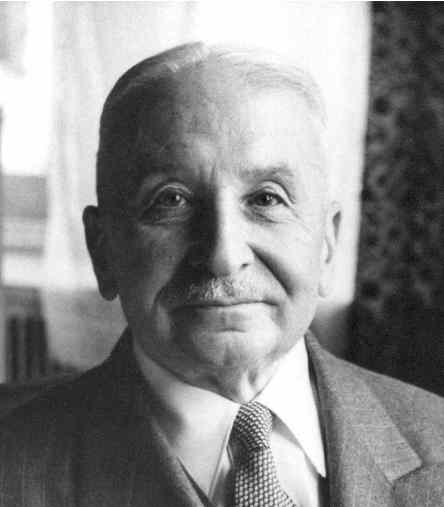
In light of the news about stimulus job creation statistics not being as advertised — complete with made-up Congressional districts — I offer another surprisingly relevant insight from Mises’ Human Action. Turns out there is a reason stimulus advocates are resorting to trickery:

“If government spending for public works is financed by taxing the citizens or borrowing from them, the citizens’ power to spend and invest is curtailed to the same extent as that of the public treasury expands. No additional jobs are created.”

-Ludwig von Mises, Human Action, 4th ed., (Irvington-on-Hudson New York: Foundation for Economic Education, 1996 [1949], p. 776.

New Trotsky Biography

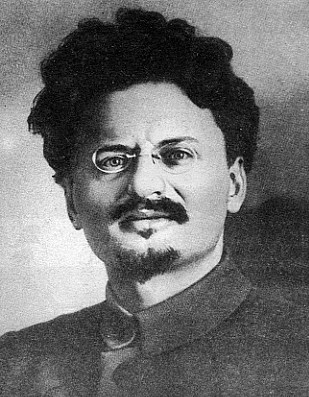
Robert Service’s new biography of Trotsky is reviewed in today’s Wall Street Journal. Having read Service’s excellent biography of Lenin a few years ago, this seems like a book worth reading. Joshua Rubenstein’s thoughtful review touches on some thoughts about socialism and socialists.

Socialism had three major failings. The first is what economists study most closely. It is the impossibility of economic calculation under socialism, because of the rejection of prices and money as a medium of exchange. Whether you support socialist ideals or not, it is literally impossible to achieve. Do away with prices and currency, and they will emerge in a different form. They are part of human society.

The second aspect of socialism intrigues philosophers: socialism genuinely sought to change human nature itself. People as they currently are are in no shape to realize Marx’s vision of communist society. So part of the communist program was to actively mold and change people so that vision could one day become a reality.

Before Marx came along, Plato’s Republic and Thomas More’s Utopia were also written about societies with a fundamentally changed human nature. More, knowing his ideal to be impossible, coined the word “utopia,” which literally means “no place.” His book is a pleasant dream (for a collectivist at least), but More knew it was one that could ever come true. We are they way we are. And we’re stuck that way, for better or worse.

This leads us to the third aspect of socialism, which most concerns Trotsky. This is, for me, the most remarkable part, and the most chilling. It is the sheer violence that accompanied Marxism-Leninism everywhere it was tried. And I mean everywhere. Every single country to adopt communism had a checkered human rights record. No exceptions. Not one had anything resembling freedom of speech or press, or due process, or property rights.

Most historians now estimate that communist governments killed around 100,000,000 people. Mostly their own citizens. At no other point in human history have governments been so murderous of their own people. No other ideology has had consequences so bloody as Marxism and its variants.

One reason for the violence is that it allowed the governments to maintain power; resistance is less likely when the prevailing climate is of fear. Another is that human nature is stubborn. If it is to be changed, force is required. But, of course, the basic tenets of humanity are immutable. We are who we are.

Communist leaders, including Trotsky, were simply chilling. Many of them come off as sadists. They seemed to actually enjoy bloodshed. Revel in it. Yet Trotsky still has his admirers today. They need to answer for why they look up to someone who would even have thoughts like the following, let alone give voice to such brutish impulses in public speeches:

“The strength of the French Revolution,” he shouted to a group of revolutionary sailors, “was in the machine that made the enemies of the people shorter by a head. This is a fine device. We must have it in every city.” And have it they did. Once in power, Trotsky advocated show trials and the execution of political prisoners; he suppressed other socialist parties and independent trade unions; he pushed for the censorship of art that did not support the revolution; and he created the institutions of repression that were later turned against him and his followers.

The Economic Way of Thinking about Stimulus Packages

“[A] government can spend or invest only what it takes away from its citizens… its additional spending and investment curtails the citizens’ spending and investment to the full extent of its quantity.”

-Ludwig von Mises, Human Action, 4th ed., (Irvington-on-Hudson New York: Foundation for Economic Education, 1996 [1949], p. 744.

Keeping Priorities Straight

vanuatu
Bjørn Lomborg, head of the Copenhagen Consensus, brings some much-needed common sense to the global warming debate. Reporting from Vanuatu, he finds that many of the locals haven’t even heard of global warming.

Torethy Frank is one of them. She has other priorities, such as escaping crushing poverty: “Torethy and her family of six live in a small house made of concrete and brick with no running water. As a toilet, they use a hole dug in the ground. They have no shower and there is no fixed electricity supply.”

You can see why the two degrees of projected warming over the next century are not at the top of her “problems to solve” list. I would argue that ending global poverty should be a little higher on ours. Certainly higher than global warming.

What Does Protectionism Protect?

Classic reductio ad absurdum.

Modern technology could easily grow oranges and grapes in hothouses in the arctic and subarctic countries. Everybody would call such a venture lunacy. But it is essentially the same to preserve the growing of cereals in rocky mountain valleys by tariffs and other devices of protectionism while elsewhere there is plenty of fallow fertile land. The difference is merely one of degree.

Ludwig von Mises, Human Action, p. 395.

Markets and Special Interests

ludwig-von-mises
Detractors of capitalism decry that it caters to special interests. The opposite is actually true. Just look at what’s happened in the last year.

Most of Wall Street came to government asking for a bailout when the government-created housing bubble popped.

The Big Three automakers also went to Washington for largesse when their customers came to prefer Toyotas and Hondas.

Health insurance companies stand to make a killing if Obamacare passes.

T. Boone Pickens and Al Gore would make millions from environmental legislation.

Ludwig von Mises explained the reason for all of this corrupt behavior with a single sentence back in 1949: “It is precisely the fact that the market does not respect vested interests that makes the people concerned ask for government interference.”
Human Action, 4th Edition, p. 337.

Bastiat on the Stimulus Package

Public spending is always a substitute for private spending, and that consequently it may well support one worker in place of another, but adds nothing to the lot of the working class as a whole.”

-Frederic Bastiat, Selected Essays on Political Economy, p. 16 (emphasis in original)

New Schumpeter Book

In the tradition of the Reader’s Digest condensation of F.A. Hayek’s The Road to Serfdom, Joseph Schumpeter’s Can Capitalism Survive? Creative Destruction and the Future of the Global Economy is coming out on September 1.

Can Capitalism Survive? is a condensation of Schumpeter’s 431-page masterwork of 1942, Capitalism, Socialism, and Democracy. The timing couldn’t be better. With economic crisis and recession dominating the news, people are as interested in the topic as ever. The trouble is, they don’t understand it very well. This book should help.

In this age of bailouts and cash-for-clunkers, Schumpeter’s theory of creative destruction is crucial for understanding why some policies will work and others will fail.

Putting Schumpeter’s ideas in a more accessible format does not dilute them, as some ivory tower types will no doubt allege. It increases their impact. Economic literacy is a good thing. The economic way of thinking badly needs to be popularized. May many more distillations of major economic works follow this one.

Rose Friedman, 1910-2009

Rose Friedman died today at age 98 after a life well lived. Sincerest condolences to her family and friends from all of us at CEI.

The body of work that Milton and Rose Friedman put together over many years was one of the most influential of the 20th century. It continues to resonate in the 21st. From technical works like A Monetary History of the United States to popular works like the Free to Choose book and television series, the Friedmans made valuable contributions to economics, politics, philosophy, and, most importantly, human freedom.

Milton got most of the credit, and the Nobel prize. But even works without Rose’s name next to Milton’s on the cover bear her stamp. They were a team.

I had the opportunity to meet Mrs. Friedman and her husband when I was about 22. I was reading Capitalism and Freedom at the time. Both were kind enough to sign it. The gesture was almost meaningless to them — just a few scribbles on the title page — but not to me. Both of the Friedmans were kind, gracious, and took seriously what an unaccomplished nobody like me had to say, even though they certainly didn’t have to.

The sincere interest the Friedmans took in young people has assured that their ideas will not be forgotten by the next generation. The world could use more people like Rose Friedman. Especially now that the original is lost to us.

Geographical Determinism?

The FT interviews Jared Diamond.